The first life: painter to the royal court
Francisco Goya was born in 1746 in a village in Aragon. After an apprenticeship in Zaragoza and two trips to Italy, he settled in Madrid, where his career took off quickly. He produced tapestry cartoons for the royal manufactory of Santa Bárbara — colourful, lively scenes of everyday Spanish life that delighted the court. In 1789 he was appointed court painter to King Charles IV, and in 1799 First Painter to the King, the highest artistic distinction in Spain.
His royal portraits from this period are masterworks of formal elegance and psychological truth. The Family of Charles IV (1800–1801) is the perfect example: all the members of the royal family are shown in their gala dress, yet their faces reveal with pitiless honesty the mediocrity and vanity of each one. Goya flatters and denounces in the same stroke.
Deafness and the dark turn
In 1792–1793, Goya contracted a severe and mysterious illness — probably encephalitis or lead poisoning — that left him completely and permanently deaf. He was 46. Deafness cut him off from the world of salon conversation, from the noise of the court, from the daily commerce of society. It turned him inward, isolated him, and — according to many historians — freed a darker and more personal vision than his official commissions had until then permitted.
It was in this period that the Caprices (1799) were born — a series of 80 satirical, nightmarish etchings depicting human vices, superstition and social madness. One of them — The Sleep of Reason Produces Monsters — became one of the most quoted images in all of art history, summing up in a single image the programme of all Goya's work to come.
The war: The Disasters of War
Napoleon's invasion of Spain in 1808 and the ensuing war of independence mark a second turning point. Goya witnessed — or had precisely recounted to him — the atrocities committed by both sides. Between 1810 and 1820 he produced a series of 82 etchings titled The Disasters of War, published only in 1863, long after his death.
These prints depict scenes of massacre, rape, famine and violence with a rawness unprecedented in the history of Western art. There are no heroes, no glory, no national narrative: only naked barbarity, on both sides. The great painting The Third of May 1808 (1814) — the execution of Spanish civilians by French soldiers — belongs to the same impulse to bear witness.
The Black Paintings: for himself alone
Between 1819 and 1823, Goya lived in retirement at his country house near Madrid, nicknamed the Quinta del Sordo (the Deaf Man's House). Aged 73 to 77, deaf, traumatised by war and the political repression that followed the restoration of Ferdinand VII, he painted directly onto the walls of his home fourteen frescoes never intended to be seen by anyone.
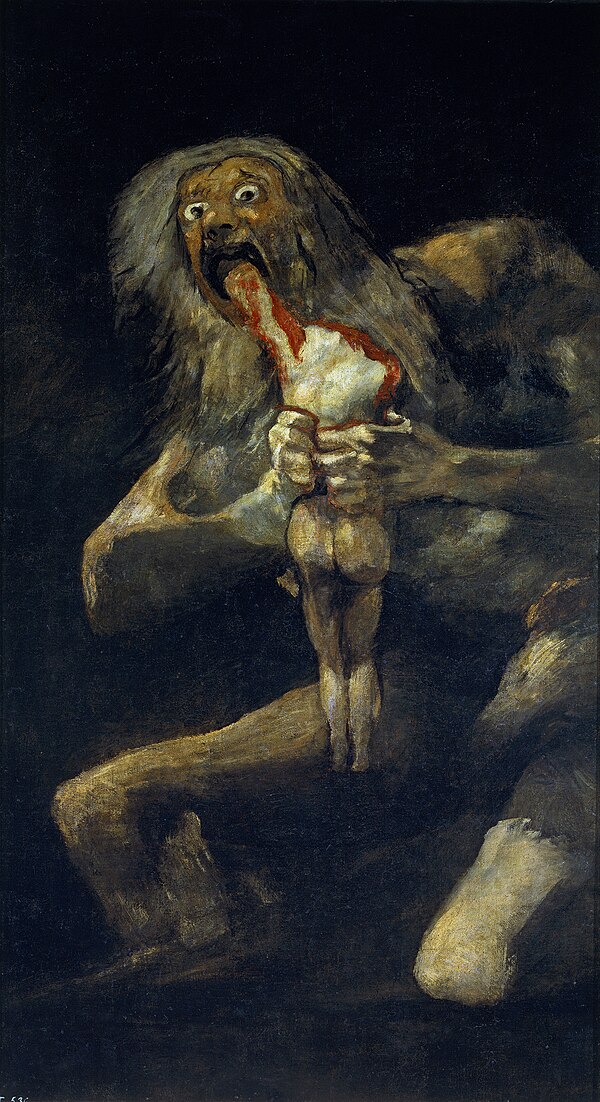
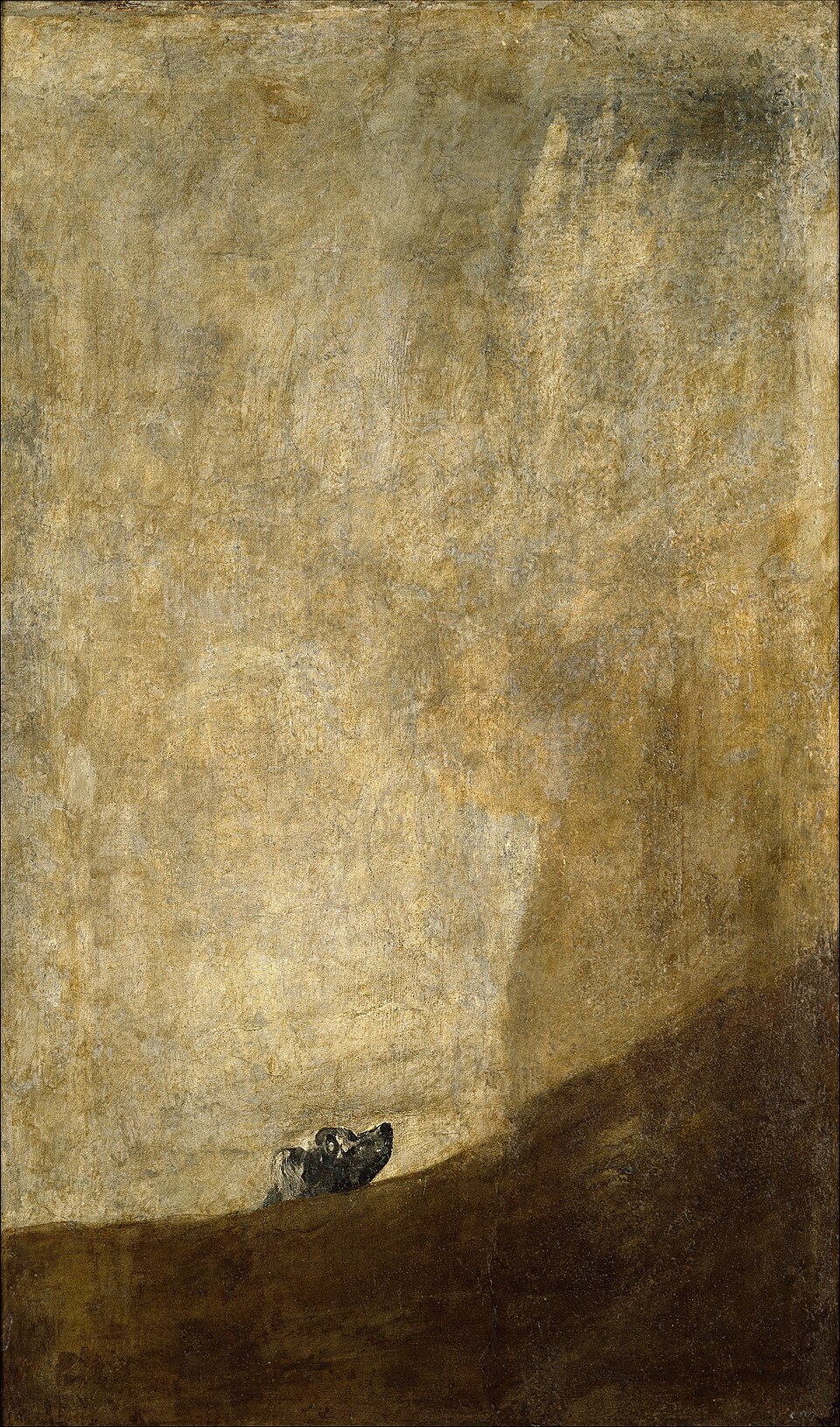
These Black Paintings depict scenes of hallucinatory violence: Saturn Devouring His Son — a wide-eyed giant tearing a human body apart with both hands; Witches' Sabbath; Two Old Men; A Dog. The tones are almost exclusively black, ochre and grey. There is no clear narrative, no hope, no redemption. These are visions, not stories.
The legacy: Goya, father of modern art
Goya died in exile in Bordeaux in 1828, having fled the absolutism of Ferdinand VII. He is often described as "the last of the Old Masters and the first of the Moderns." His way of painting his inner nightmares without any concern for pleasing or explaining directly prefigures twentieth-century Expressionism. Edvard Munch, Francis Bacon and Max Beckmann all claimed his legacy as their own.
The Black Paintings, transferred to canvas after his death and donated to the Prado in 1881, are today among the museum's most visited works — and the most discussed. They leave every visitor with a question: what is there left to paint when you have lost all hope?