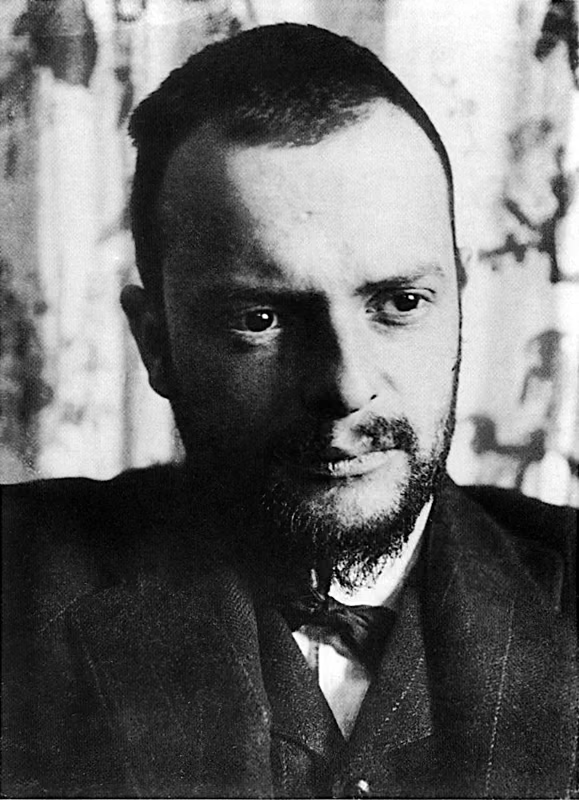
Paul Klee is one of the most singular and unclassifiable artists of the twentieth century. A Swiss-German painter, musician, poet and theorist, he developed a pictorial language of absolute originality and diversity — by turns playful and grave, childlike and philosophical, geometric and organic — that resists any simple categorisation. Neither Expressionist nor Cubist nor Surrealist, though he came into contact with all of these tendencies, he followed an entirely personal path, nourished by encyclopaedic curiosity, deep musical sensibility and constant meditation on the mysteries of nature, life and death. His output, comprising more than nine thousand pieces — paintings, watercolours, drawings, prints — is one of the most extensive and most coherent in the entire history of modern art.
A Double Identity: Swiss and German, Visual and Musical
Paul Klee was born on 18 December 1879 in Münchenbuchsee, near Berne, Switzerland, into a family of dual German-Swiss culture. His father, Hans Klee, was a German music teacher at the Berne Normal School; his mother, Ida Maria Frick, was Swiss and a lyric singer. Paul grew up in a deeply musical environment: he learned the violin from childhood and reached a level of virtuosity that would have allowed him to pursue a career as a concert performer. Throughout his life he played regularly in chamber music, and music — Bach, Mozart, the structures of counterpoint and fugue — profoundly permeated his conception of painting.
His destiny tilted towards painting during his secondary schooling in Berne, where he revealed exceptional gifts for drawing and caricature. In 1898, against his father's wishes — who would have preferred to see him pursue a musical career — he left for Munich to study painting. He entered the studio of Franz von Stuck at the Academy of Fine Arts — the same master with whom Kandinsky would study a few years later.
A journey to Italy in 1901–02 — Florence, Rome, Naples — revealed the treasures of Renaissance and antique art to him, but left him in a certain perplexity: too great, too finished, all this seemed to belong to a world that was not his. It would take him several more years to find his own path.
The Years of Formation and the Discovery of Colour
Back in Berne in 1902, Klee led a life of patient work and doubt. He first produced etchings and pen drawings of remarkable precision and satirical invention — a cycle of Inventions (1903–06) in which fantastic figures populate worlds of dream and nightmare, already announcing his tendency towards oneirism and dark humour.
In 1906 he married the pianist Lily Stumpf, whom he had met in Munich, and settled there permanently. He renewed contact with Kandinsky, August Macke and Franz Marc, joining the Der Blaue Reiter group in 1912, whose almanac published one of his drawings. The encounter with Kandinsky was decisive: it opened the doors of abstraction to him and confirmed his intuition that painting could function as an autonomous, non-descriptive language.
But the true chromatic revelation came in April 1914, during a two-week journey to Tunisia with the painters August Macke and Louis Moilliet. The light of Tunis, Carthage and Kairouan was an illumination. In his diary, Klee wrote a sentence that became famous: "Colour possesses me. I don't have to pursue it. It will possess me always, I know it. That is the meaning of this happy hour: colour and I are one. I am a painter."
This revelation was tragically interrupted by the First World War, which broke out a few months later. Macke was killed at the front in September 1914, Marc in 1916. Klee was mobilised but assigned to administrative posts that allowed him to continue drawing and painting.
The Bauhaus and Pedagogy
In 1920, Klee was invited by Walter Gropius to join the Bauhaus in Weimar as a master. He taught there from 1921 to 1931 — first in Weimar, then in Dessau — in an extraordinarily stimulating intellectual context alongside Kandinsky, Moholy-Nagy, Itten and Schlemmer. His teaching, founded on a rigorous analysis of the fundamental plastic elements (point, line, plane, colour, texture), was gathered in his Theory of Form and Figuration (Pädagogisches Skizzenbuch, 1925; Bildnerisches Denken, published posthumously), which became one of the most influential pedagogical texts in the history of art.
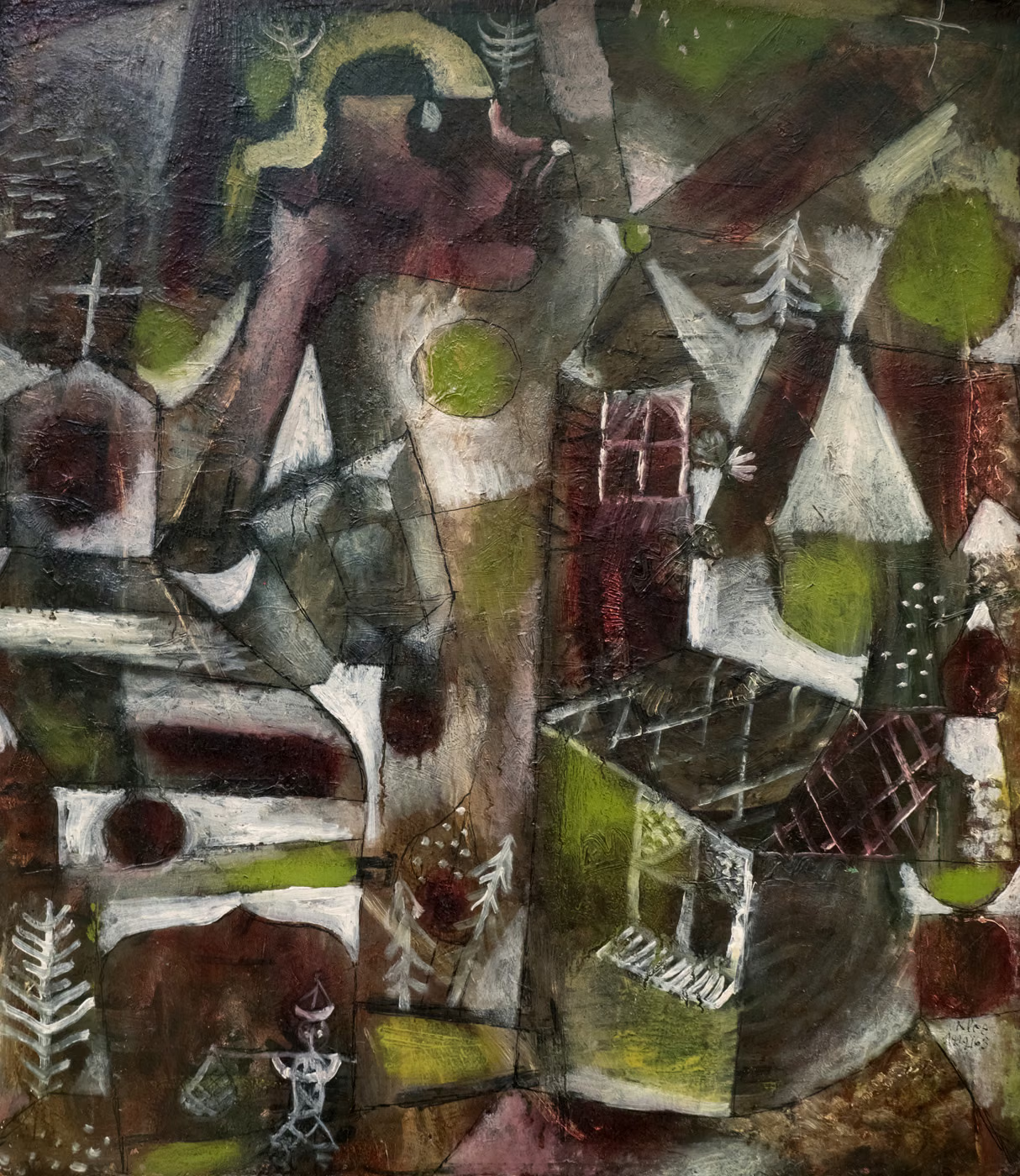
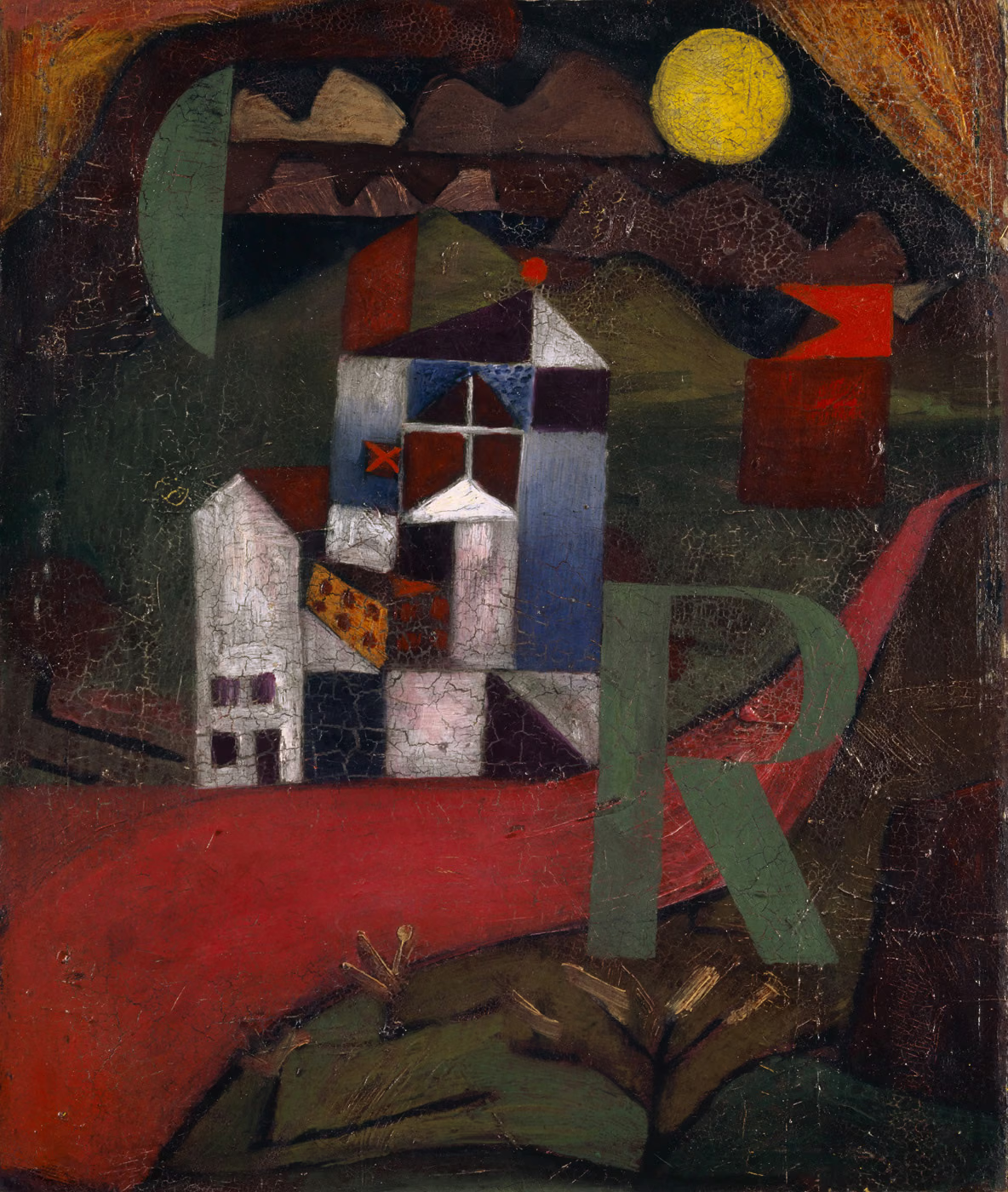
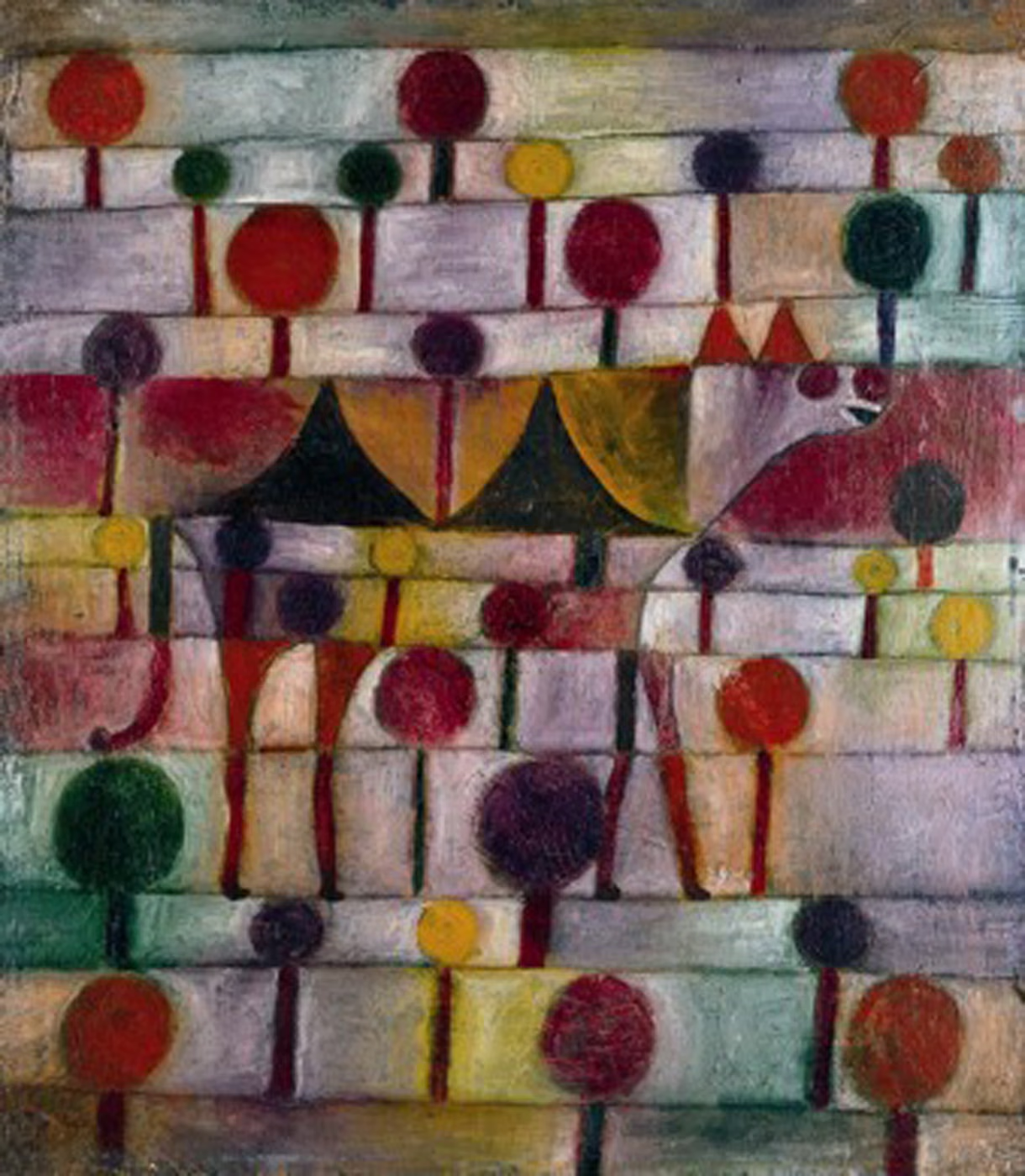
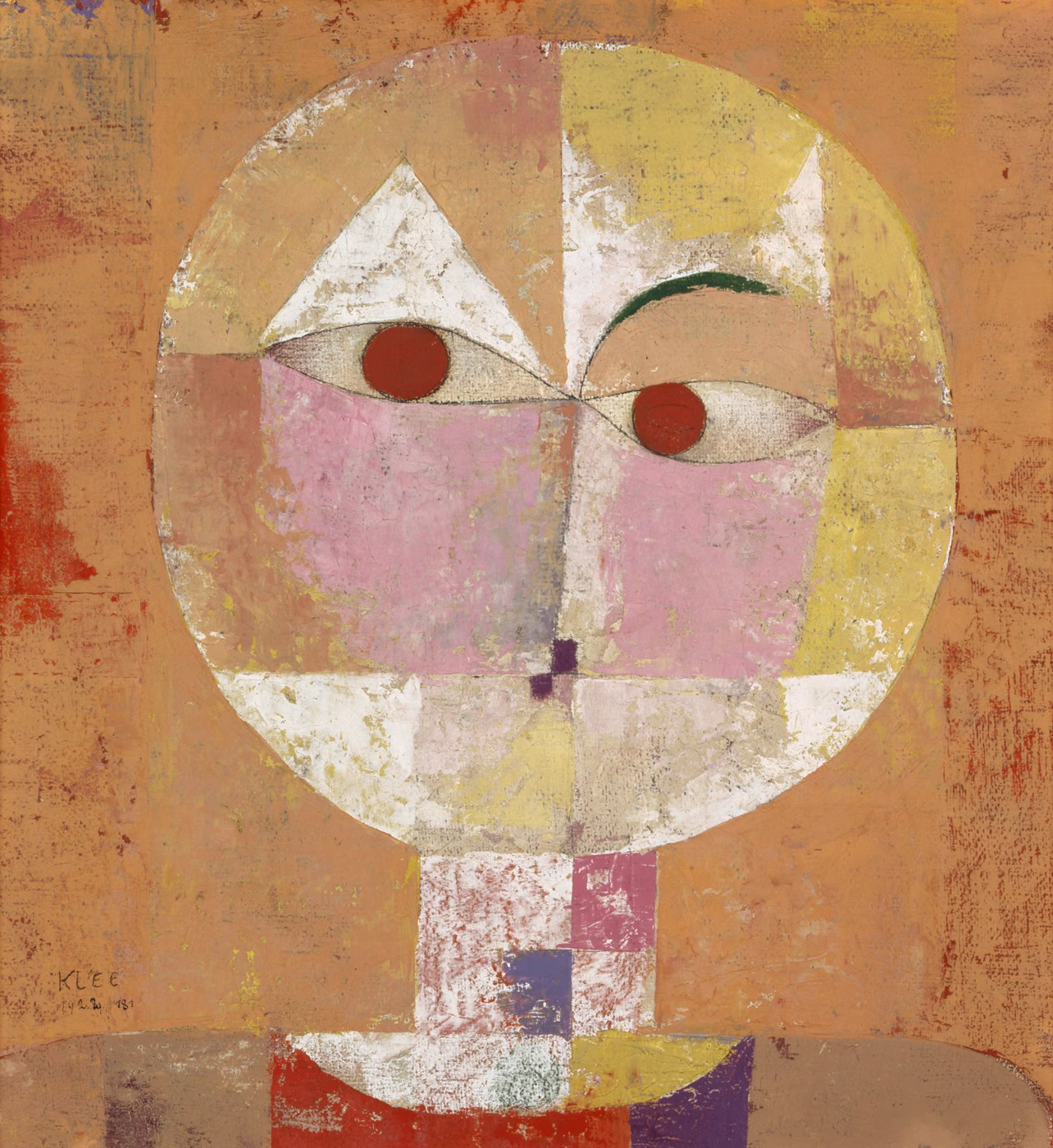
These years were also those of extraordinary creative fertility. Klee produced hundreds of works each year, methodically exploring new techniques and new formal languages: transparent watercolours with delicate networks of lines, encaustic wax paintings, compositions in chequered or banded colour, automatic pen drawings, representations of plants, animals, imaginary architectures, invented signs and hieroglyphs. Each work was an experiment, a new territory.
An Unclassifiable Poetic Universe
Klee's work is so diverse that it is difficult to extract a simple stylistic unity. What runs through it, however, is a vision of the world that is simultaneously poetic and analytical, childlike and learned, humorous and melancholy. Klee drew on children's drawings — whose freedom and direct expressivity he admired — but also on Egyptian hieroglyphs, primitive art, botanical illustrations and geographical maps. He was interested in the natural processes of growth and transformation, in the germination of plants, crystalline formations and microscopic structures.
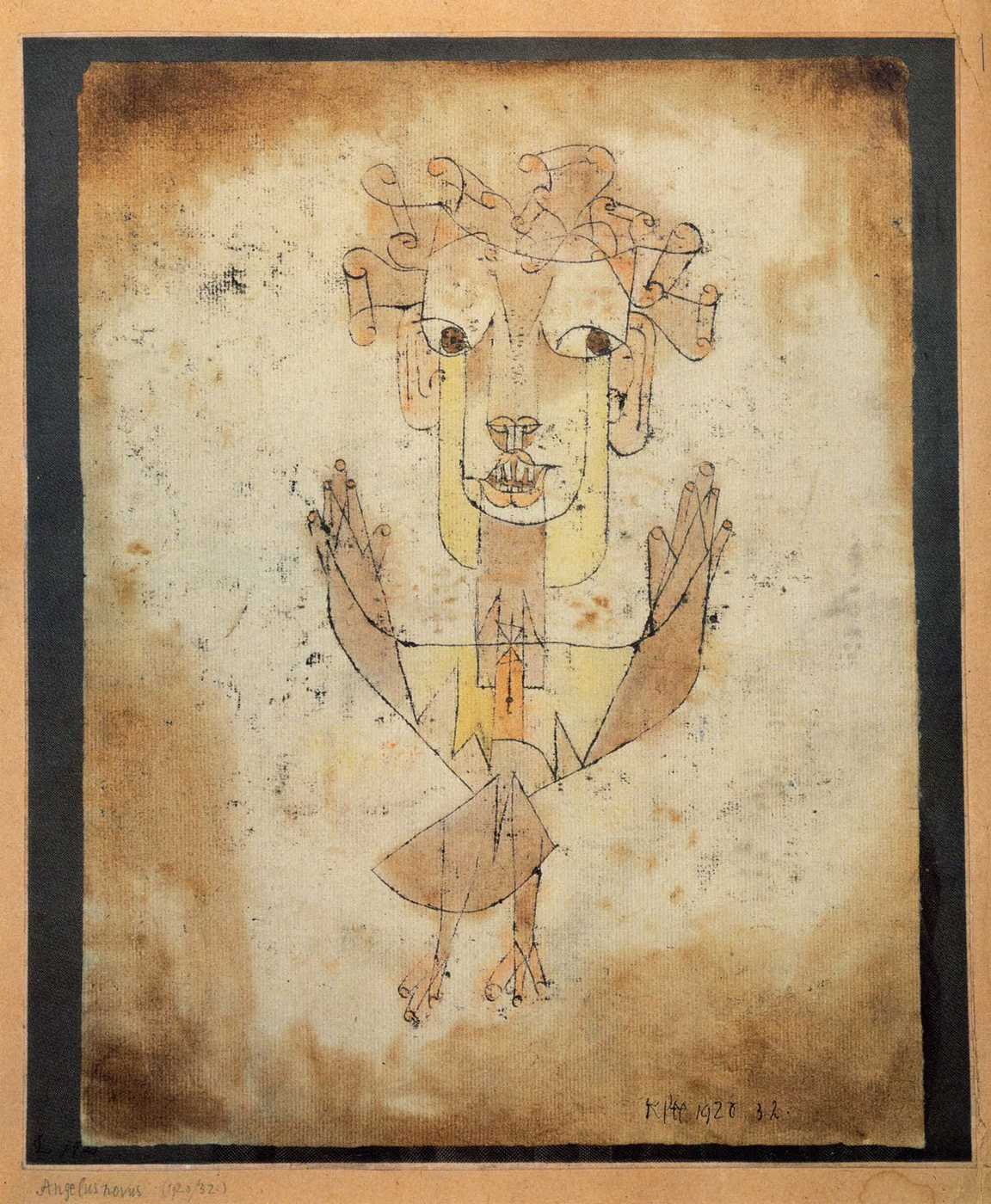
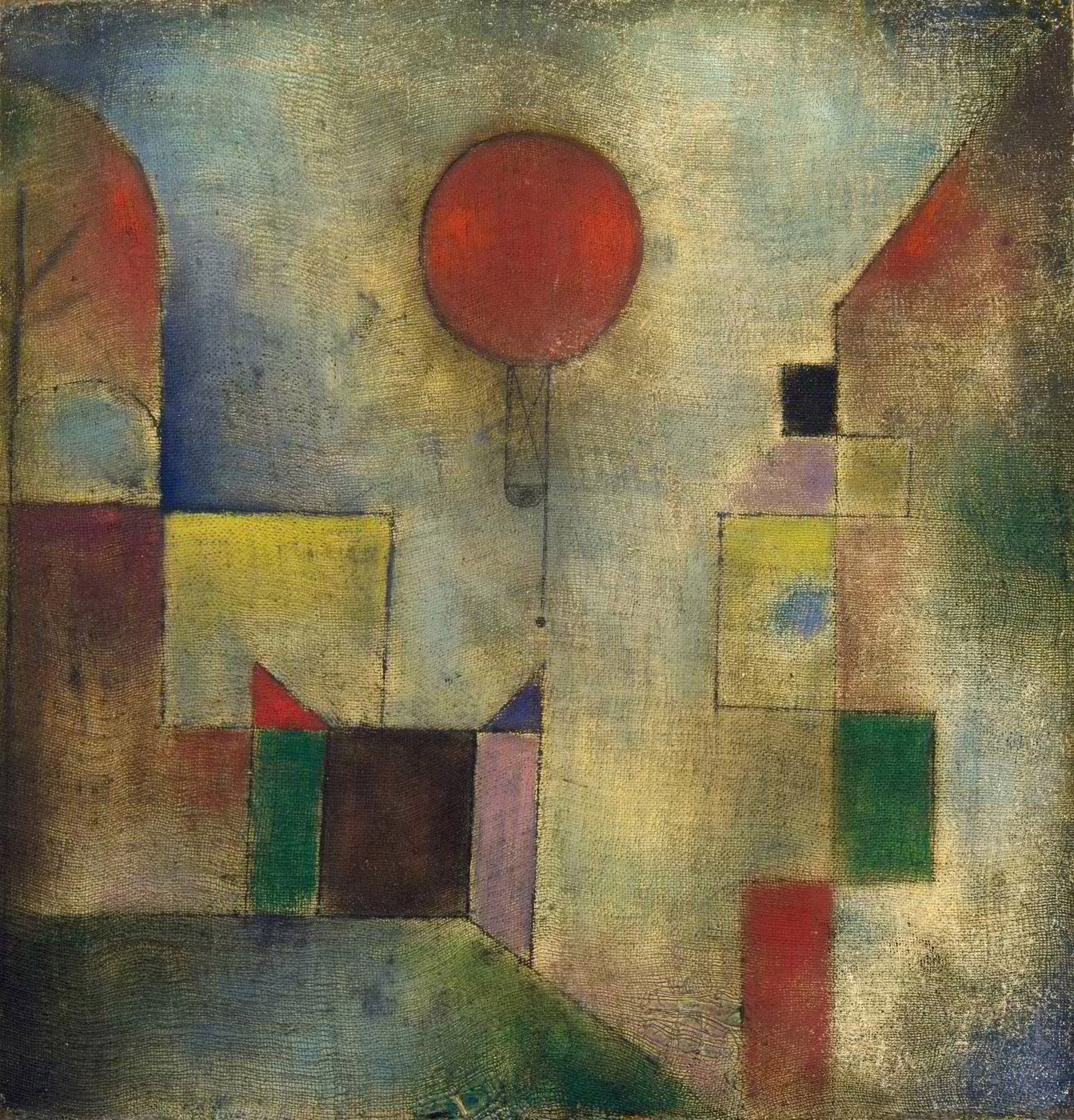
Among his most celebrated works: Twittering Machine (1922, MoMA, New York), a watercolour-drawing of an absurd machine operating mechanical birds; Ad Parnassum (1932, Kunstmuseum, Berne), a large pointillist composition that is one of his most monumental and most enigmatic works; Around the Fish (1926, MoMA, New York), in which a red fish presides over a cosmos of signs and symbols; and Angelus Novus (1920, Israel Museum, Jerusalem), the watercolour that Walter Benjamin acquired in 1921 and made the emblem of his concept of the "angel of history."
Illness and the Late Works
In 1933, the Nazi regime came to power in Germany. Klee, who had obtained a position at the Düsseldorf Academy of Fine Arts in 1931, was immediately dismissed. His works were classified as degenerate art and removed from German museums — more than a hundred of his paintings would figure in the notorious Entartete Kunst exhibition of 1937. He returned to Switzerland, to Berne, his home city.
In 1935, he was struck by progressive scleroderma, an autoimmune disease affecting the skin and mucous membranes that made work increasingly difficult. His hands stiffened, his lines thickened. But far from stopping, Klee responded to illness with a creative explosion: his last years, between 1937 and 1940, were among the most productive of his life. He produced more than twelve hundred works in 1939 alone. The paintings of this late period — larger, with thick black lines, dark and intense colours — have a gravity and force that contrast sharply with the lightness of the Bauhaus works. Death and Fire (1940, Kunstmuseum, Berne) and Kettledrummer (1940) seem to look the approaching death squarely in the face.
Paul Klee died on 29 June 1940 in Muralto, near Locarno, Switzerland, aged sixty, without having obtained the Swiss nationality he had applied for — it was granted posthumously two days after his death, a cruel administrative paradox.
An Immense and Protean Legacy
Klee's influence on twentieth-century art is considerable and difficult to circumscribe, precisely because his work is so diverse that it was able to nourish very different tendencies: abstract art, Surrealism, graphic design, illustration and art pedagogy. The Zentrum Paul Klee, inaugurated in Berne in 2005 in a building designed by Renzo Piano, holds the largest collection of his works in the world and testifies to the place he occupies in Swiss and European cultural consciousness. His pedagogical and theoretical writings remain references in art education worldwide.