Saint John the Baptist with the Attributes of Bacchus
Artwork by Leonard De Vinci • 1516
🖼️ Reproduce this artwork — 📗 Book on Leonard De Vinci on Amazon
About this artwork - painting analysis
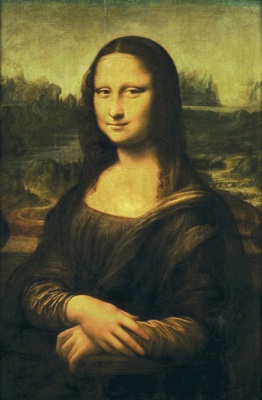
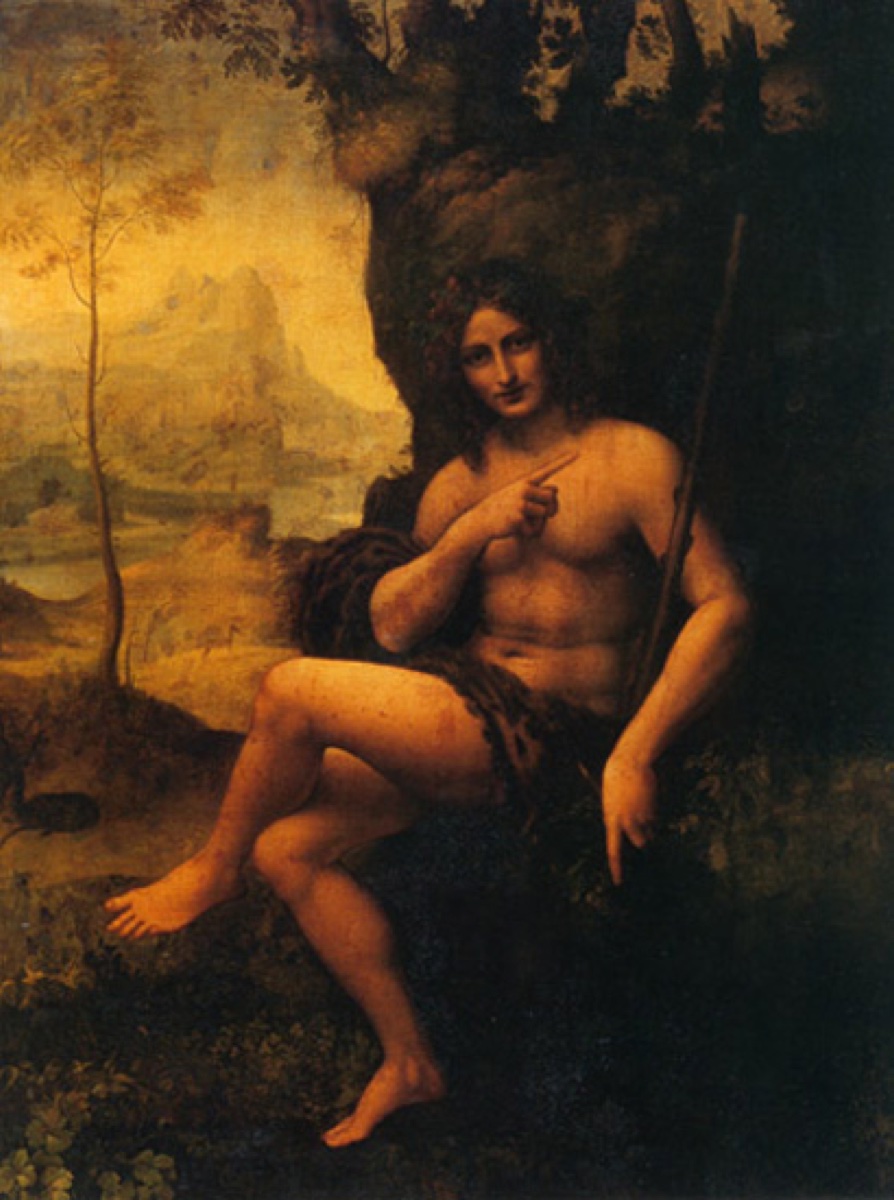
Leonardo da Vinci signs with Saint John the Baptist with the Attributes of Bacchus one of his last enigmatic works, completed around 1516 during his stay in France with Francis I. This painting presents an androgynous figure seated in a nonchalant pose at the foot of a tree, his body half-naked and draped in dark fabric, his right arm raised in a gesture pointing to the sky. The equivocal smile that illuminates his face inevitably recalls that of the Mona Lisa, creating an atmosphere of mystery and ambiguity characteristic of Tuscan genius. At his feet lies a panther skin, a traditional attribute of Bacchus, while a twilight landscape bathed in golden light extends in the background, evoking an idealized nature where ancient architecture can be discerned.
Leonardo da Vinci's sfumato technique, his stylistic signature, reaches absolute mastery here. The contours fade into imperceptible transitions between shadow and light, giving the figure a presence that is both carnal and ethereal. The subtle modeling of the male body testifies to the artist's profound anatomical knowledge, while the color palette dominated by ochres, browns, and golds creates a warm and enveloping harmony. This work perfectly illustrates the spirit of the Italian High Renaissance, a period when humanism brought together Christian iconography and references to pagan Antiquity.
Housed in the Louvre Museum in Paris, this painting long sparked debate and questioning. Saint John the Baptist, the ascetic prophet of the desert, is here adorned with the attributes of Bacchus, the Roman god of wine and drunkenness. This fusion of the sacred and profane reveals Leonardo's intellectual freedom, transcending religious conventions to explore the ambivalence of the human condition. The work continues to exert a lasting fascination, embodying the timeless quest for an ideal of beauty where spirituality and sensuality meet.
If you appreciate "Saint John the Baptist with the Attributes of Bacchus" and other paintings by Leonard De Vinci, we offer you 10% off the purchase of an art poster from our partner europosters with the promo code GRANDSPEINTRES10.
Image license: faithful photographic reproduction of a two-dimensional public domain work of art.