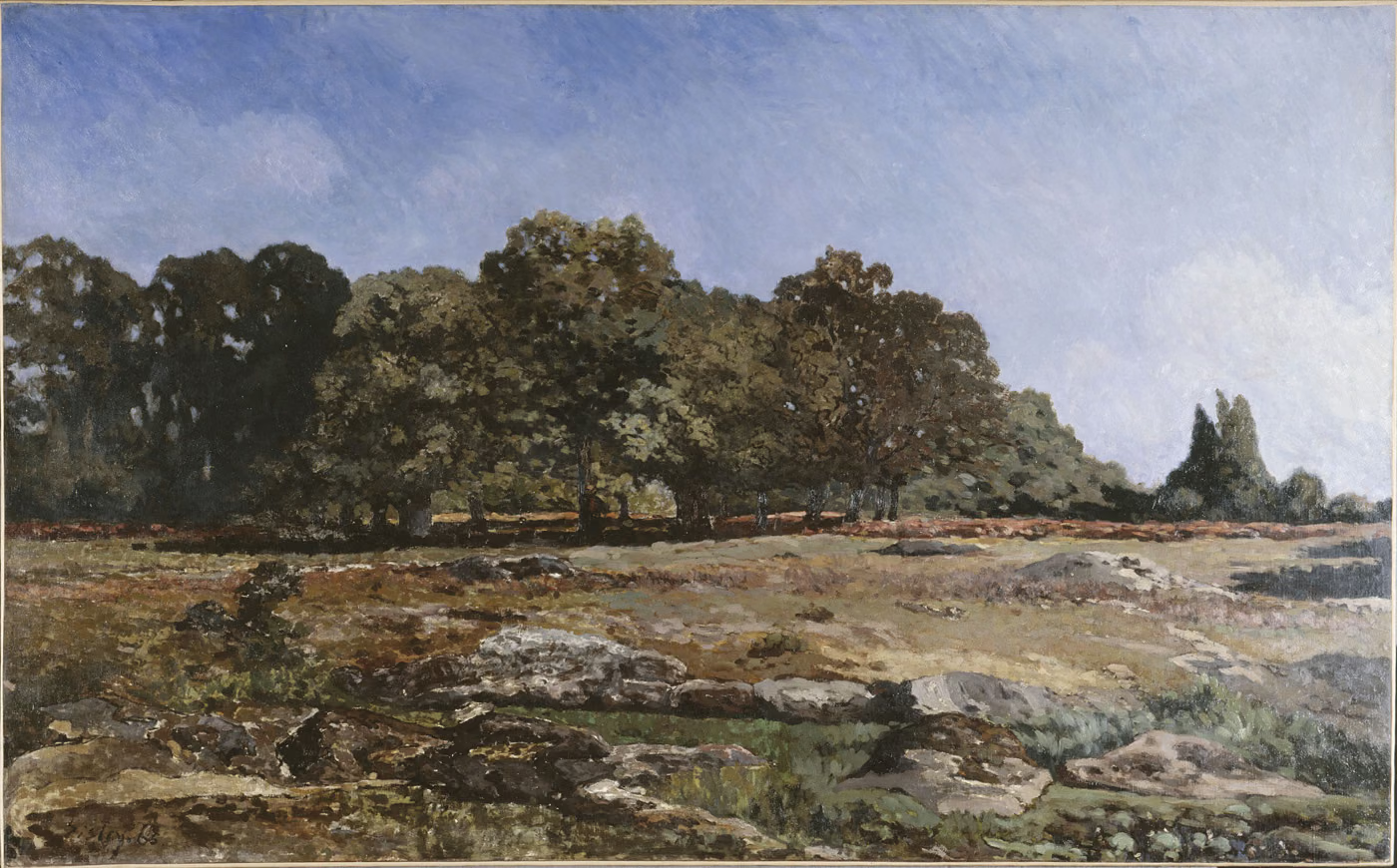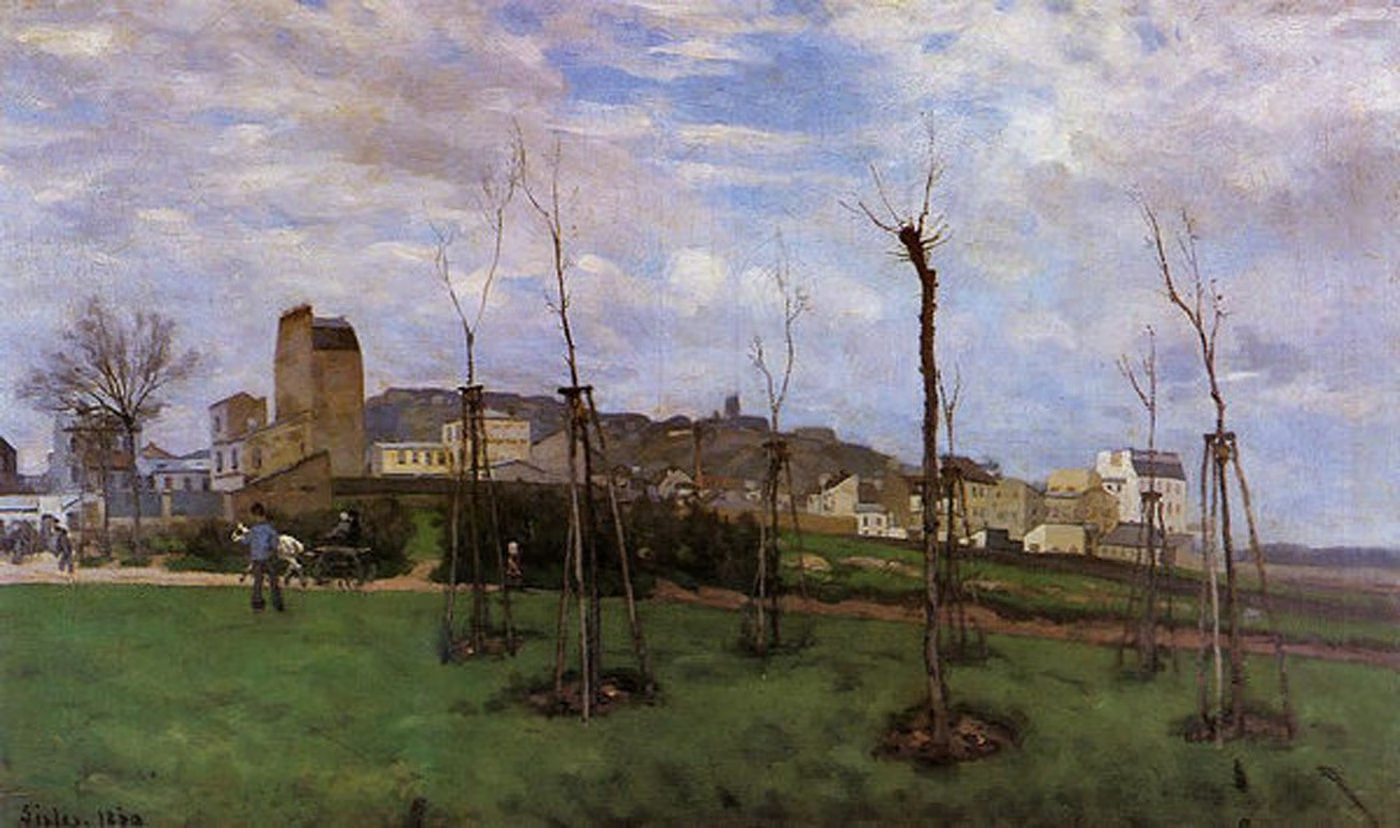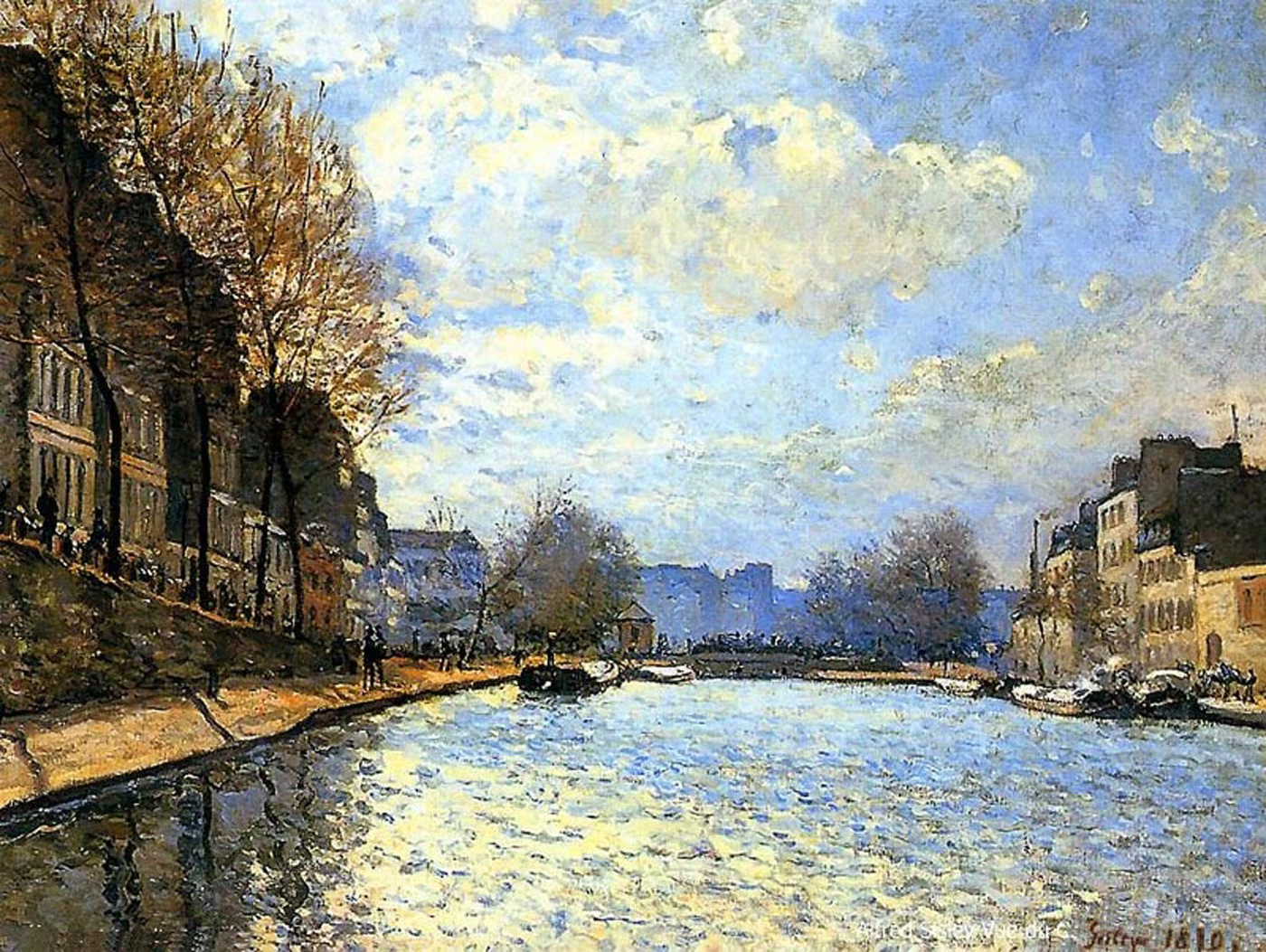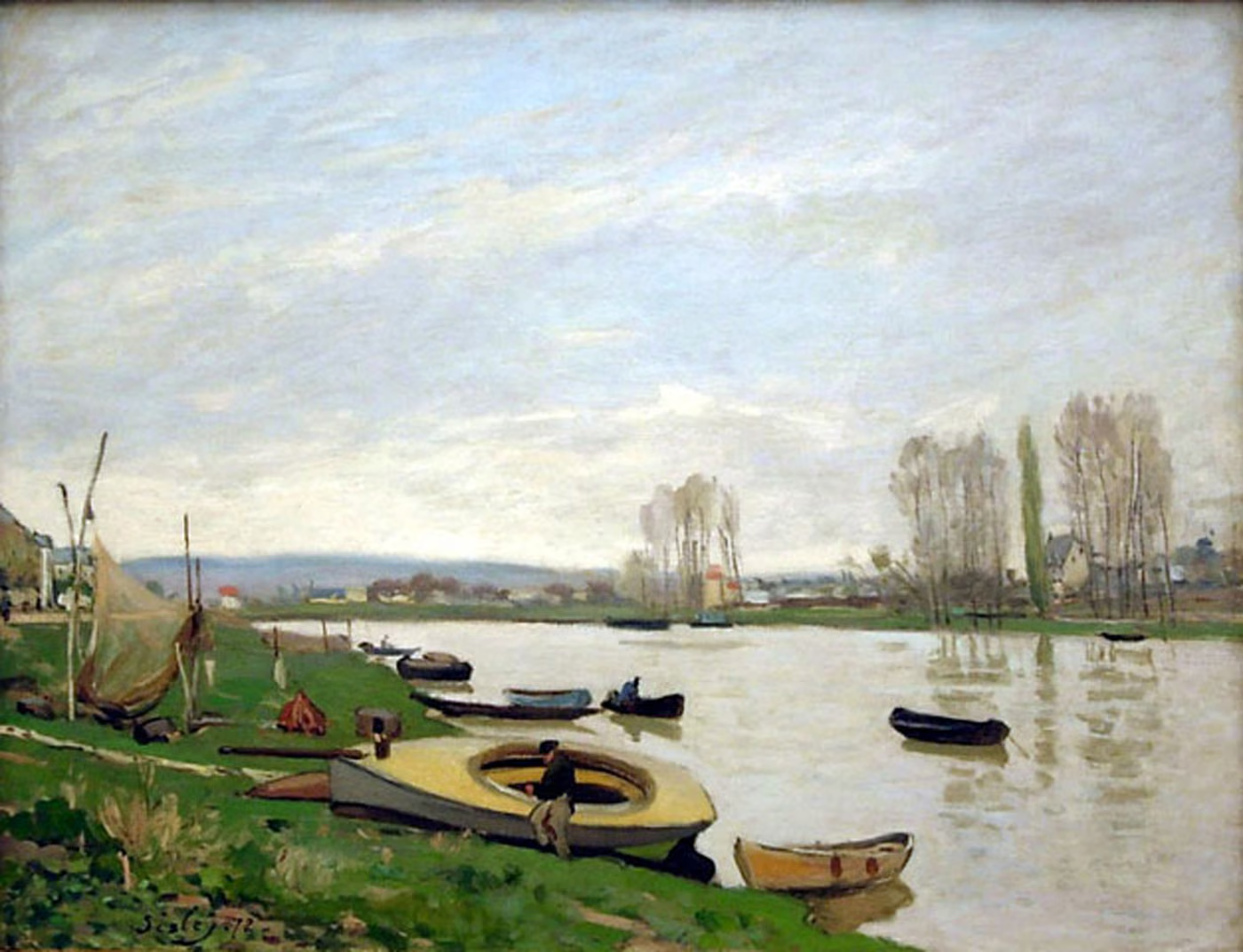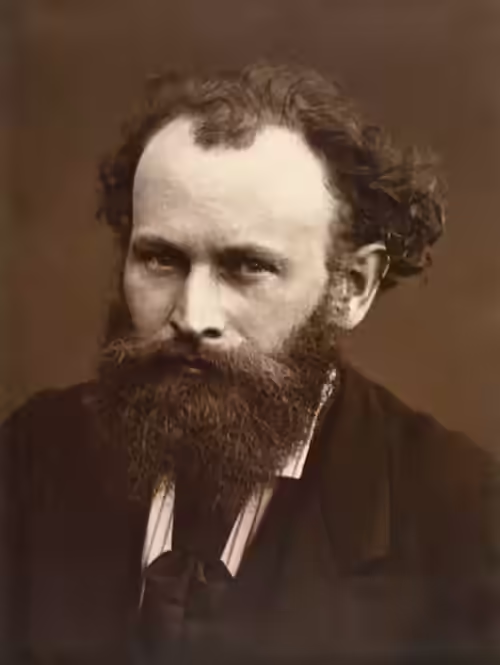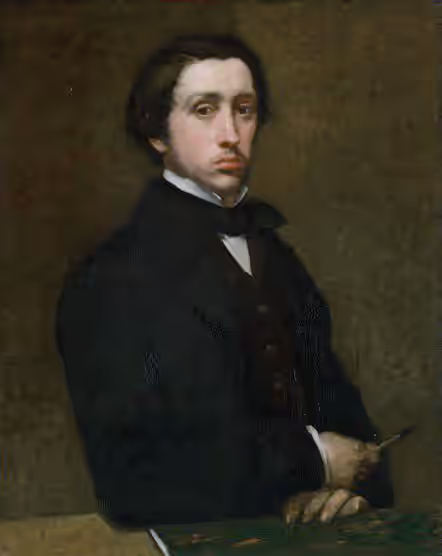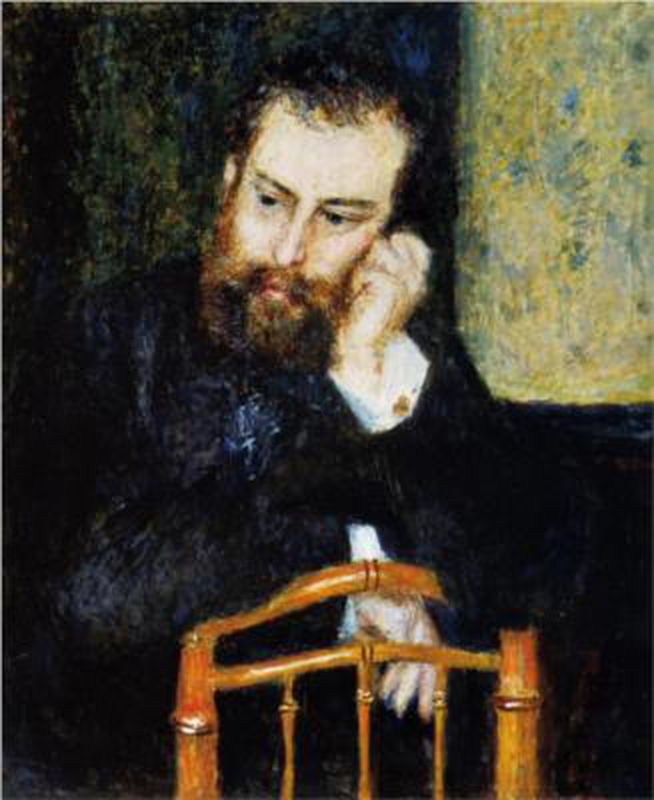
Alfred Sisley is one of the purest and most poetic painters of the Impressionist movement. Less celebrated than Monet, Renoir or Degas, he is no less one of the most coherent and accomplished representatives of the Impressionist ideal: to paint nature in its most fleeting luminous variations, with a sensitivity and delicacy that make each canvas a unique atmospheric experience. A painter almost exclusively of landscapes — rivers, floods, villages, shifting skies — he devoted his entire life to this pursuit with admirable humility and rigour, in a poverty and relative anonymity that never quite lifted during his lifetime.
An English Birth, a French Life
Alfred Sisley was born on 30 October 1839 in Paris, into an English family settled in France. His father, William Sisley, was a prosperous merchant specialising in the export of luxury goods — artificial flowers and silks — to South America. His mother, Felicia Sell, was a cultivated, music-loving woman. The family belonged to the prosperous cosmopolitan bourgeoisie of the capital.
In 1857, his father sent him to London to learn commerce, following family tradition. Alfred stayed four years, but developed more passion for museums and galleries than for business. There he discovered the English landscape painters — Constable, Turner — whose attention to atmospheric effects and the changing light of the sky exercised a lasting influence on his sensibility.
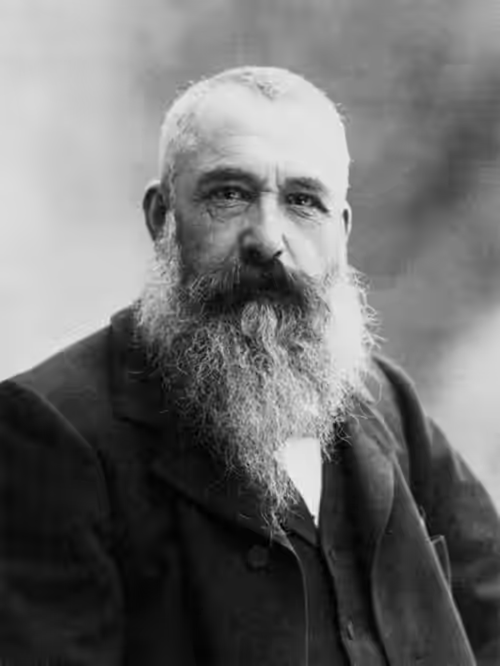
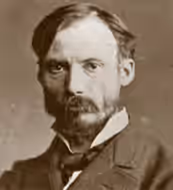
Back in Paris in 1861, he obtained his father's permission to study painting and entered the studio of the academic painter Charles Gleyre, where he almost immediately met Claude Monet, Pierre-Auguste Renoir and Frédéric Bazille. These four young painters, sharing the same aspirations and impatience with academic painting, would form the founding nucleus of what would become Impressionism. Sisley worked regularly with Monet and Renoir in the open air in the Forest of Fontainebleau during the years 1863–66.
Family Ruin and the Life of a Poor Painter
In 1870, the Franco-Prussian War disrupted Sisley's life. But it was his father's death in 1871 that proved the decisive catastrophe: the family business, already weakened by the war, collapsed completely, leaving Alfred without resources. He had been living for several years with Marie Lescouezec, a model he had met around 1866, with whom he had two children — Pierre in 1867 and Jeanne in 1869. He would not marry her until 1897, two years before his death.
From then on Sisley led the life of a painter in almost constant poverty, depending on the sale of his canvases and the support of a few dealers and collectors. He settled successively in several villages in the Paris region — Louveciennes, Marly-le-Roi, Sèvres, Moret-sur-Loing — seeking the light, rivers and landscapes that fed his work. Unlike Monet, who eventually achieved prosperity, or Renoir, whose society portraits assured him an income, Sisley remained in material hardship to the end of his life, a situation that affected him profoundly.
The Port-Marly Floods: The Masterpiece
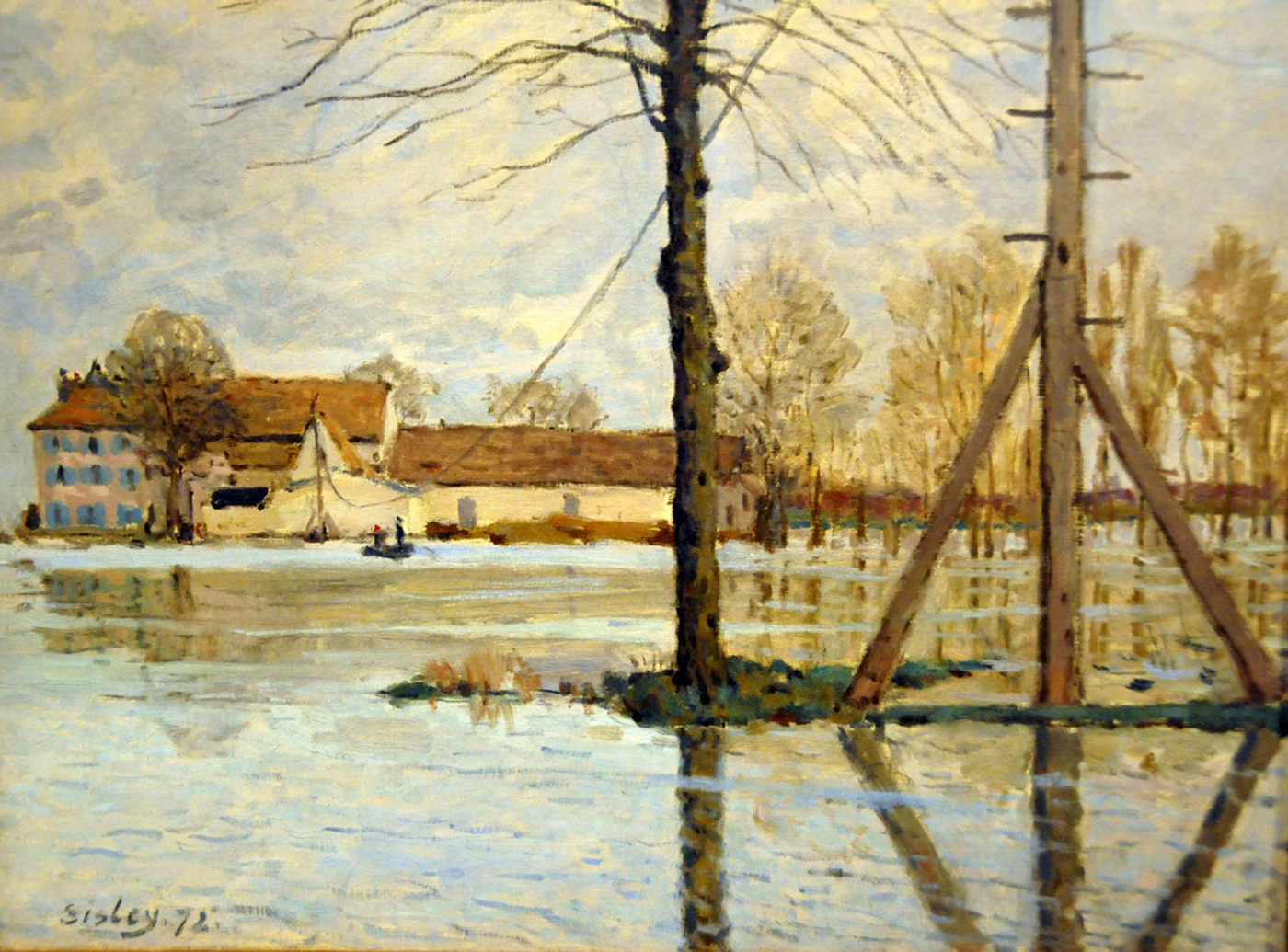
In 1872, and especially in 1876, Sisley produced one of his most celebrated series: the Floods at Port-Marly. The Seine in flood had inundated the village of Port-Marly, and Sisley painted the water reflecting the houses, trees and sky in a palette of greys and blues of extraordinary delicacy. These paintings — several of which are held at the Musée d'Orsay — rank among the finest of the entire Impressionist movement. The silence, the diffused light, the trembling reflection of façades in the water: everything is of absolute poetry and rightness.
The flood series illustrates what makes Sisley singular within Impressionism: a modesty of subject (no extraordinary spectacles, no dominant human figures) combined with extreme concentration on light and atmosphere, a search for emotion in quiet contemplation rather than in brilliance or movement.
Moret-sur-Loing and the Final Years
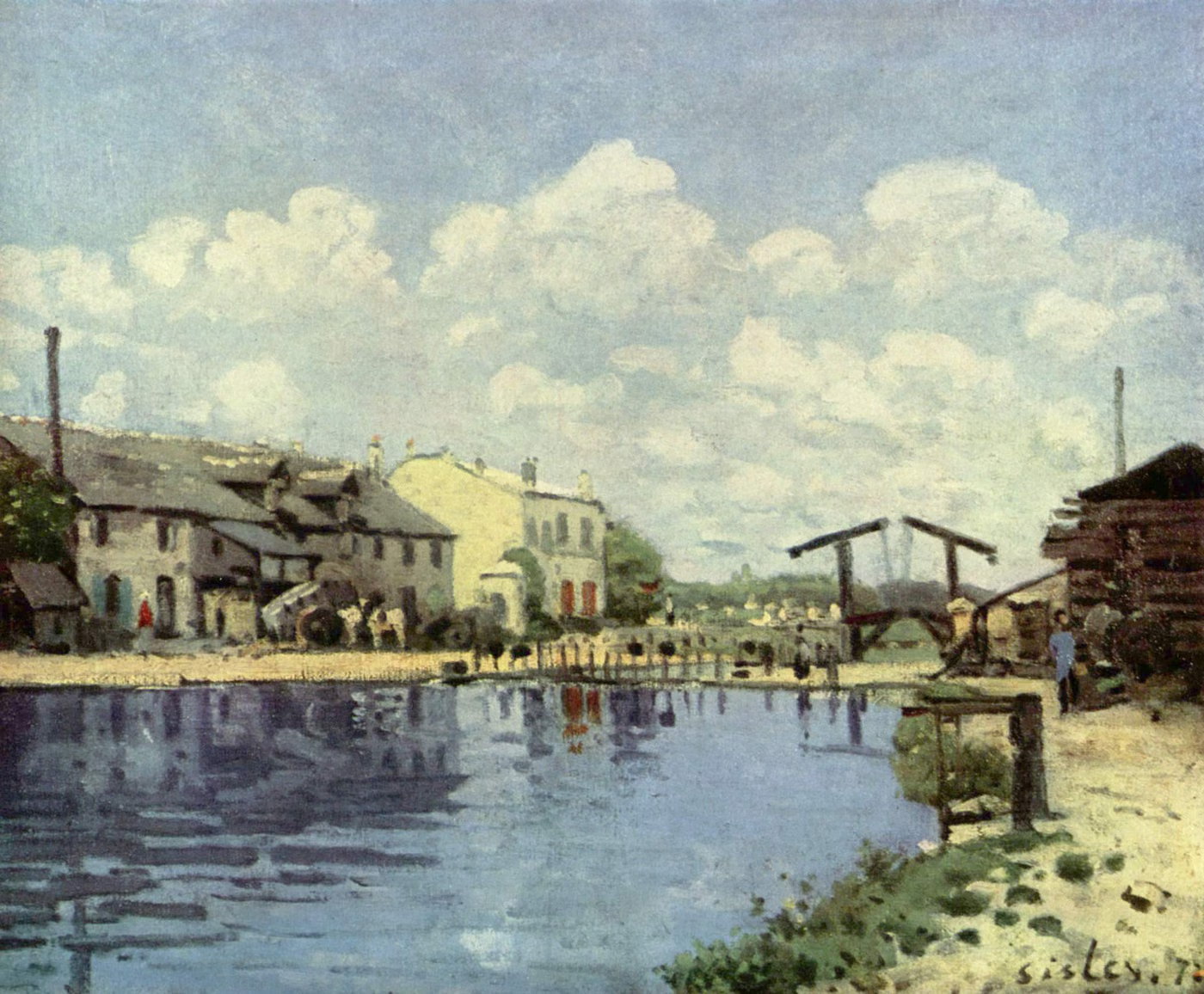
In 1880, Sisley settled in Veneux-les-Sablons, then in 1882 permanently in the region of Moret-sur-Loing, a medieval village at the confluence of the Loing and the Seine, on the edge of the Forest of Fontainebleau. He would remain there until the end of his life, painting incessantly the banks of the Loing, the poplars, the meadows, the cloudy skies and the variations of light with the seasons.
At Moret he produced several series that constitute the summit of his late work: views of the Loing canal, riverbanks at different hours of the day, and above all the series of the church of Moret (1893–94), in which he depicted the Gothic façade of the church under different lighting conditions — an undertaking that recalls Monet's Rouen Cathedral series and testifies to the Impressionists' interest in the serial effect.
His last years were marked by mounting difficulties: the illness of his companion Marie, his own, and above all the painful awareness that he was not receiving the recognition he deserved. His canvases sold badly, at derisory prices, while the celebrity of Monet, Renoir and Degas progressively consolidated itself. In 1897 he travelled to England, hoping to find there a recognition that his British nationality might logically have earned him — in vain.
Marie Lescouezec died of cancer in October 1898. Alfred Sisley followed her shortly: suffering himself from throat cancer, he died at Moret-sur-Loing on 29 January 1899, aged fifty-nine. He had asked Monet to look after his children.
A Posthumous Reputation
Only months after his death, an auction of his paintings in Paris fetched considerable prices — a cruel irony that illustrates the belated recognition so many artists have suffered. In the twentieth century, Sisley's reputation grew steadily, and his works are today held in the greatest museums in the world — the Musée d'Orsay in Paris, the Metropolitan Museum of Art in New York, Tate Britain in London, the Courtauld Institute — and fetch high prices at international auctions.
His nationality — British by birth, French by life and art — sometimes placed him in an uncomfortable intermediate position: neither quite claimed by France, nor fully recognised in Britain. But his work speaks beyond these borders: in his rivers and skies, his villages in the snow and his waterside scenes, he captured something universal about the fragility and beauty of the visible world.