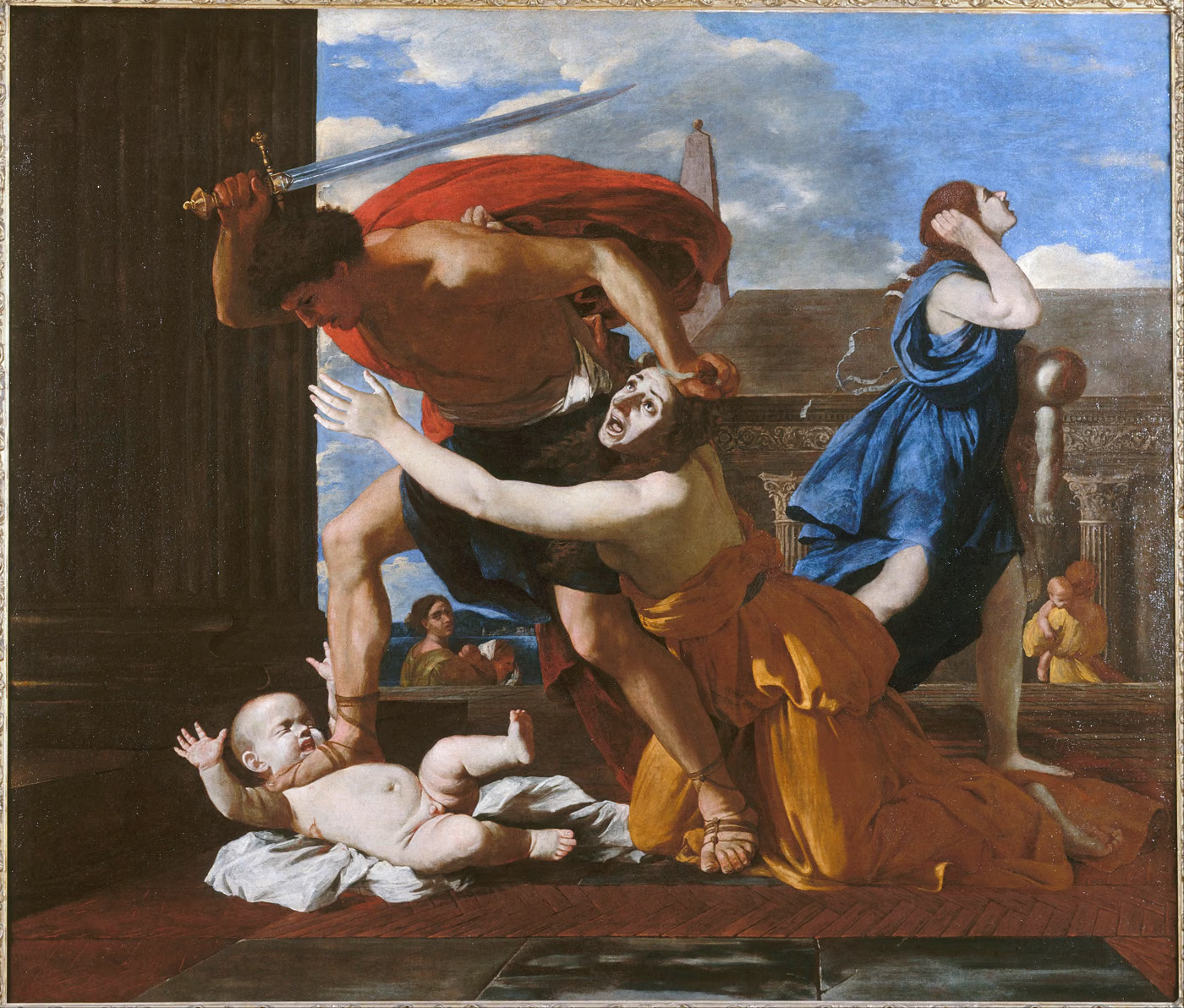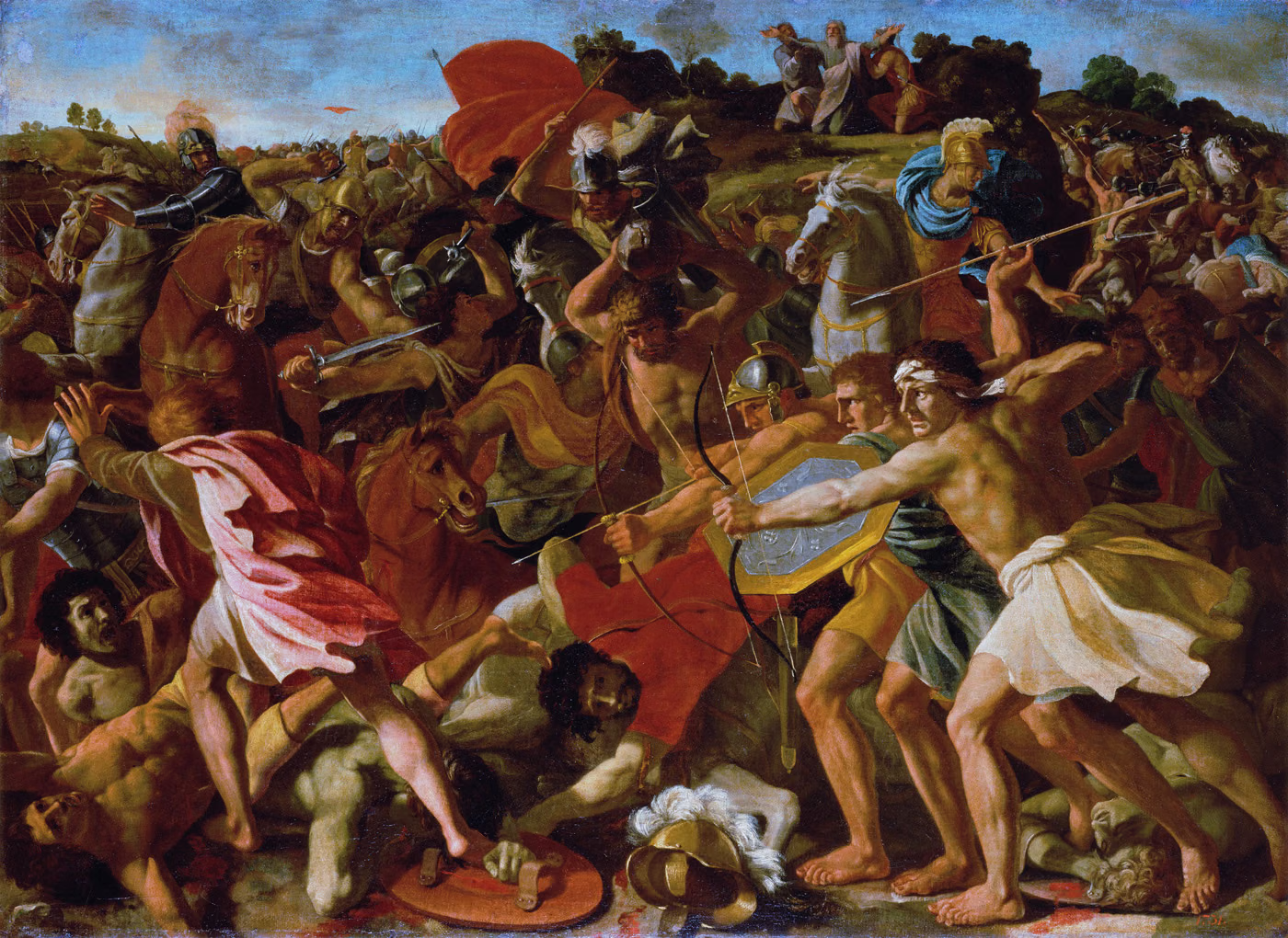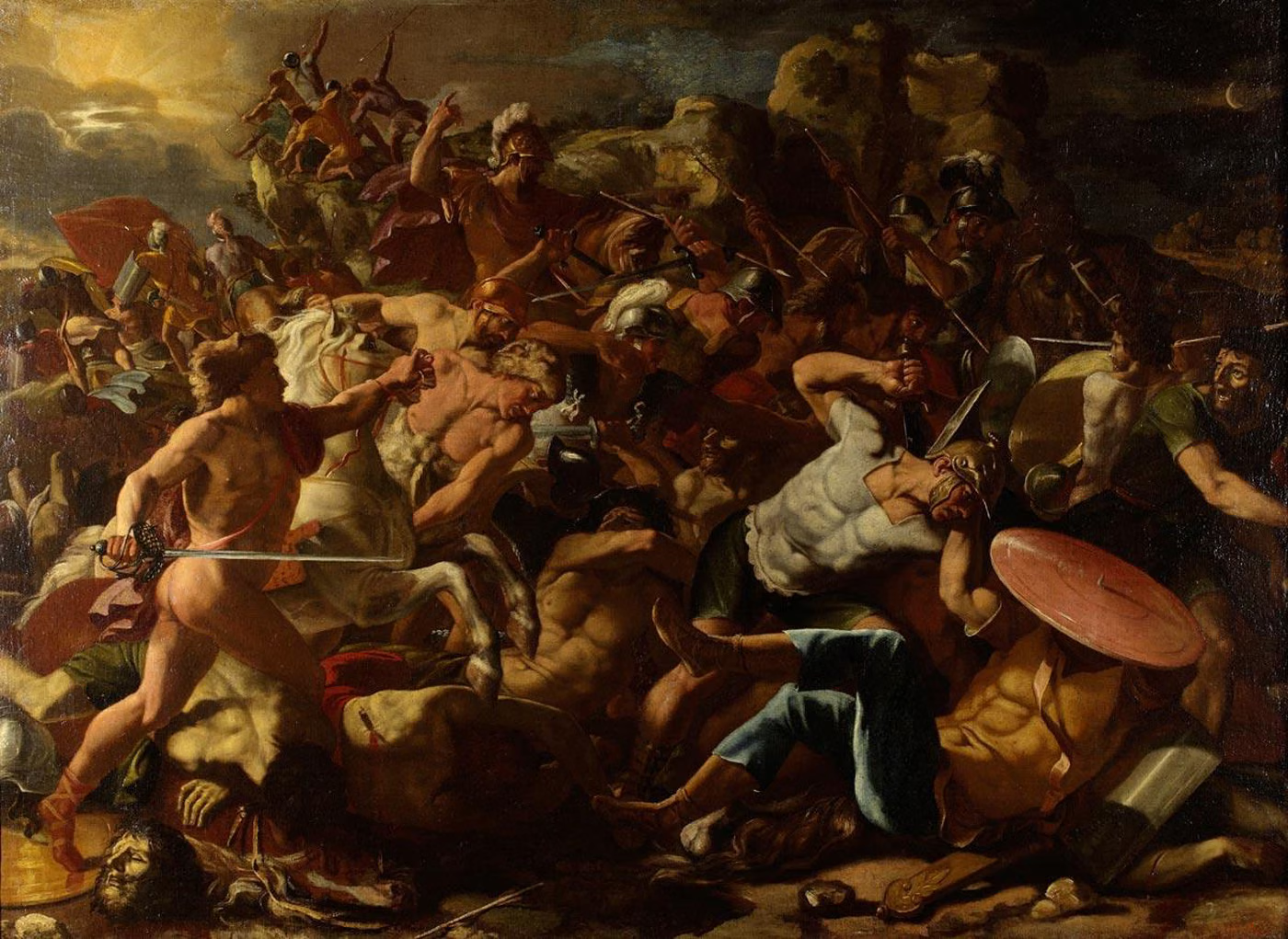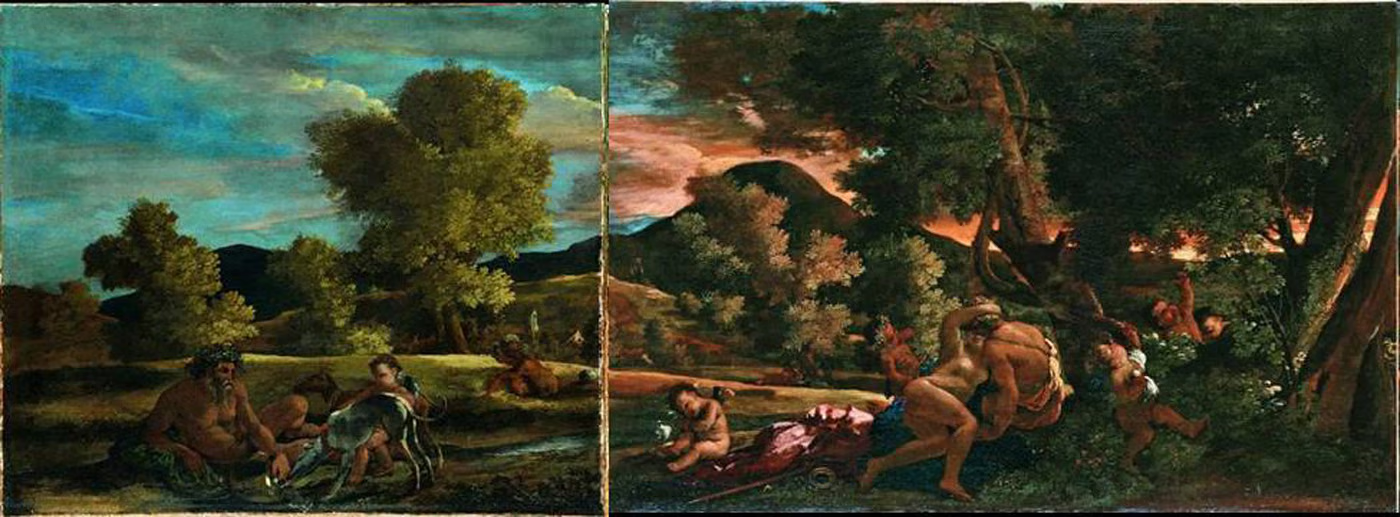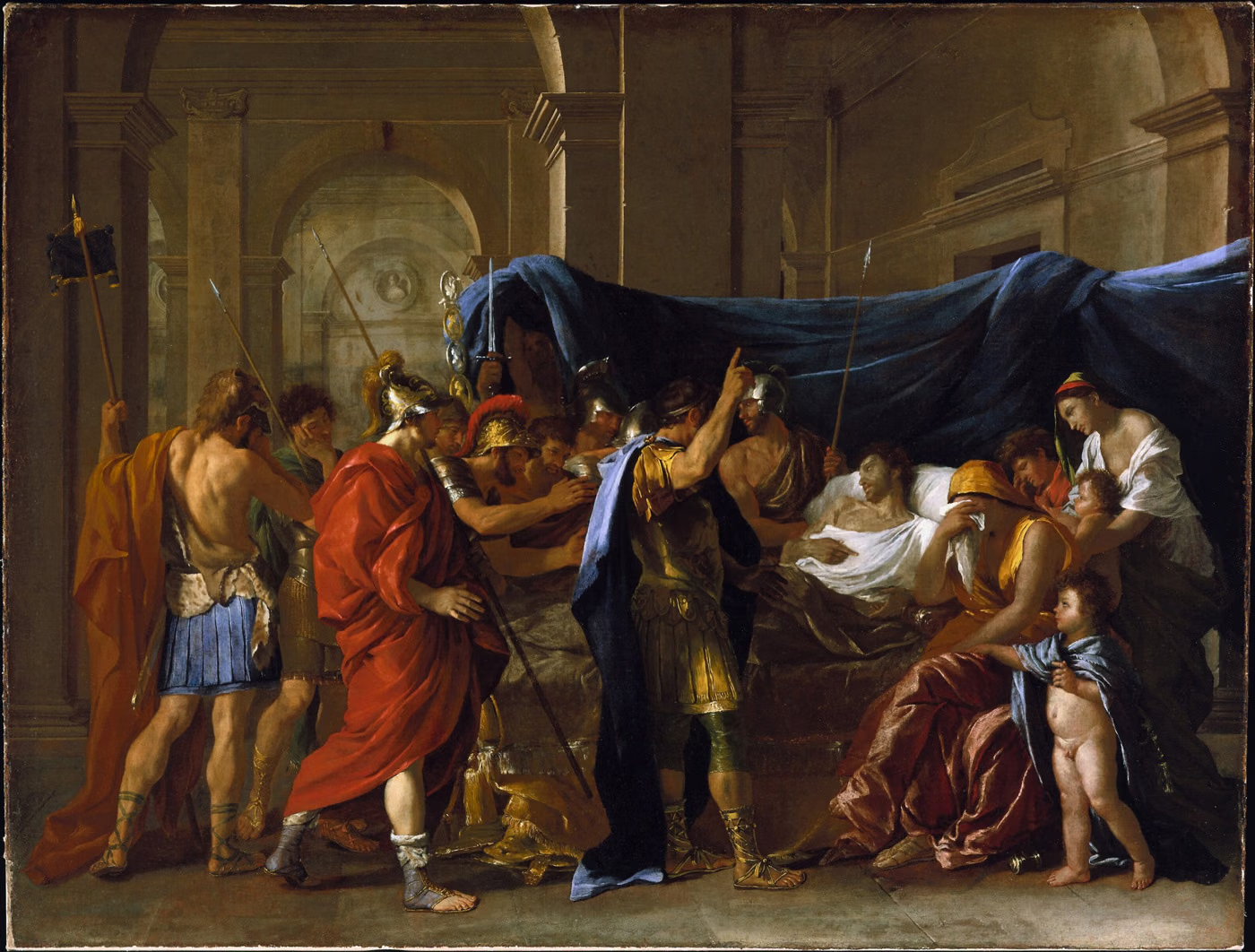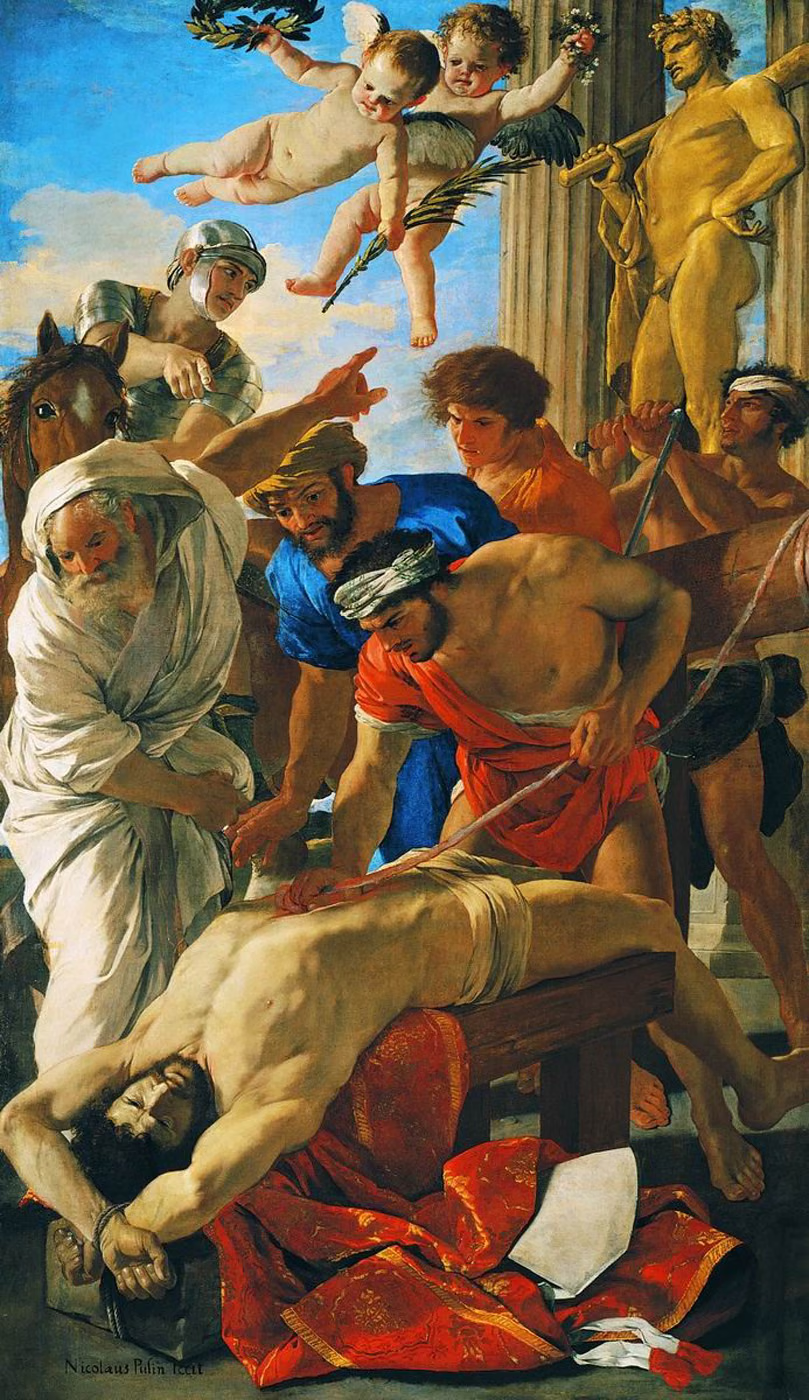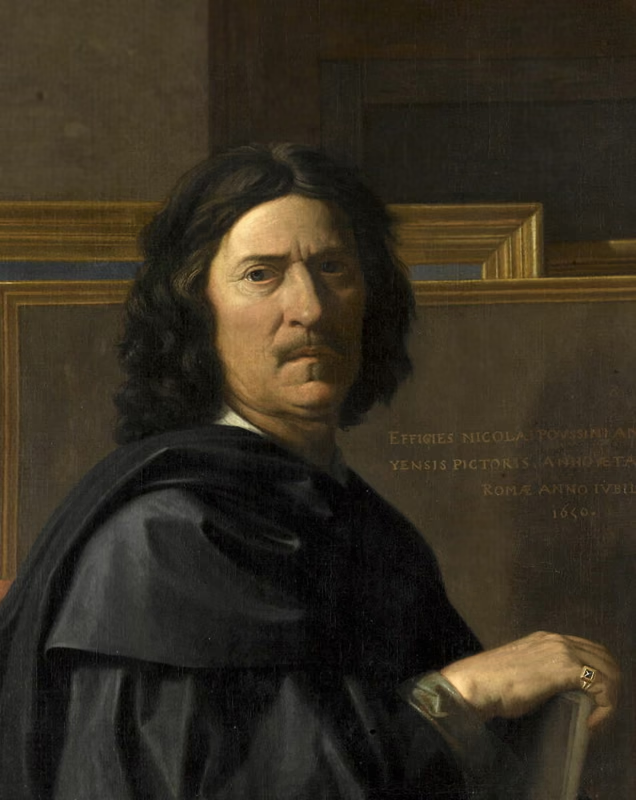
Nicolas Poussin is the greatest French painter of the seventeenth century and one of the founding figures of the classical tradition in painting. An artist of reason and order, of noble subjects and learned composition, he laid the foundations of what would become known as "French classicism" — an aesthetic that would dominate the Académie Royale de Peinture et de Sculpture for more than two centuries and whose influence would be felt as far as Cézanne and beyond. The paradox of his biography: this most "French" of painters spent almost his entire life in Rome, far from his native country, in uninterrupted dialogue with Greek and Roman Antiquity.
A Norman Childhood and an Early Vocation
Nicolas Poussin was born on 15 June 1594 in Les Andelys, in Normandy, into a modest family. His father, Jean Poussin, was a former soldier; his mother, Marie de Laisement, had been widowed before him. Nicolas received a solid but simple education, and revealed exceptional gifts for drawing at an early age. His artistic vocation crystallised in adolescence when the Mannerist painter Quentin Varin passed through Les Andelys to work on a local commission — the encounter determined Poussin to devote himself to painting.
Around 1612 he left Normandy for Paris, where he frequented the studio of Ferdinand Elle and studied the royal paintings in the Louvre, then accessible to artists. He made stays in Poitiers and Paris, met the poet Giovanni Battista Marino — who commissioned several drawings from him illustrating Ovid's Metamorphoses — and attempted repeatedly to reach Rome, which remained his principal objective.
Rome and the Discovery of Antiquity
In 1624, after several unsuccessful attempts, Poussin finally managed to settle in Rome, which would henceforth be his adopted homeland. He entered the entourage of Cardinal Francesco Barberini, nephew of Pope Urban VIII, and benefited from the patronage of the Cavaliere Cassiano dal Pozzo, a learned and passionate collector of antiquities who would become one of his principal patrons and friends. For Cassiano, Poussin produced a drawn reconstruction of the reliefs on Trajan's Column.
Rome offered him what he had come to find: Antiquity. He studied the Greek and Roman sculptures in the papal collections, copied bas-reliefs, measured the proportions of statues, read architectural treatises and the texts of the ancient poets. This immersion in Antiquity nourished a conception of painting radically different from the flamboyant Baroque then triumphant in Rome with Bernini and Pietro da Cortona: where those artists sought emotion through movement, colour and spectacle, Poussin sought truth through order, clarity and meaning.
In 1629 he contracted a serious illness — most likely syphilis — that left him weakened for several months. He was nursed by the Dughet family, with whom he was staying, and in 1630 married Anne-Marie Dughet, his host's daughter. This marriage of reason and affection gave him the domestic stability that would support his work.
The Theory of Modes and History Painting
During the 1630s and 40s, Poussin developed his most original pictorial theory: the theory of modes, inspired by ancient Greek musical theory as transmitted through classical authors. Each subject, according to Poussin, calls for a specific pictorial "mode" — a register of colours, forms and expressions adapted to the nature of the theme. The Dorian mode, grave and severe, suits heroic subjects; the Phrygian, violent and agitated, battle scenes; the Lydian, soft and melancholy, subjects of love or mourning.
This theory, expounded in a celebrated letter to his friend Canon Chantelou in 1647, was not a rigid constraint but a requirement of correspondence between form and content — the conviction that painting, like music, must produce in the spectator a precise emotional state appropriate to the subject depicted.
His great history paintings of this period — The Israelites Gathering the Manna in the Desert (1637–39, Louvre), The Plague of Ashdod (1631, Louvre), The Rape of the Sabine Women (1637–38, Louvre) — illustrate this compositional rigour: the figures are arranged with the precision of an antique bas-relief, gestures are eloquent and measured, colours distributed with extreme care for visual balance.
The Paris Interlude and Return to Rome
In 1640, Louis XIII and Richelieu summoned Poussin to Paris with the title of "first ordinary painter to the king." This stay, which he approached reluctantly, proved difficult: court intrigue, the jealousy of Parisian painters and constraining official commissions all weighed on him. He found the atmosphere of the French capital intolerable and returned to Rome in 1642, this time definitively, citing his wife's illness. He would never return to France.
Back in Rome, he entered the most accomplished period of his career. His patrons were now principally scholars, enlightened amateurs and senior churchmen — Cassiano dal Pozzo, Chantelou, Pointel — who commissioned works of medium format, intended for private cabinets rather than public spaces. This relative freedom allowed him to deepen his most personal inquiries.
Philosophical Landscapes: Et in Arcadia Ego
From the 1640s, and especially in the decade 1650–60, Poussin turned increasingly towards landscape — not as backdrop or accessory, but as a subject in its own right, the vehicle for a philosophical meditation on time, nature and human destiny.
The two versions of Et in Arcadia Ego (the first c.1627, Chatsworth House; the second c.1637–38, Louvre) illustrate this shift. In the Louvre version — the more famous — shepherds discover in an ideal Arcadian landscape a tomb bearing the Latin inscription Et in Arcadia ego ("And I too have lived in Arcadia" — or, in another reading: "Even in Arcadia, I am present"). Death infiltrates paradise; beauty cannot exclude awareness of finitude. This meditation, expressed with absolute serenity and restraint, is one of the most accomplished formulations of the Stoic sensibility in the entire history of painting.
The four Seasons painted between 1660 and 1664 (Louvre), one of his last great works, develops this metaphysical dimension with testamentary breadth: each season is illustrated by an episode from the Old Testament — Spring by the Garden of Eden, Summer by Ruth and Boaz, Autumn by the Spies of Canaan bearing a bunch of grapes, and Winter by the Flood — composing a meditation on the cycles of life, nature and sacred history.
Final Years and Death
Poussin aged in Rome in relative solitude, increasingly afflicted by trembling hands — possibly Parkinson's disease — which made work progressively more difficult. He continued to paint with admirable stubbornness, seeking in his late works a new formal simplification and chromatic depth. His wife Anne-Marie died in 1664. He followed her on 19 November 1665, in Rome, aged seventy-one.
A Founding Legacy
Poussin's influence on French and European painting is immense and enduring. The Académie Royale de Peinture, founded in 1648, made his work the absolute reference for academic teaching — the traditional opposition between the "Poussinistes" (advocates of drawing and reason) and the "Rubénistes" (advocates of colour and feeling) is one of the most productive aesthetic debates in the history of art. Ingres, David and all the Neoclassical painters of the nineteenth century claimed him as their model. Cézanne, who admired his compositions deeply, aspired to "redo Poussin from nature." His work is today held principally at the Louvre, which possesses the finest collection of his paintings in the world, and at the Museo del Prado in Madrid.