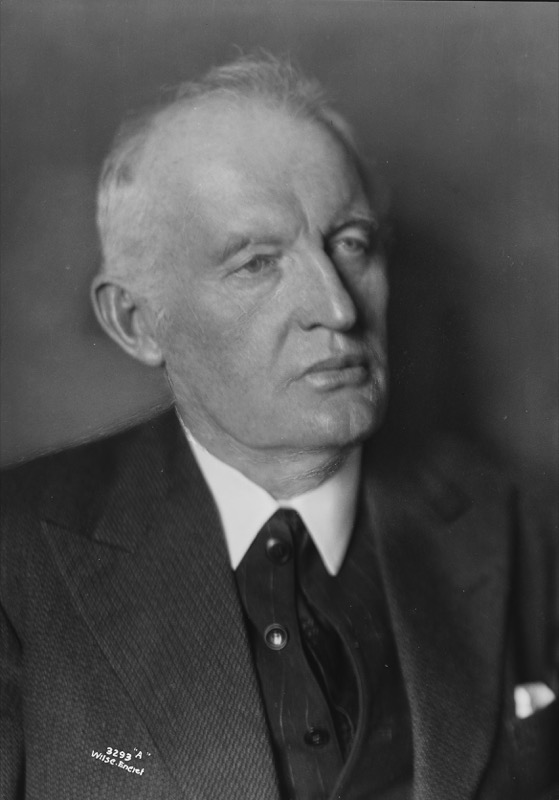
Edvard Munch is one of the most important artists of the late nineteenth and early twentieth centuries. A major figure of Expressionism and precursor of the Symbolist movement, he transformed Western art by making the canvas a mirror of his deepest anxieties. His work, dominated by the themes of death, love, jealousy and existential anguish, continues to exercise universal fascination more than a century after its creation.
Formative Years: A Childhood Marked by Bereavement
Edvard Munch was born on 12 December 1863 in Løten, Norway, into a family profoundly marked by illness and loss. His father, Christian Munch, was a military doctor — a pious and strict man who transmitted to his son a religious sensibility tinged with anxiety. His mother, Laura Cathrine Bjølstad, died of tuberculosis in 1868 when Edvard was just five. His elder sister Sophie succumbed to the same disease in 1877 at the age of fifteen. These successive bereavements left indelible traces on the artist that can be found throughout his work.
The family moved to Christiania (now Oslo) in 1864, where Edvard grew up in an environment of melancholy and financial precariousness. He himself suffered frequent respiratory illness in childhood. Another sister, Laura, was committed to a psychiatric institution in adulthood. This accumulation of trials forged in Munch a dark worldview in which illness and death seemed omnipresent.
In 1879, he began studying engineering, but soon gave it up to devote himself to painting. In 1881, he enrolled at the Royal School of Art and Design in Oslo, studying under the sculptor Julius Middelthun. He subsequently benefited from the teaching of the Realist painter Christian Krogh, an important figure on the Norwegian art scene of the period.
Influences and Early Works
Munch's first paintings were inscribed in the Naturalist and Realist tradition fashionable in Scandinavia in the 1880s. But it was during his stays in Paris — notably thanks to a state grant that allowed him to travel there in 1889 — that he discovered Impressionism and, above all, Post-Impressionism. The work of Paul Gauguin and Vincent van Gogh, with their expressive use of colour and their attention to interior life, exercised a decisive influence on his approach.
In Paris, he also frequented Symbolist circles and the intellectual and bohemian milieux of Montmartre. These encounters led him to explore more personal paths and to abandon the representation of the outer world in favour of the exploration of psychological states.
In 1890, he began working on an ambitious series he named The Frieze of Life, a vast ensemble of paintings organised around the themes of the awakening of love, love in bloom and in dissolution, anxiety and death. This frieze constitutes the heart of his work and illustrates his conception of painting as a tool for introspection.
The Scream and International Consecration
Munch's most celebrated work, The Scream (Skrik in Norwegian), was produced in 1893. It depicts an androgynous figure with a face distorted by terror, standing on a bridge above a fjord in red and orange tones, while two dark silhouettes recede in the background. Munch himself described in his diary the experience that gave rise to this painting: while out walking, he was suddenly seized by intense anxiety and had the vision of the sky turning blood-red, seeming to express an infinite scream from nature.
The Scream exists in several versions: two oil paintings (1893 and 1910), two pastels and a lithograph. One version is held at the National Gallery in Oslo, another at the Munch Museum in the same city. In 2012, one of the pastel versions was sold at Sotheby's for 119.9 million dollars, setting a record for a work by the artist.
Beyond its aesthetic value, The Scream has become one of the most powerful visual symbols of modern anxiety, an icon of the human condition on a par with Leonardo's Mona Lisa.
Personal Crises and Commitment
Munch's personal life was marked by numerous crises. His love relationships were turbulent, notably with Tulla Larsen, with whom he had a painful liaison between 1898 and 1902. In 1902, during a quarrel, an accidental gunshot cost him a phalanx of the index finger of his left hand. A notorious drinker, Munch suffered from depression and hallucinations. In 1908, after a serious nervous breakdown in Copenhagen, he was hospitalised for several months in Dr Daniel Jacobson's clinic. This stay proved a turning point: on his discharge, his mental state had stabilised and his pictorial style evolved towards lighter tones and less oppressive compositions.
Artistic Maturity and Recognition
Back in Norway, Munch settled progressively into a more settled existence. In 1909, he acquired the property of Ekely, near Oslo, where he would live until his death. He worked there with remarkable productivity, producing murals, prints and numerous self-portraits in which he documented his ageing with striking lucidity.
Between 1909 and 1916, he completed a monumental commission for the University of Oslo: the frescoes of the Aula, which depict allegorical figures such as The Sun, Alma Mater and History. These works testify to a more serene and luminous vision of the world.
Over the decades, his reputation grew throughout Europe. His Berlin exhibition of 1892 had already caused such a scandal that the Association of Berlin Artists had decided to close it after only a week — inadvertent publicity that contributed to his renown.
Final Years and Legacy
When the Nazis came to power in Germany in 1933, they classified Munch's works as "degenerate art" (Entartete Kunst) and removed them from German museums. Munch, whose international reputation was well established, experienced this period with pain.
He died on 23 January 1944 in Oslo, aged eighty, a few weeks after his birthday. He bequeathed the entirety of his remaining body of work to the city of Oslo — more than 1,100 paintings, 4,500 drawings and 18,000 prints. This exceptional fund forms the collection of the Munch Museum, inaugurated in 1963 and transferred to a spectacular new building in 2021.
Munch's influence on twentieth-century art is considerable. The German Expressionists of the Die Brücke group, founded in 1905, openly acknowledged their debt to him. His exploration of the human psyche and his formal innovations — flat areas of colour, undulating lines, distortion of forms — opened paths that modern art followed extensively. Edvard Munch remains, today still, one of the deepest and most moving painters in the history of Western art.