
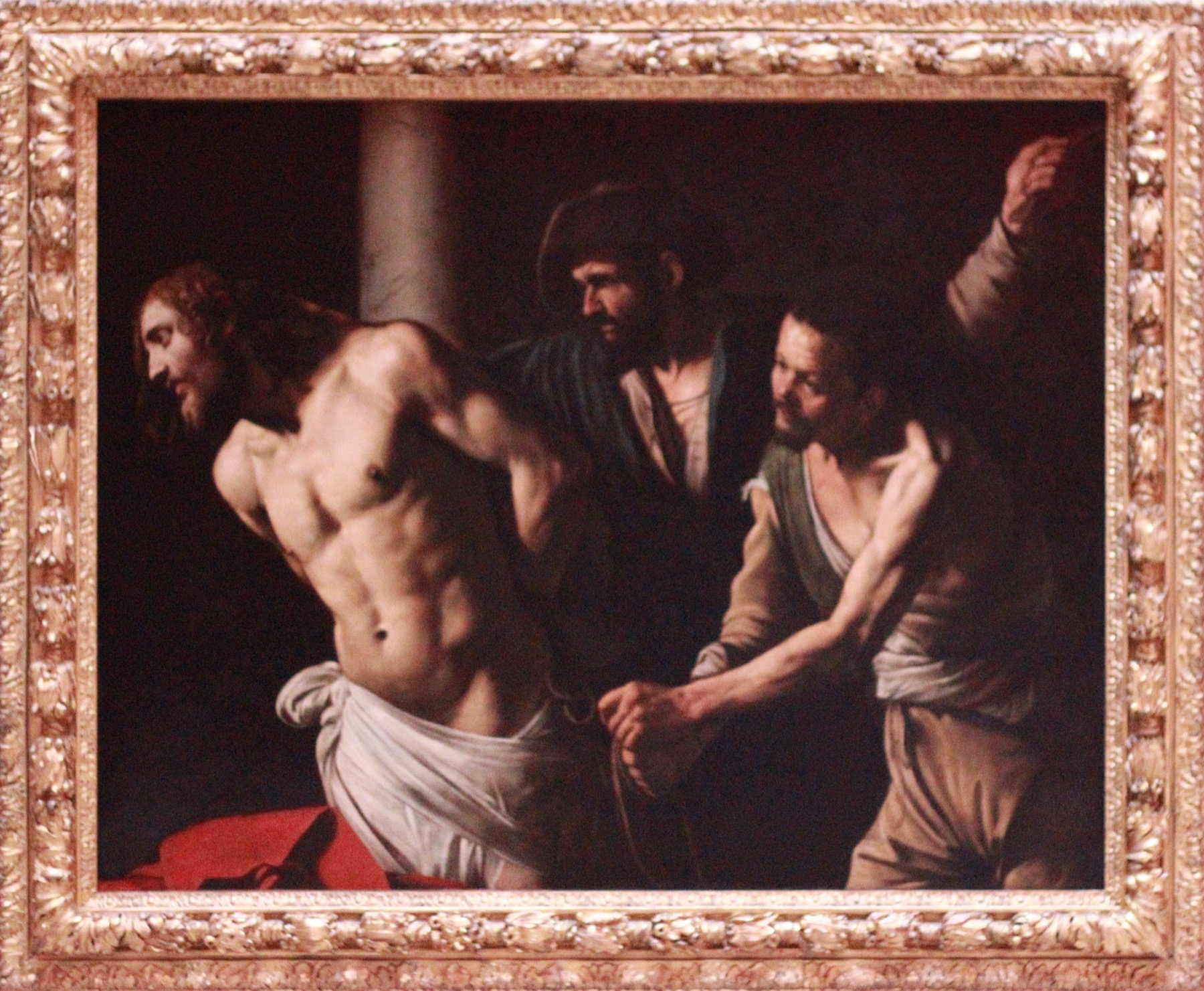
The Flagellation of Christ
Artwork by Le Caravage • 1607
🖼️ Reproduce this artwork — 📗 Book on Le Caravage on Amazon
About this artwork - painting analysis
Painted in 1607 during Caravaggio's Neapolitan exile, The Flagellation of Christ bears witness to a crucial moment in the Lombard master's career, when he was in flight following the murder of Ranuccio Tomassoni in Rome. This monumental canvas depicts the painful episode of the Passion in which Christ, bound to a column, suffers the blows of his torturers before crucifixion. The painter chose to capture the paroxysmal moment of torture with contained yet palpable violence, privileging dramatic intensity over complaisance in horror. The triangular composition organizes three figures around the tortured body: two executioners frame Christ, whose taut musculature conveys physical suffering with striking anatomical realism.
Caravaggio's characteristic chiaroscuro achieves remarkable expressive power here. Raking light sculpts the bodies emerging from an almost absolute dark background, creating violent contrasts that heighten the dramatic tension of the scene. Christ's bare torso, illuminated as if by an invisible divine source, contrasts with the dark garments of the torturers plunged into shadow. This technique of tenebrism, perfected by the artist, transforms the religious scene into a visceral experience where the viewer becomes a direct witness to the martyrdom. The white drapery and red cushion in the foreground introduce a chromatic note into this palette dominated by browns, ochres, and deep blacks.
Housed in the reserves of the Capodimonte Museum in Naples, this Flagellation illustrates Caravaggio's Neapolitan period, marked by darker and more introspective spirituality. The influence of this work on Neapolitan Caravaggists was considerable, spreading the master's dramatic naturalism and tenebrism throughout southern Italy. Through its deeply moving humanity and refusal of idealization, this canvas embodies the Baroque pictorial revolution initiated by Caravaggio, who substituted crude representation of the human condition and faith for Mannerist conventions.
If you appreciate "The Flagellation of Christ" and other paintings by Le Caravage, we offer you 10% off the purchase of an art poster from our partner europosters with the promo code GRANDSPEINTRES10.
Image license: faithful photographic reproduction of a two-dimensional public domain work of art.


