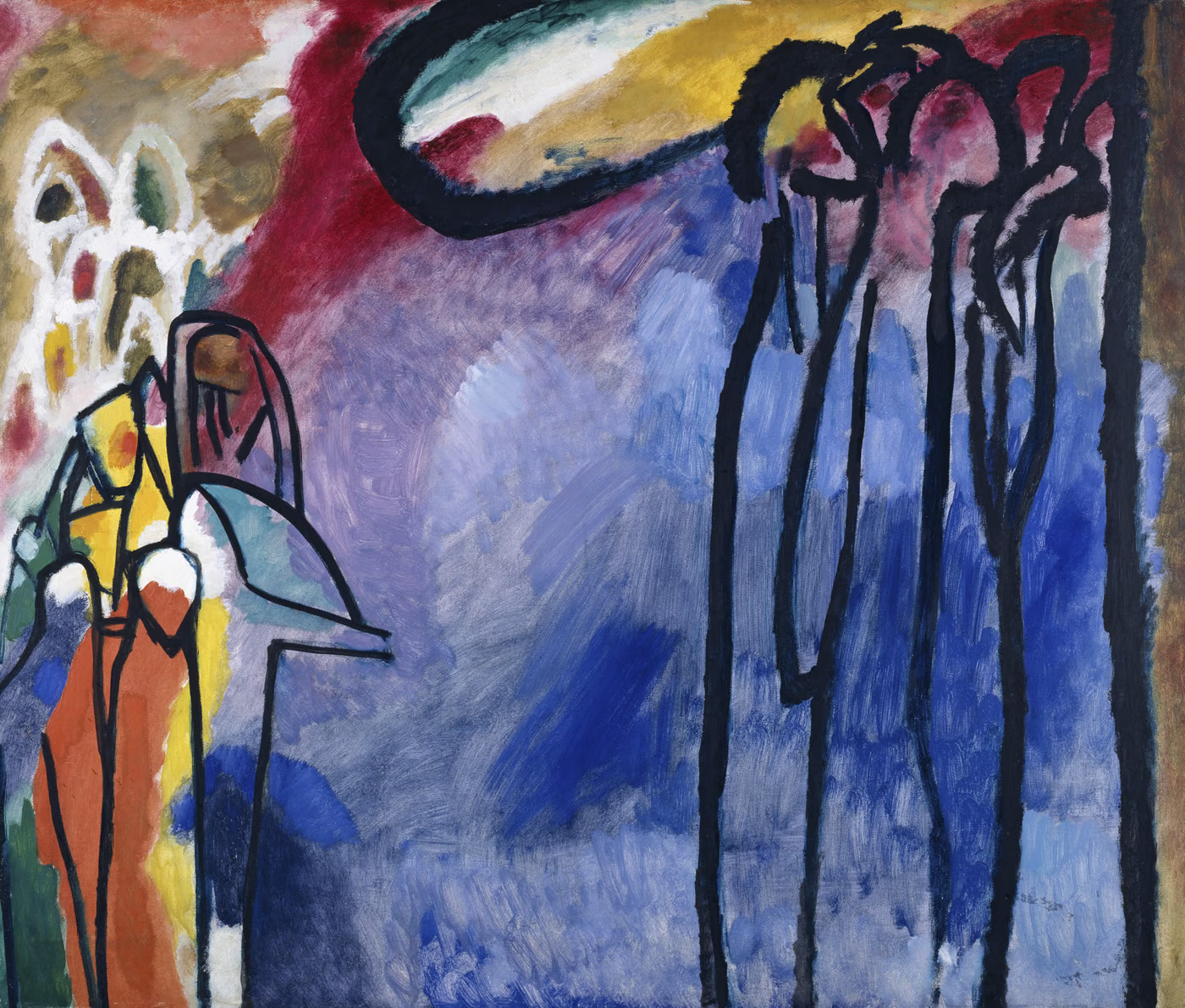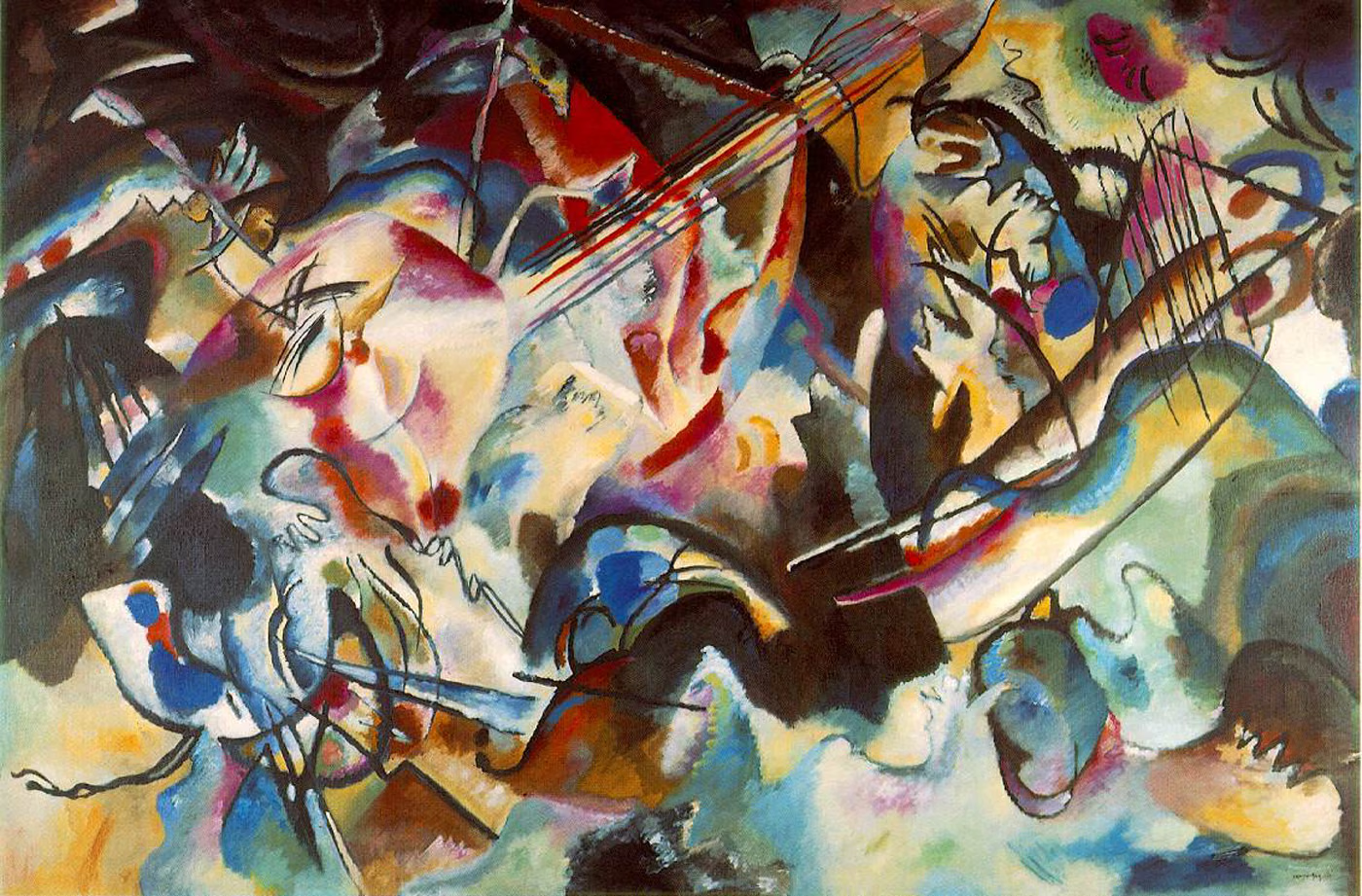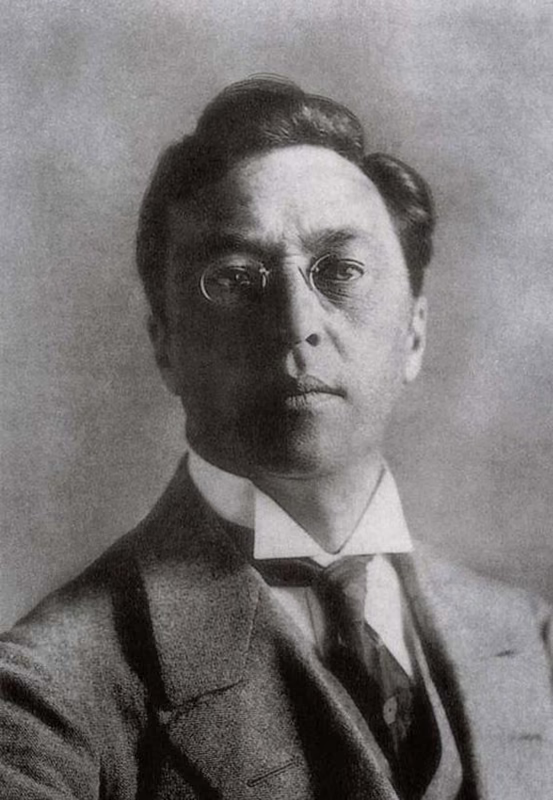
Wassily Kandinsky is one of the most revolutionary artists in the history of modern art. A Russian-born painter, theorist and educator, he is generally recognised as the first artist to have deliberately produced an abstract painting — a work that renounces entirely the representation of the visible world and speaks only through colours, forms and lines. This rupture, consummated around 1910–11, was not a gratuitous or nihilistic gesture: it was the fruit of a deep conviction, nourished by philosophy, spirituality and the analogy with music, that art can and must reach the inner life of the human being through pure means, freed from all reference to the material world. Kandinsky not only inaugurated this path but theorised it with a rigour and depth that made him one of the most important thinkers of twentieth-century art.
A Russian Youth and a Late Vocation
Wassily Vassilyevich Kandinsky was born on 16 December 1866 in Moscow, into a prosperous and cultivated family. His father was a tea merchant of Siberian origin; his mother was Muscovite. As a child he grew up in a musical and artistic environment — he learned piano and cello from an early age, developing a sensitivity to music that would play a capital role in his later conception of painting.
Following family expectations, he studied law and economics at Moscow University, graduating in 1892. He pursued a promising academic career — he was even considered for a law professorship at the University of Dorpat in Estonia — when two decisive experiences tipped his life in a different direction.
The first was the discovery, at an exhibition in Moscow in 1895, of Monet's Haystacks. Kandinsky was stunned: he did not immediately recognise the subject of the painting and realised with a mixture of awe and wonder that painting could act on him with emotional power independent of what it represented. The second was hearing Wagner's Lohengrin, which revealed to him music's capacity to provoke inner colour visions — a synaesthesia that would underpin his entire theory of correspondence between sounds and colours.
In 1896, at thirty, he gave up his legal career and left for Munich to study painting.
Munich and the Early Years
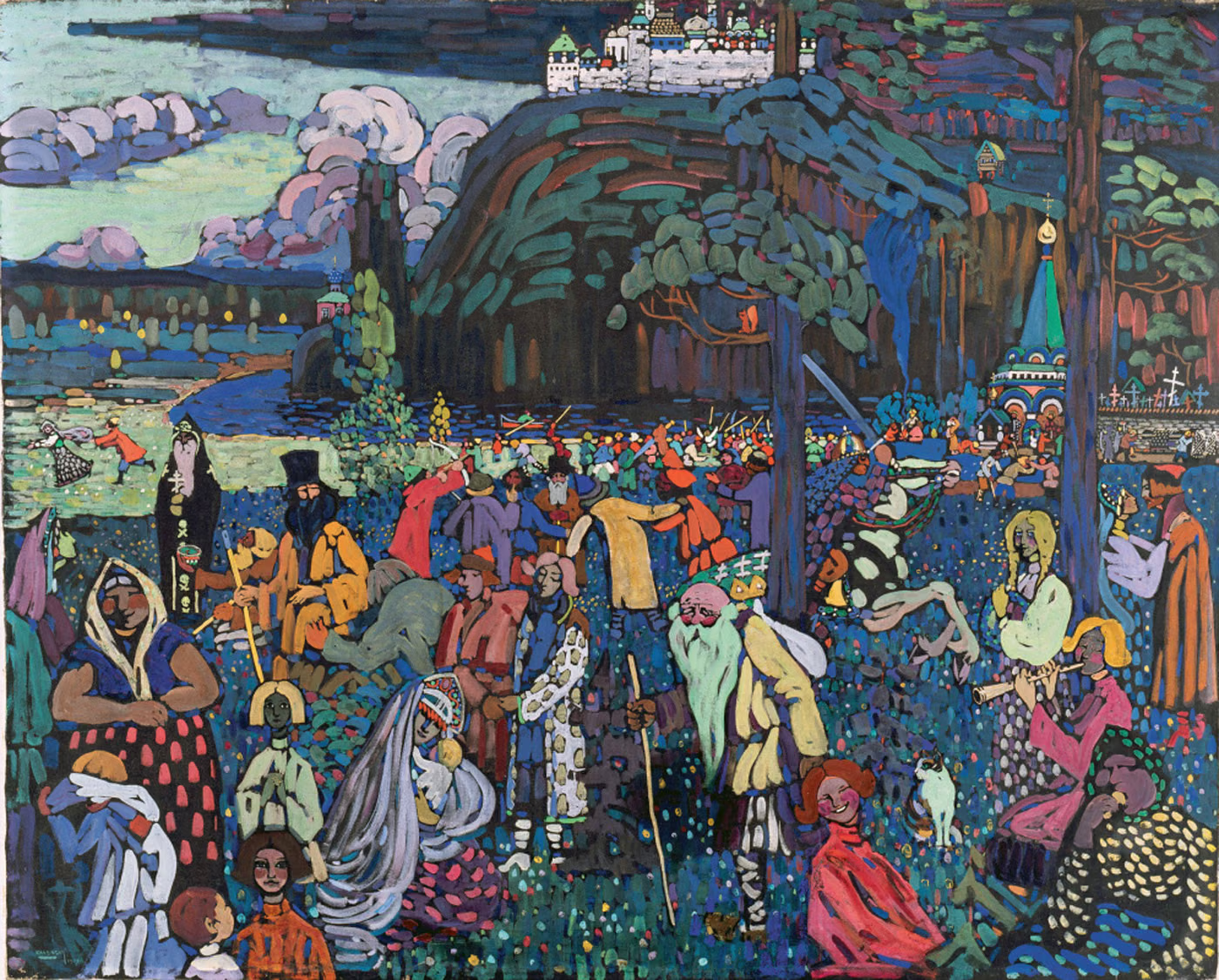
In Munich, Kandinsky entered the studio of the painter Anton Azbé, then studied under Franz von Stuck at the Academy of Fine Arts. He worked first in a Post-Impressionist and Symbolist style, exploring Russian and Germanic folk tales and legends in compositions of vivid colour and stylised forms. His first significant works — Evening (1902), Colourful Life (1907) — reveal an already assured mastery of colour effects and a tendency towards formal simplification.
In 1901 he founded the Phalanx artists' group, which organised exhibitions and classes. It was through this group that he met Gabriele Münter, a gifted painter who became his companion for a decade and his closest artistic interlocutor.
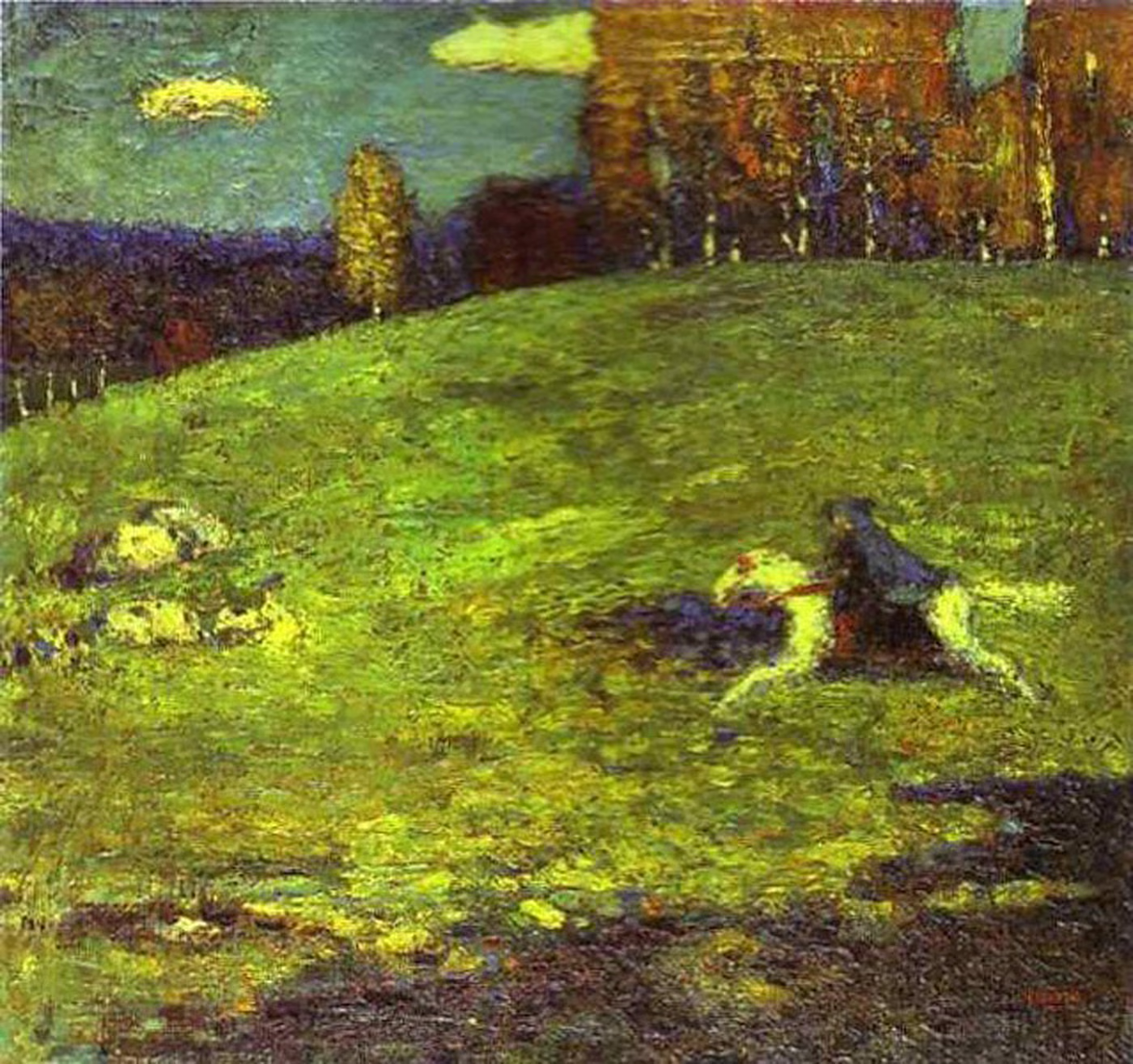
Stays abroad enriched his formation: he spent several periods in Paris between 1906 and 1908, where he discovered the Fauvism of Matisse and Derain, whose liberated use of colour marked him deeply. From 1908 he lived with Münter in Murnau, Bavaria — an Alpine landscape whose light and vibrant colours fed a rapid evolution in his style towards increasing simplification and chromatic intensification.
The Birth of Abstraction
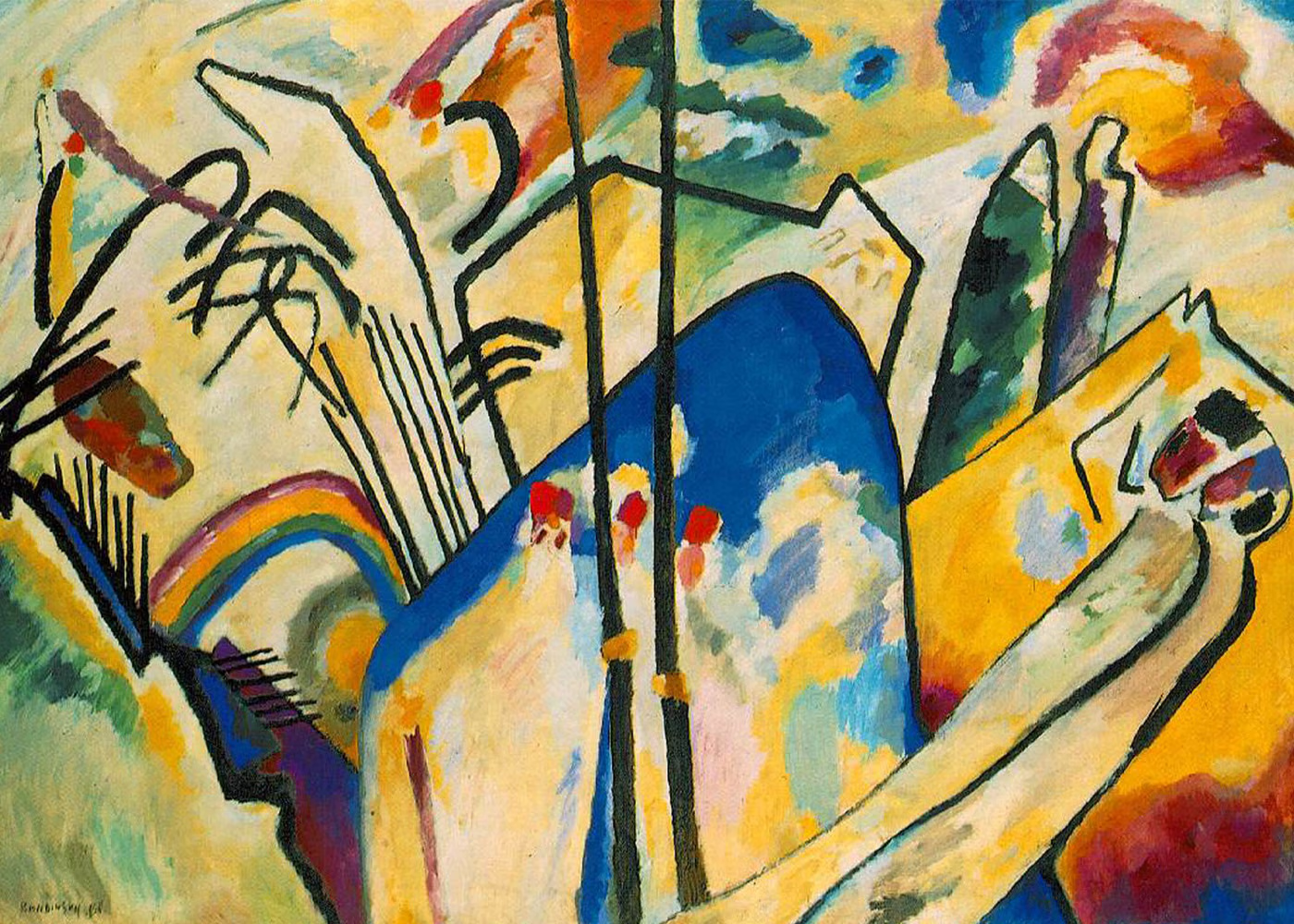
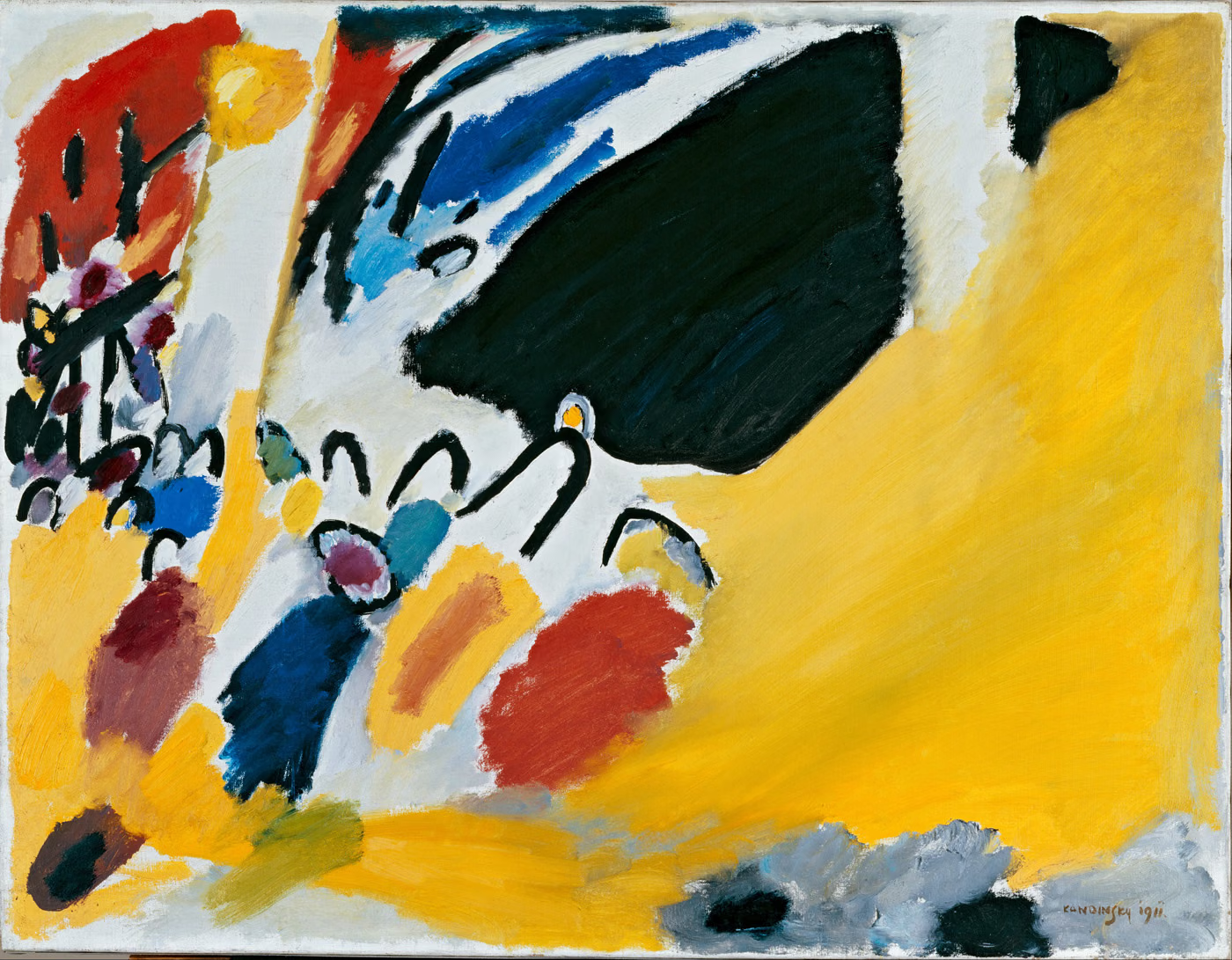
It was between 1910 and 1913 that Kandinsky took the decisive step. The exact date of the "first abstract watercolour" is debated among historians — Kandinsky himself, in later years, placed it in 1910, but analysis has suggested a date closer to 1913. What is certain is that around 1910–11 he produced works in which all reference to the visible world had disappeared, replaced by configurations of coloured patches, lines and forms that evoke nothing but themselves.
At the same time he wrote his fundamental theoretical treatise, Concerning the Spiritual in Art, published in Munich in December 1911. This text, now a classic of artistic thought, develops the idea that colours and forms have an inner spiritual resonance independent of any depicted subject — that yellow, for example, has a warm and aggressive vibration, that blue calls to depth and contemplation, that the straight line and the curve have distinct emotional meanings. Painting, like music, can "sound in the soul" of the spectator.
In 1911 he founded with the painter Franz Marc the group Der Blaue Reiter (The Blue Rider), whose almanac published in 1912 is one of the most important documents of modern art. The group brought together artists sharing the aspiration to a spiritual and expressive painting freed from academic conventions: August Macke, Paul Klee and Alexej von Jawlensky were among its members.
Return to Russia and the Bauhaus
The First World War forced Kandinsky to leave Germany — a Russian citizen in a country at war — and return to Russia in 1914. He lived through the Bolshevik revolution of 1917 and participated actively in the reorganisation of Soviet artistic and cultural institutions in the first years of the regime — founding museums, teaching, contributing to debates on revolutionary art. But the orientations of Socialist Realism, taking shape from the early 1920s, were incompatible with his conception of art. In 1921 he left Russia permanently and returned to Europe.
In 1922 he joined the Bauhaus, the school of art and design founded in Weimar by Walter Gropius in 1919, which had become the most innovative and influential institution of European art and design. He taught there until the school's closure by the Nazis in 1933, first in Weimar, then in Dessau, then in Berlin. These Bauhaus years were among the most fertile of his career: he developed a more geometric and analytical painting, more constructed and rigorous than his Improvisations and Compositions of the Munich period, and published his second major theoretical treatise, Point and Line to Plane (1926).
Paris and the Final Years
In 1933, after the Bauhaus was closed by the Nazi regime, Kandinsky settled in Neuilly-sur-Seine, on the outskirts of Paris, where he would spend the rest of his life. This final period is one of the most inventive of his career: his style evolved towards biomorphic and fanciful forms, influenced by the surrounding Surrealism and by a softer, more lyrical palette. Works such as Composition X (1939, Kunstsammlung Nordrhein-Westfalen, Düsseldorf) and Sky Blue (1940, Centre Pompidou, Paris) testify to a new freedom and lightness.
Kandinsky died at Neuilly-sur-Seine on 13 December 1944, a few days before his seventy-eighth birthday. He had been granted French nationality in 1939.
A Founding Legacy
Kandinsky's influence on twentieth-century art is immense and foundational. Lyrical abstraction, American Abstract Expressionism (Rothko, Pollock, de Kooning), kinetic art and twentieth-century graphic design all owe him something essential. His theories on the correspondence between colours, forms and emotions have nourished generations of artists, designers and educators. The Centre Pompidou in Paris and the Städtische Galerie im Lenbachhaus in Munich hold the most important collections of his work.