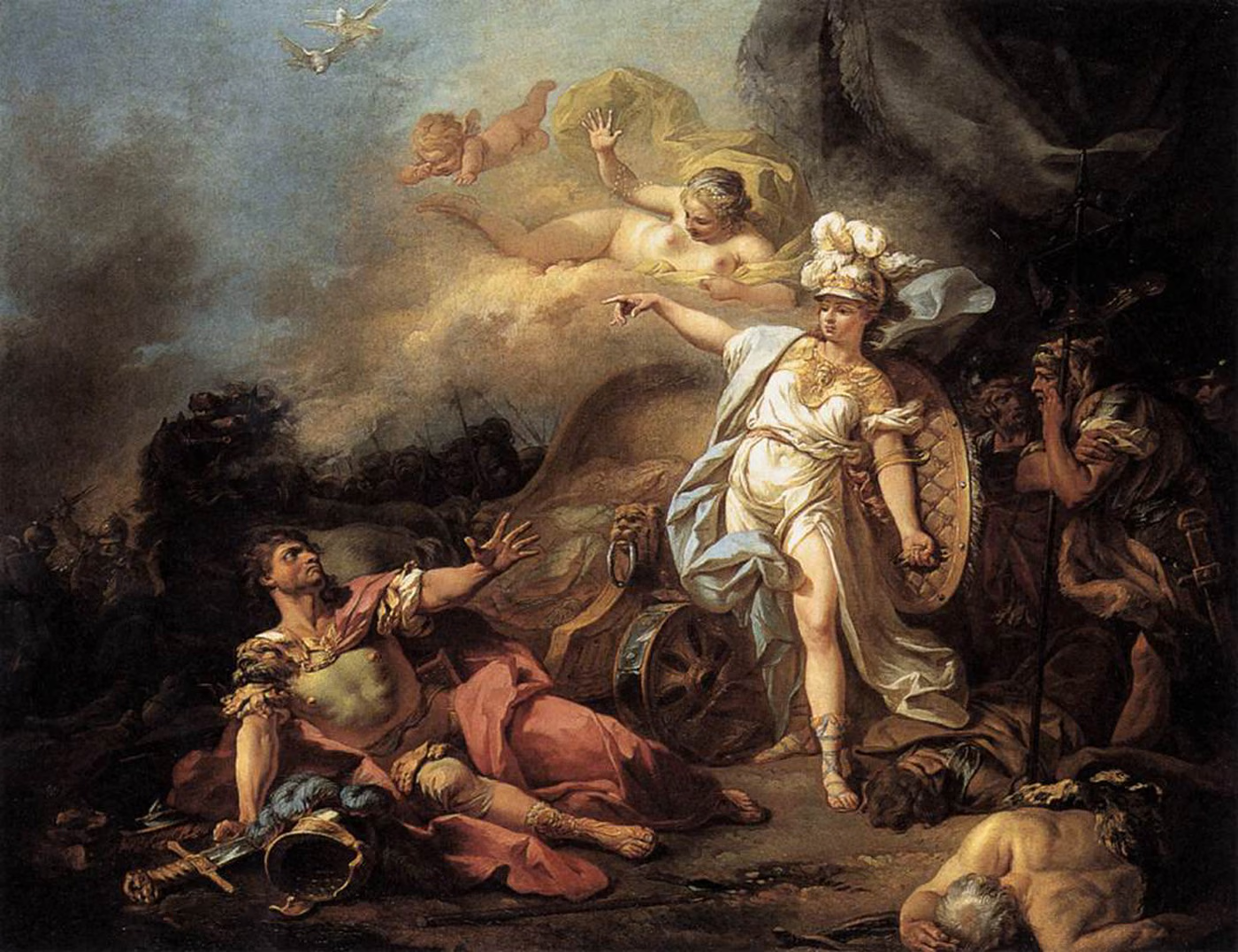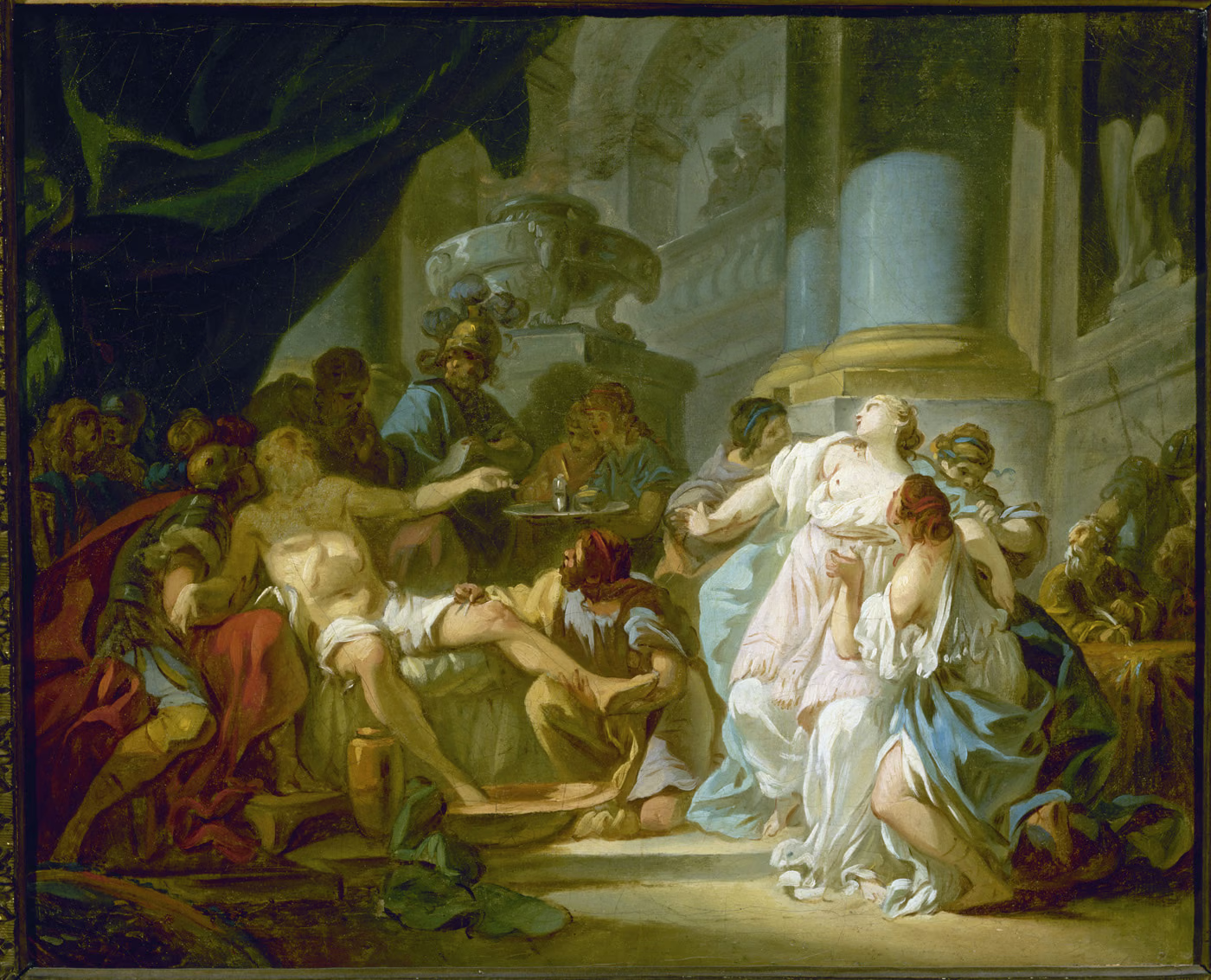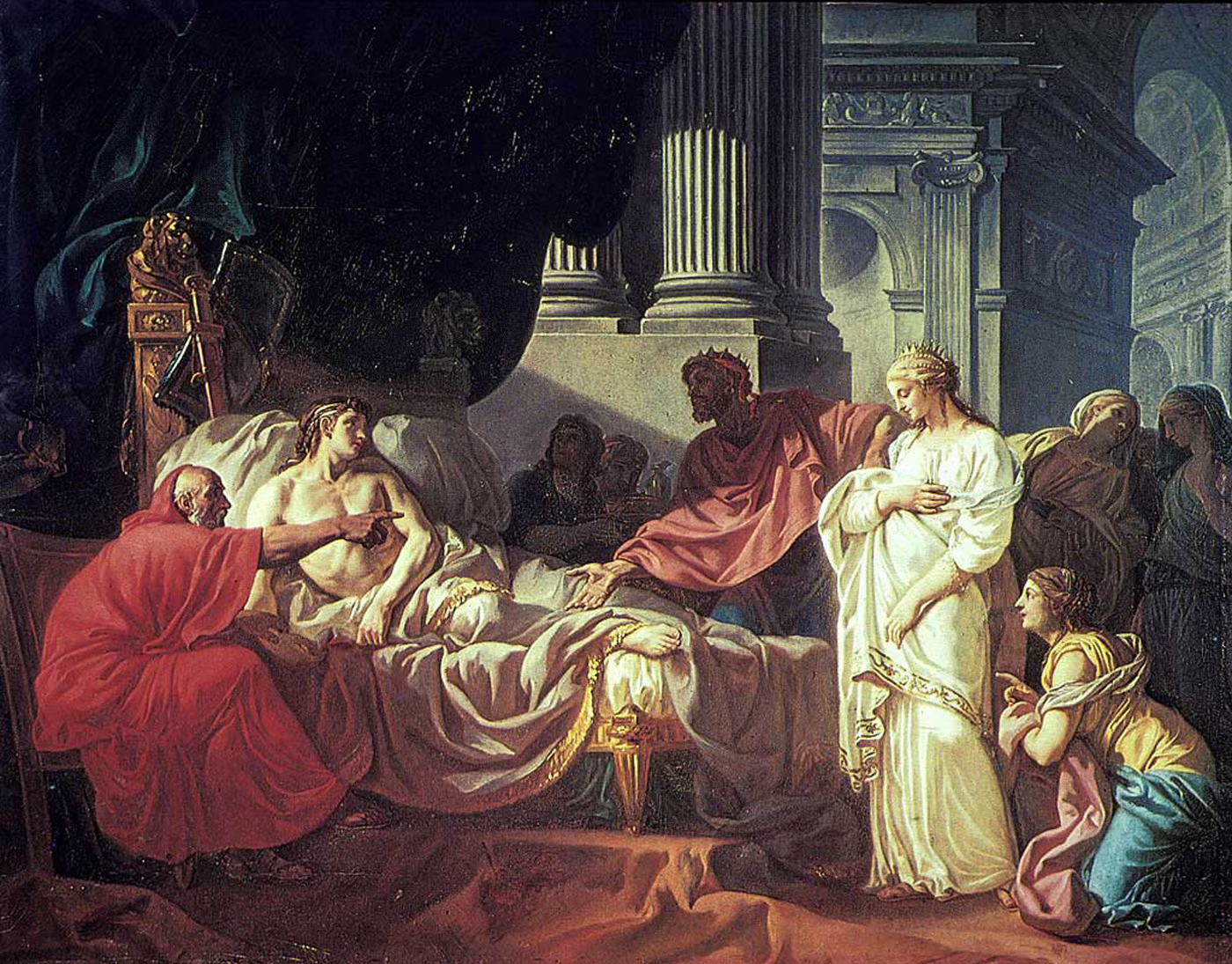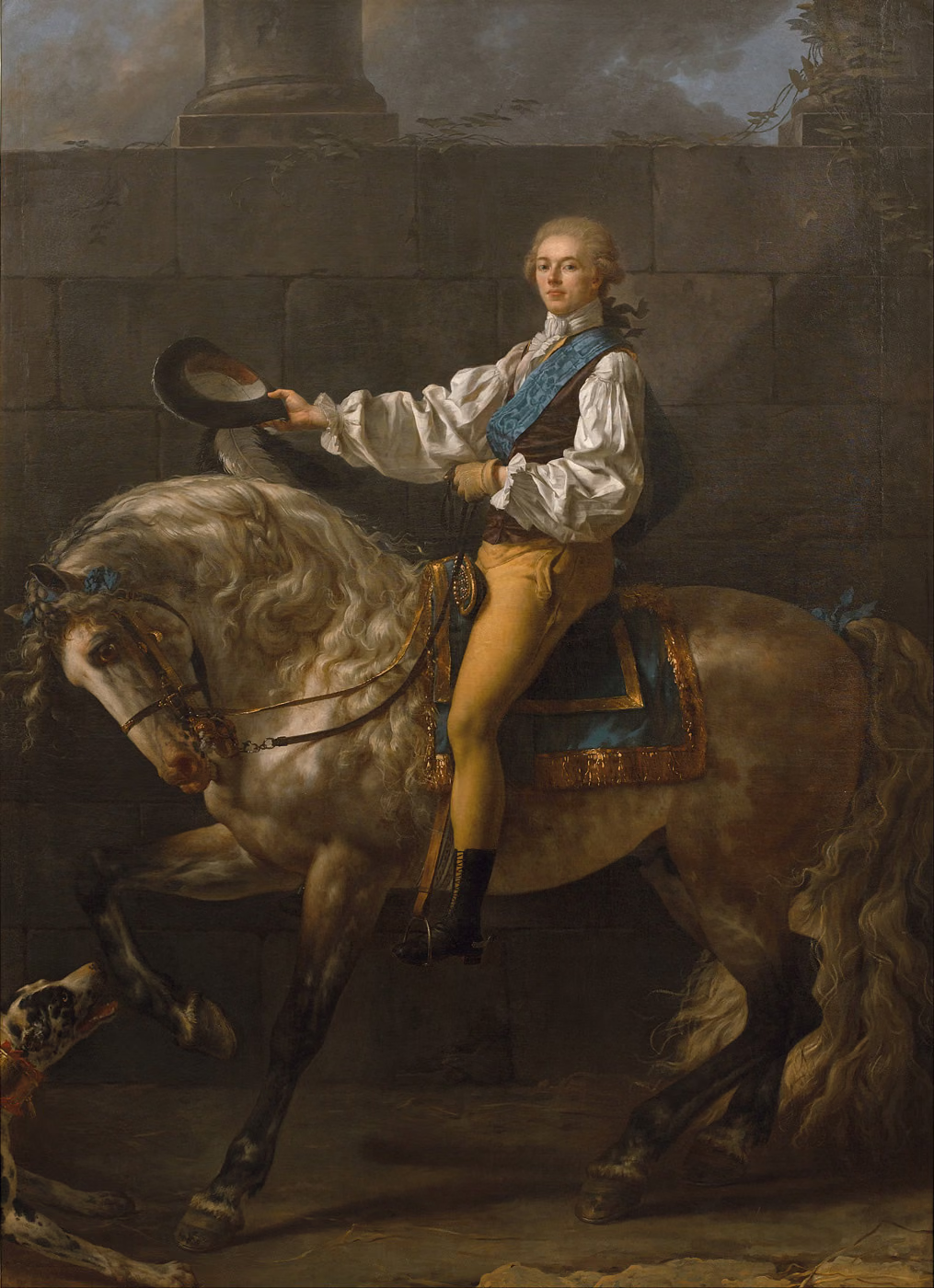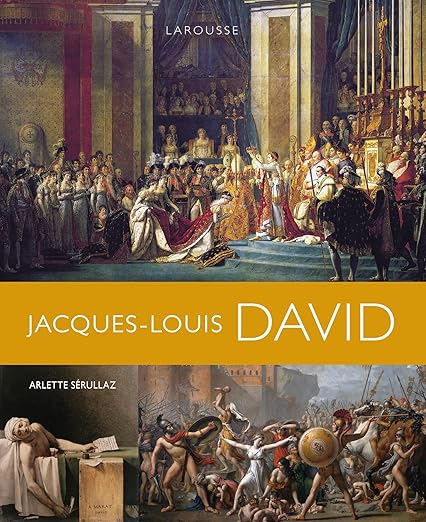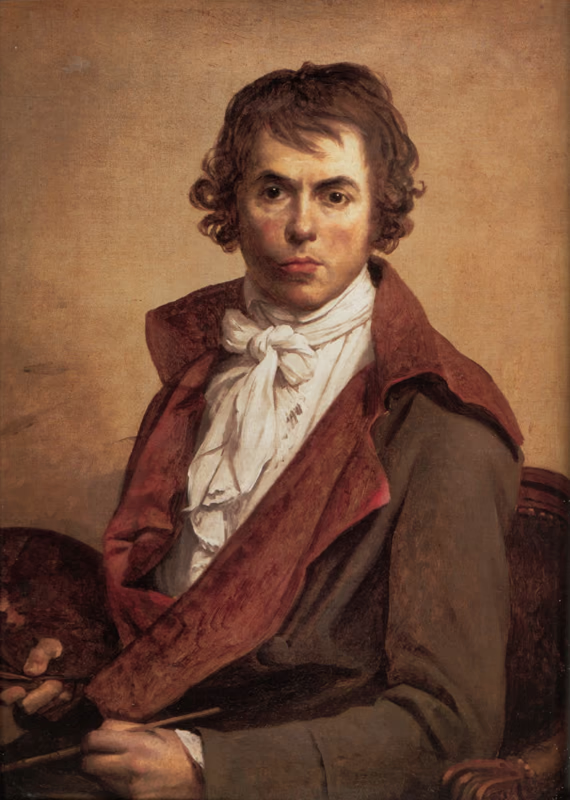
Jacques-Louis David is the most important painter of Revolutionary and Napoleonic France. The unchallenged leader of the Neoclassical movement, he put his art at the service of the great events of his time with absolute conviction and technical mastery: the Republic, the Terror and the Empire all had in him their official painter, their visual chronicler and their inspired propagandist. His great historical compositions — The Oath of the Horatii, The Death of Marat, The Coronation of Napoleon — rank among the best-known and most powerful canvases in all of Western painting. An exceptional teacher, he trained an entire generation of French painters including Ingres, Gros and Gérard, and his influence on nineteenth-century art was decisive.
A Parisian Childhood and a Classical Formation
Jacques-Louis David was born on 30 August 1748 in Paris, into a family of commercial bourgeoisie. His father, Louis-Maurice David, was an ironmonger who died in a duel when Jacques-Louis was only nine. The child was entrusted to his architect uncles — Jean-Michel Buron and Jacques-François Desmaisons — who raised him and recognised his exceptional gifts for drawing.
Around 1764 he entered the studio of the painter Joseph-Marie Vien, one of the first representatives of the return to antique taste in France. Despite several attempts, he won the Prix de Rome only in 1774, at his fourth candidacy — the previous failures having plunged him into a depression that nearly cost him his life. The Prix de Rome finally opened the doors of the Villa Médicis, where he stayed from 1775 to 1780.
This Roman sojourn was decisive. David studied the antique sculptures of the Vatican and the Capitoline, copied the masters of the Renaissance and the Baroque — Raphael, Michelangelo, Caravaggio, Poussin — and immersed himself in the moral and formal ideal of Greek and Roman Antiquity. He returned to Paris convinced that painting must recover the grandeur, sobriety and civic virtue of the Ancients, against the Rococo frivolity of Boucher and Fragonard that still dominated the French scene.
The Oath of the Horatii and Consecration
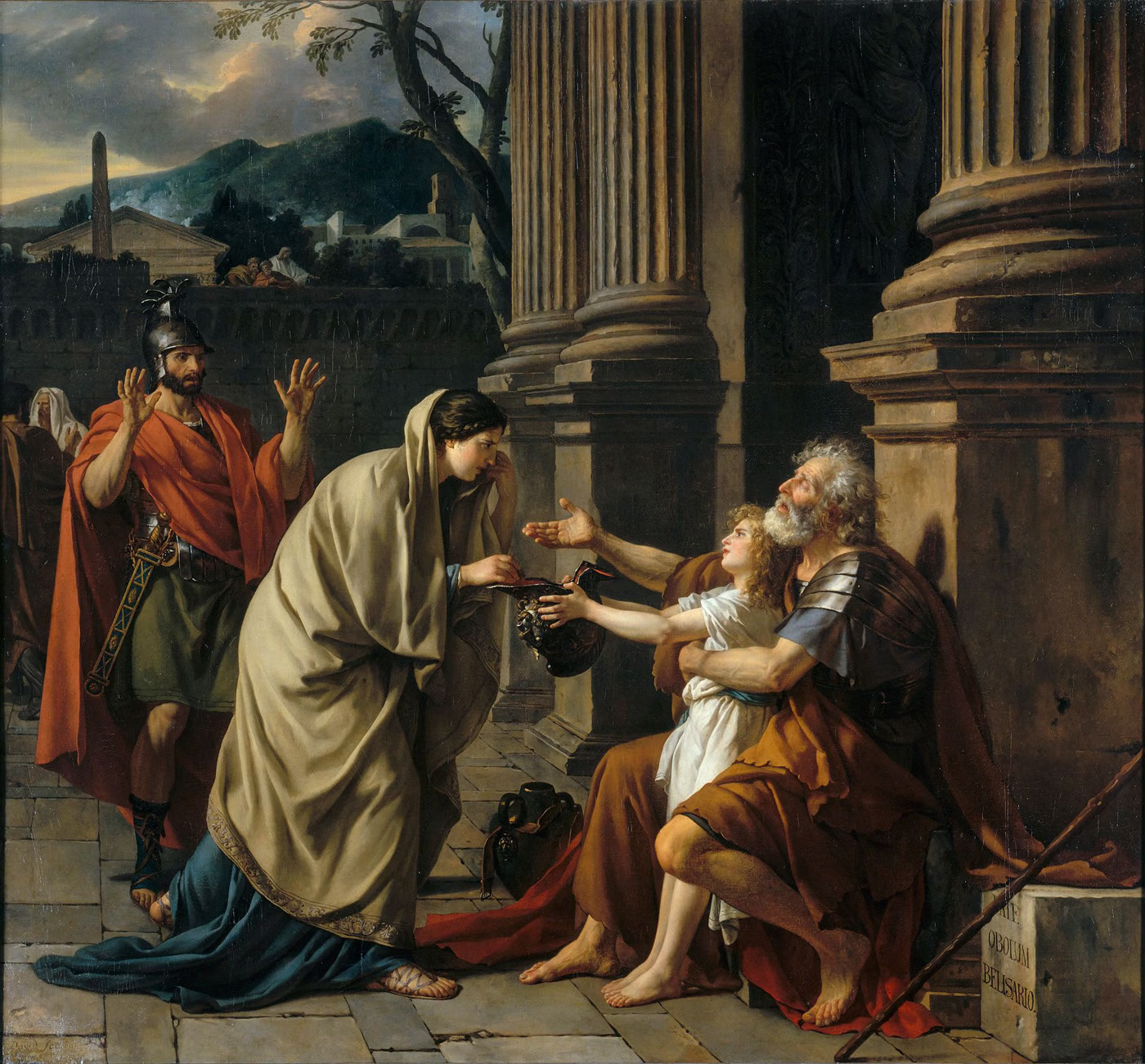
In 1781, David was received into the Académie Royale de Peinture with Belisarius Recognised by a Soldier (Palais des Beaux-Arts de Lille). But it was at the Salon of 1785 that his reputation was definitively established with The Oath of the Horatii (Louvre). The painting shows three Roman brothers swearing to their father to conquer or die for Rome, in a composition of absolute architectural rigour — three arches in the background, three groups of figures, arms extended towards the swords. The composition is of striking clarity and force: everything superfluous is eliminated, every gesture carries an unequivocal moral meaning. The painting was immediately read as a call to civic virtue and patriotic sacrifice — a message that resonated all the more powerfully as France stood on the eve of Revolution.
The Lictors Bring to Brutus the Bodies of His Sons (1789, Louvre), painted in the same year as the fall of the Bastille, was also read as a revolutionary allegory — Brutus, founder of the Roman Republic, had condemned his own sons to death for treason against the homeland.
The Revolution: Commitment and the Death of Marat
David embraced the French Revolution with total enthusiasm. He was elected deputy to the National Convention in 1792, sat with the Montagnards and voted for the death of King Louis XVI in January 1793. He was the friend and admirer of Robespierre and Marat, organised the great revolutionary festivals — including the Festival of the Supreme Being in June 1794 — and effectively directed the artistic organisation of the Republic.
The assassination of Jean-Paul Marat by Charlotte Corday on 13 July 1793 inspired what is perhaps his greatest work: The Death of Marat (Musées Royaux des Beaux-Arts, Brussels). Painted in the weeks following the event, it shows the revolutionary journalist dead in his medicinal bathtub, Charlotte Corday's letter in one hand, the quill in the other. The composition, of absolute sobriety and economy, has often been compared to a Deposition — the secular laying-out of a martyr of the Revolution. The Caravaggesque light illuminating the body from the left, the inscription on the wooden box "À Marat, David," the purity of the composition: everything combines to make this one of the absolute masterpieces of French painting.
The fall of Robespierre at 9 Thermidor (July 1794) nearly cost David his life: compromised by his association with the Robespierrists, he was arrested and imprisoned twice before being released in 1795.
The Empire and Napoleon
David emerged from the Revolutionary period politically weakened but artistically intact. The rise of Napoleon Bonaparte provided him with a new great subject and a new patron. In 1801 he painted Napoleon Crossing the Alps (Château de Malmaison), a heroic equestrian portrait that powerfully contributed to forging the Napoleonic legend. Napoleon named him First Painter of the Empire in 1804.
The most monumental commission of his career was The Coronation of Napoleon I (1805–07, Louvre), a canvas nearly ten metres wide depicting the coronation ceremony at Notre-Dame de Paris on 2 December 1804. David depicted not the moment when Napoleon crowned himself (as actually happened) but the moment when he crowned the kneeling Empress Joséphine before him, in the presence of Pope Pius VII — a modification that Napoleon himself reportedly suggested for reasons of image. The painting, of extraordinary complexity and density, contains more than two hundred individually recognisable portraits. David worked on it for two years.
He also painted The Sabine Women (1799, Louvre), begun during his imprisonment and read as an allegory of national reconciliation after the revolutionary upheaval, and Leonidas at Thermopylae (1814, Louvre), a meditation on heroic sacrifice painted as the Empire was collapsing under the blows of the allied armies.
Exile in Brussels and Death
The fall of Napoleon in 1815 and the Restoration of the monarchy forced David into exile. A regicide and convinced Bonapartist, he could not remain in France under Louis XVIII. He settled in Brussels in 1816, where he was received with respect and admiration. He continued to paint — principally portraits and mythological compositions — but never again attained the grandeur of the Revolutionary and Imperial years.
David died in Brussels on 29 December 1825, aged seventy-seven. The French Restoration government refused to allow his remains to return to Paris. He was buried in Brussels, at the church of Saints-Jacques-sur-Coudenberg, though his heart was, at his own request, brought back to Paris.
A Founding Legacy
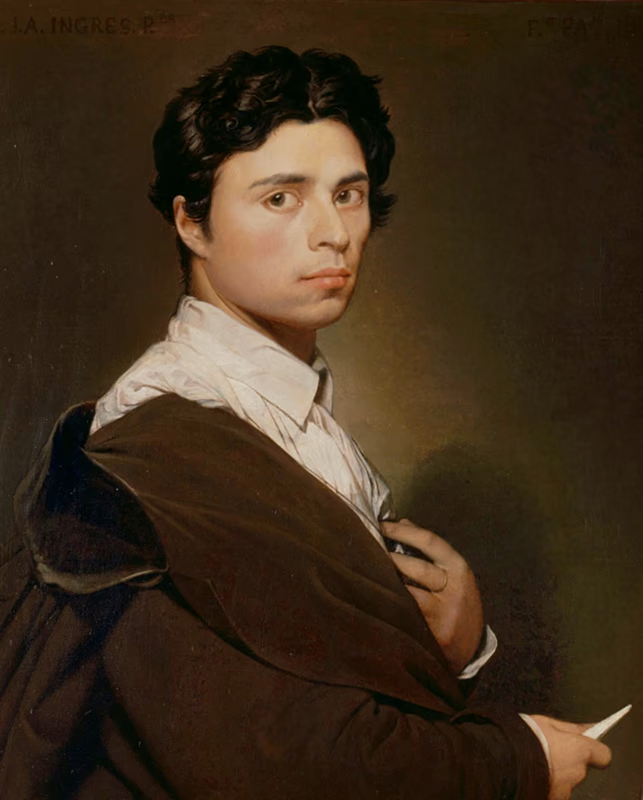
David's influence on nineteenth-century French painting is considerable and direct: Ingres, his most brilliant student, extended his cult of drawing and Raphael; Gros and Gérard developed the genre of the Imperial state portrait; Géricault and Delacroix, reacting against his legacy, defined Romanticism in opposition to Davidian Neoclassicism. The Academy of Fine Arts, the Prix de Rome, the entire structure of official artistic education in nineteenth-century France bore the imprint of his vision. His great Revolutionary and Imperial canvases are today among the most visited works in the Louvre, where they occupy entire rooms with undiminished majesty.