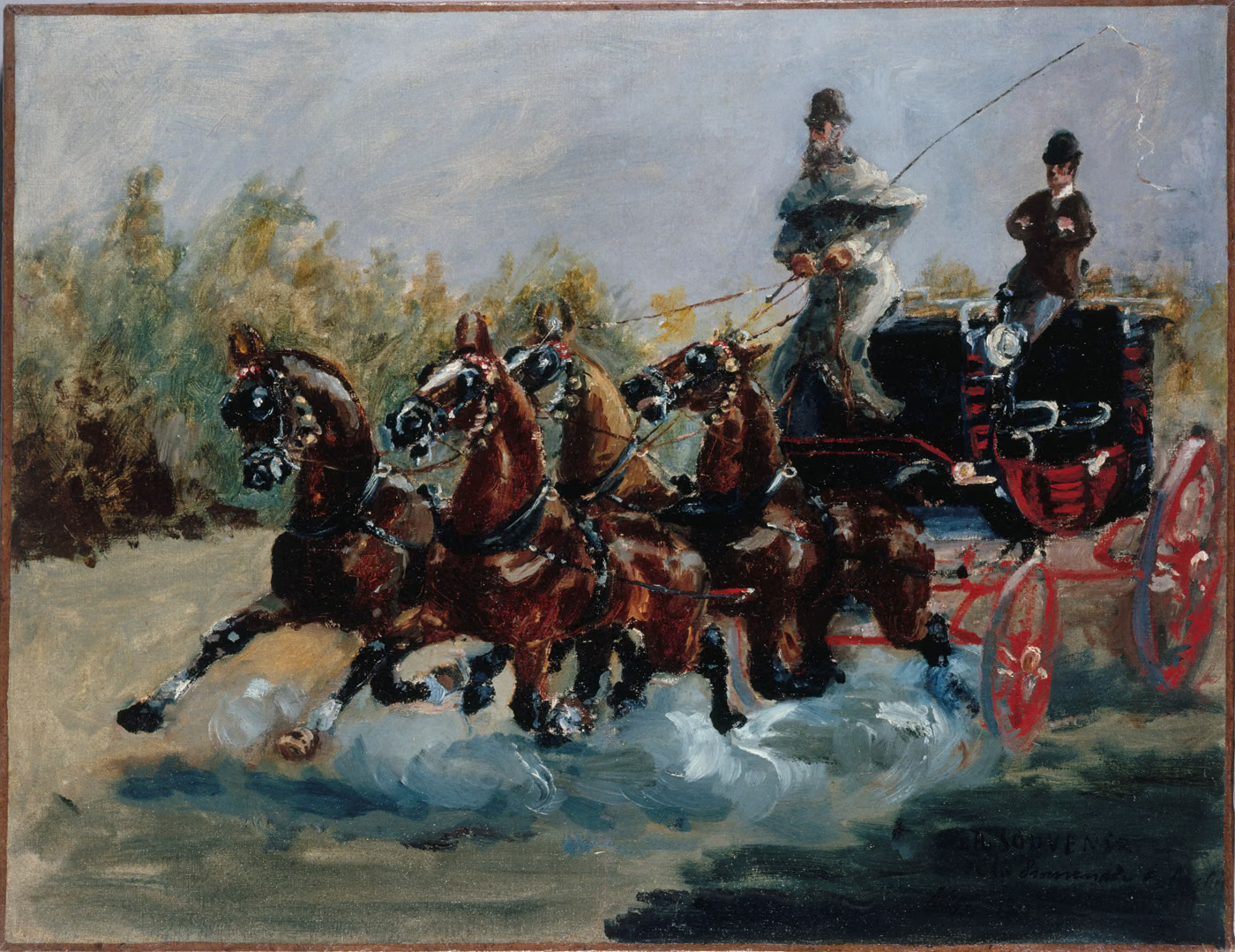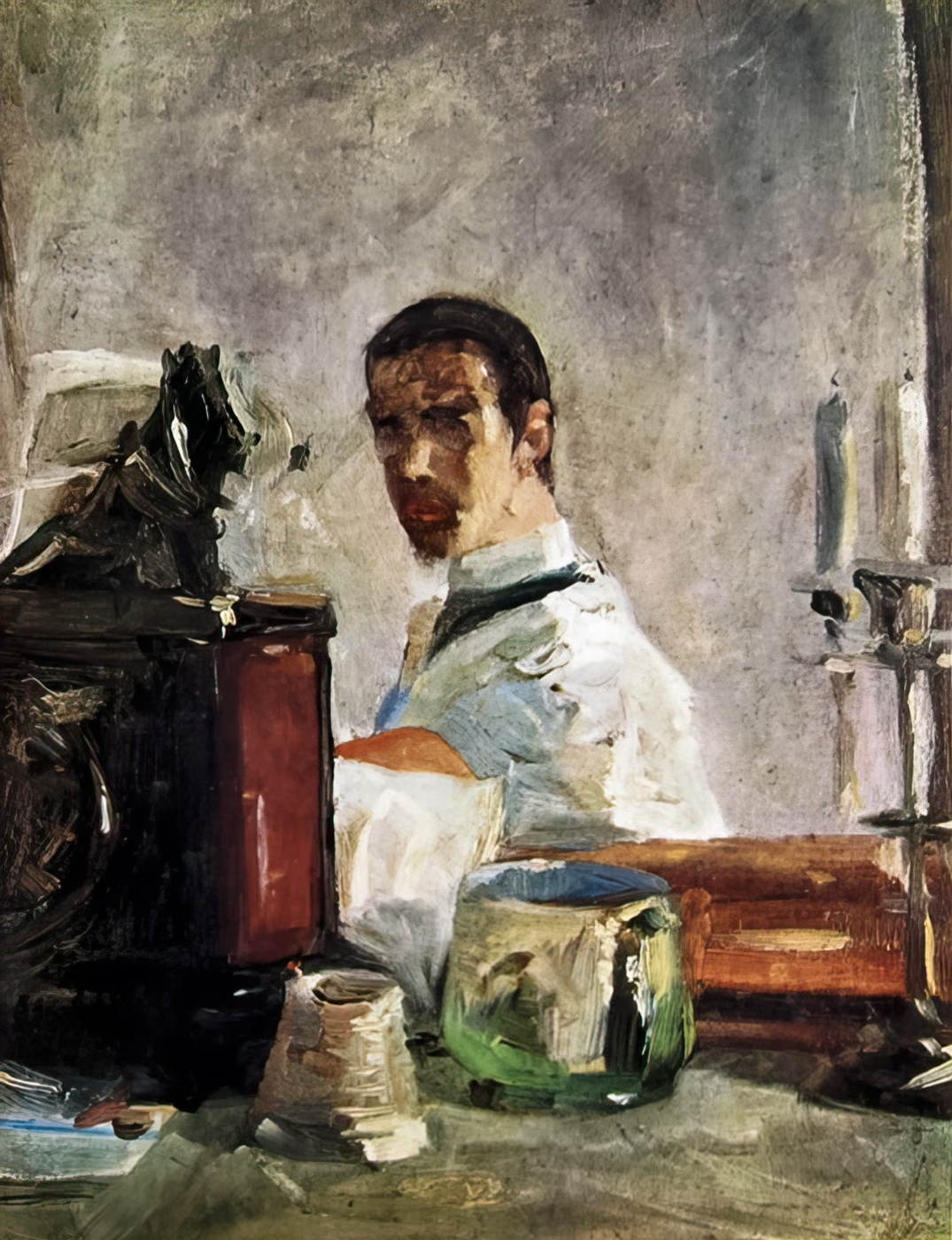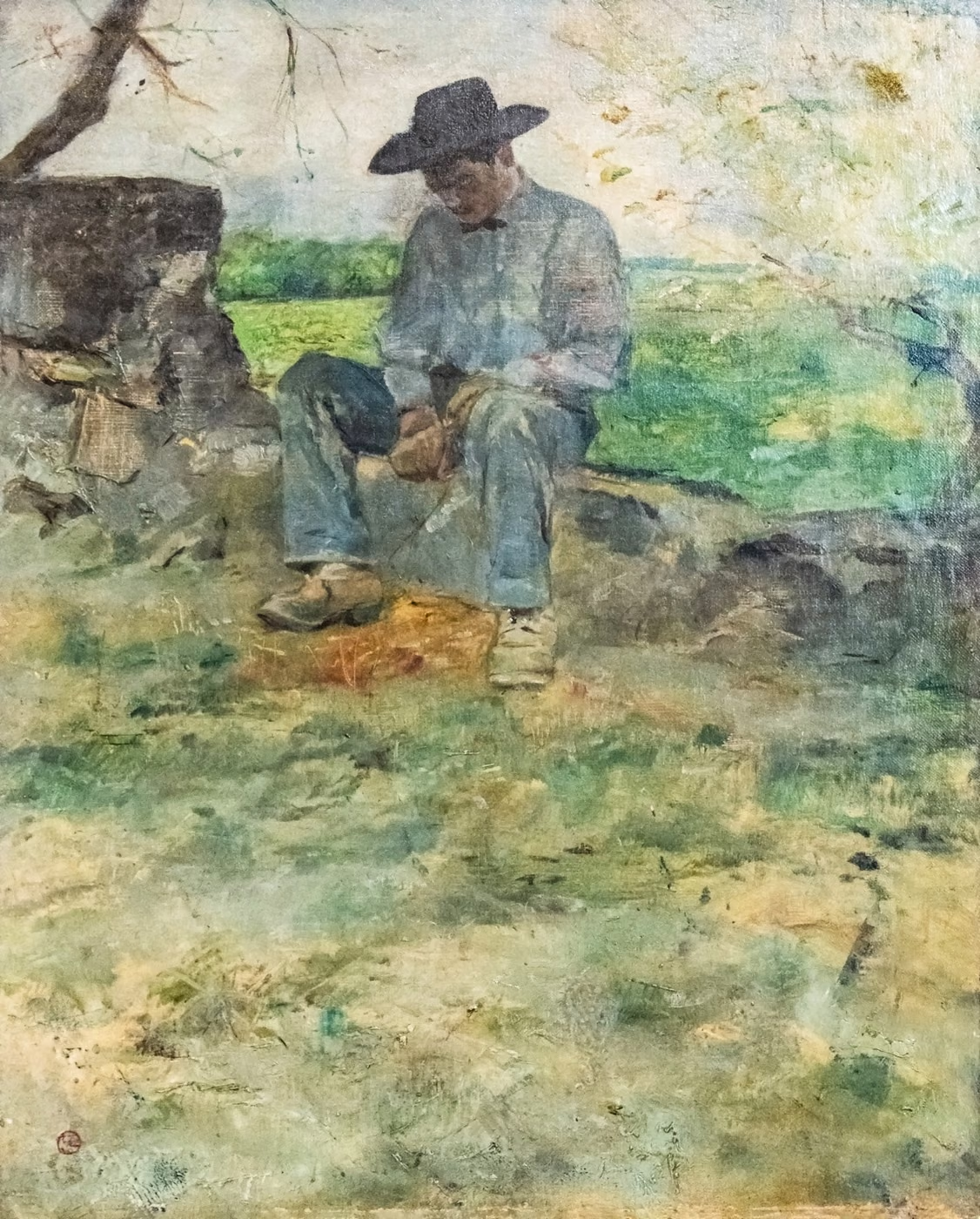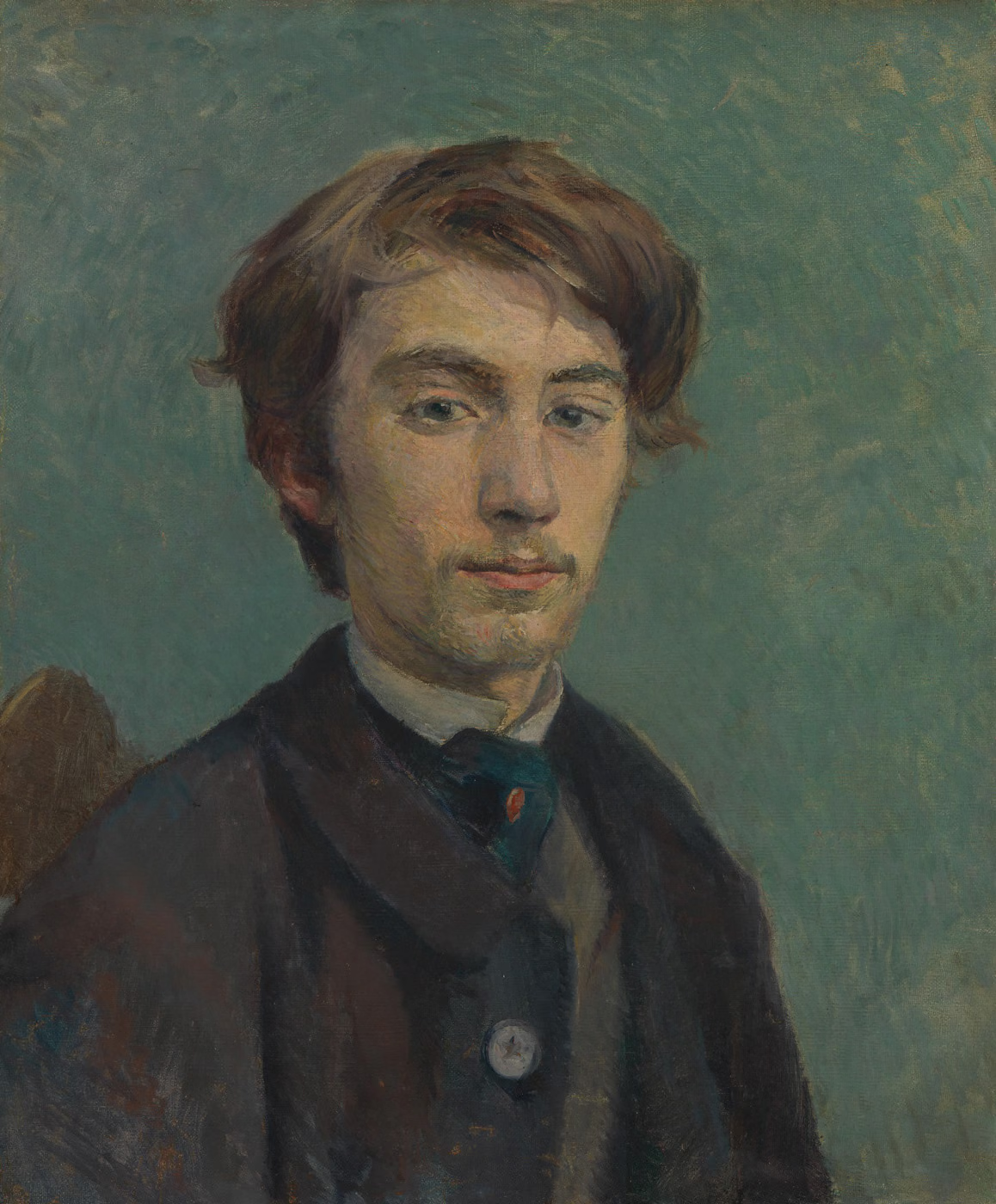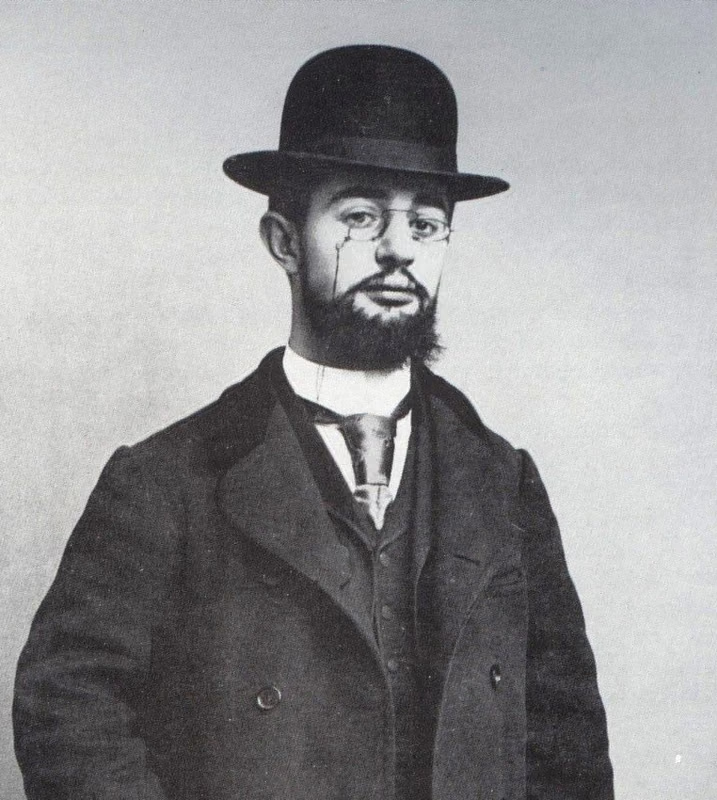
Henri de Toulouse-Lautrec is one of the sharpest and most tender witnesses to the nocturnal life of Belle Époque Paris. A painter, draughtsman and poster-maker of exceptional talent, he immortalised with rare psychological precision the world of Montmartre's cabarets, circuses, brothels and music halls — a universe of make-up and artificial lights, bodies in motion and faces marked by fatigue and pleasure. His graphic work, in particular his lithographic posters, revolutionised the art of visual communication and remains among the most recognisable in the entire history of Western art.
An Aristocratic Birth, a Broken Childhood
Henri Marie Raymond de Toulouse-Lautrec Monfa was born on 24 November 1864 in Albi, in the Tarn, into one of the oldest aristocratic families in France. His father, Count Alphonse de Toulouse-Lautrec, was an eccentric man, passionate about horses and falconry, ill-suited to domestic life. His mother, Countess Adèle Tapié de Céleyran, was a gentle and devoted woman who would be her son's unwavering support throughout his life. The two parents were first cousins — a consanguinity that most likely weakened the child's physical constitution.
In 1878, at thirteen, Henri fractured his left femur falling from a chair. In 1879 he fractured his right femur in another fall. His legs, already fragile, stopped growing. As an adult he was about 1.52 metres tall, with a normal-sized torso but atrophied legs that imposed a difficult gait. This disability, most likely linked to a form of pycnodysostosis — a genetic bone fragility condition — definitively marginalised him from the aristocratic circles he belonged to by birth, and pushed him towards the world of art.
From childhood he drew and painted with a compulsion and talent that struck everyone around him. He received classical training under René Princeteau, a friend of his father who specialised in equestrian scenes, then under Léon Bonnat and Fernand Cormon in Paris in the years 1882–86. It was in Cormon's studio that he met Van Gogh in 1886 — an encounter between two singular spirits that history has remembered.
Montmartre: A World Apart
Around 1884, Toulouse-Lautrec settled in Montmartre, the popular and artistic neighbourhood perched on the hill north of Paris, concentrating cafés-concerts, cabarets, studios and brothels. He would remain there until the end of his life, finding both an inexhaustible subject and a space of freedom where his physical disability set him no more apart than the other marginals and originals who populated this world.
In 1889, the Moulin Rouge opened its doors on the Boulevard de Clichy. Toulouse-Lautrec immediately became a regular, with a reserved table. He observed, drew, painted the whirling quadrilles, the dancers, the audiences, the wings. His favourite subjects quickly became the stars of the Montmartre scene: La Goulue, a dancer of volcanic character whose insolent vitality he captured; Valentin le Désossé, whose interminable silhouette and improbable gestures seemed to defy the laws of anatomy; Jane Avril, whose melancholy, interior dancing contrasted with the surrounding racket; Yvette Guilbert, a singer whose stage presence he captured with a mixture of admiration and affectionate irony.
He also frequented theatres, circuses and brothels, where he sometimes spent weeks at a time, establishing relationships of trust and friendship with the residents that allowed him to paint them in their most intimate daily routines — not with voyeurism, but with a humanity and dignity remarkable for the period.
The Poster Revolution
In 1891, the manager of the Moulin Rouge, Charles Zidler, commissioned a poster from Toulouse-Lautrec for the season. The result — La Goulue at the Moulin Rouge — was a graphic revolution. Through bold use of flat areas of colour, thick outlines, simplification of forms and the asymmetric layout inherited from Japanese prints (which he knew and admired, like all artists of his generation), he created a visual object of stunning power and modernity. Pasted on the walls of Paris, the poster became instantly famous.
He would produce in total around thirty lithographic posters that permanently transformed the art of the poster into a fully fledged art form. Jane Avril at the Jardin de Paris (1893), Ambassadeurs — Aristide Bruant (1892), Divan Japonais (1893): each of these compositions is a masterpiece of graphic synthesis, in which immediate legibility and visual force are achieved by the most economical means.
His painted work — around 700 canvases — is equally remarkable. At the Moulin Rouge (1892–93, Art Institute of Chicago) is one of his most complex and ambiguous compositions: the nocturnal cabaret scene is captured in a greenish artificial light, with the foreground occupied by the livid, out-of-frame face of a woman looking towards the viewer with an indecipherable expression.
Decline and Death
Toulouse-Lautrec's alcoholism was precocious and devastating. By the 1890s his consumption of absinthe and other spirits was considerable, sustained by the nocturnal life he led without respite. In February 1899 a serious crisis — hallucinations, tremors, delirium — led to his confinement in a nursing home in Neuilly, where he stayed for three months. To prove he had recovered his faculties, he produced from memory a series of drawings depicting circus scenes of stunning precision and elegance.
His health did not lastingly recover. In the summer of 1901 a stroke partially paralysed him. His mother brought him to the family property at Malromé in the Gironde. He died there on 9 September 1901, aged thirty-six, his mother at his bedside. Legend has it that his last words were addressed to his father, who was fidgeting nervously around him: "The old fool."
An Immense Legacy
Toulouse-Lautrec's work is held above all at the Musée Toulouse-Lautrec in Albi, founded in 1922 in the Palais de la Berbie, which holds the largest collection of his paintings, drawings and posters in the world. His influence on twentieth-century graphic art is incalculable: from Art Nouveau to contemporary advertising design, via film posters and press graphics, the principles he forged — synthesis, legibility, the power of line and colour — became the foundations of modern visual communication.