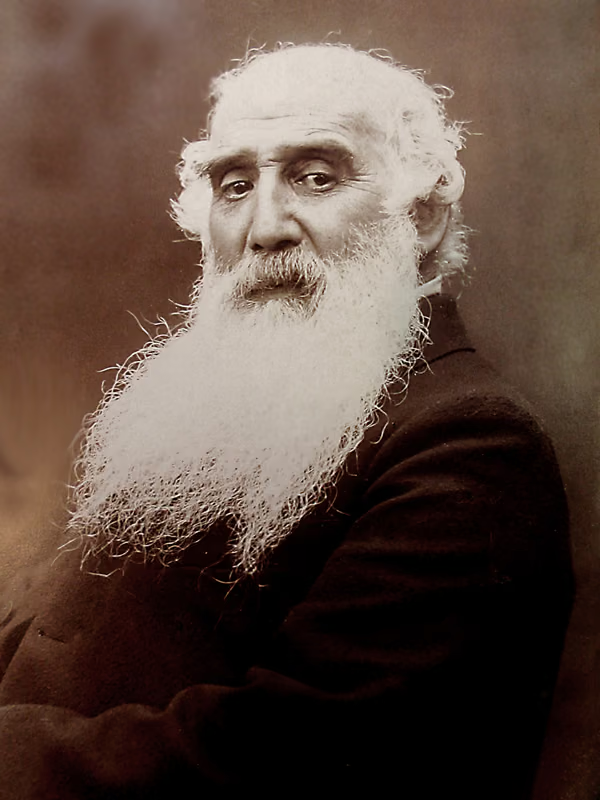
Camille Pissarro is one of the most essential and most underappreciated figures of the great Impressionist movement. The only painter to have participated in all eight of the group's exhibitions between 1874 and 1886, he was simultaneously its quiet pillar and its moral conscience — a man of exceptional generosity and open-mindedness, who encouraged and influenced Cézanne, Gauguin and Seurat without ever ceasing to search himself. A landscape painter of genius, attentive to the changing light of the Norman countryside and the bustle of the great Parisian avenues, he built a body of work of considerable coherence and richness, too often eclipsed by the celebrity of his contemporaries.
A Caribbean Origin and a Wandering Vocation
Jacob Abraham Camille Pissarro was born on 10 July 1830 in Charlotte Amalie, capital of the island of St Thomas, then a Danish possession in the Caribbean (now the United States Virgin Islands). His family was of Sephardic Jewish origin: his father, Frédéric Abraham Gabriel Pissarro, was a merchant born in Bordeaux; his mother, Rachel Manzana-Pomié, was Creole, born on St Thomas. This double identity — Jewish and Caribbean, French and Caribbean — made Pissarro a man apart, belonging fully to nowhere, sensitive to injustices and social margins.
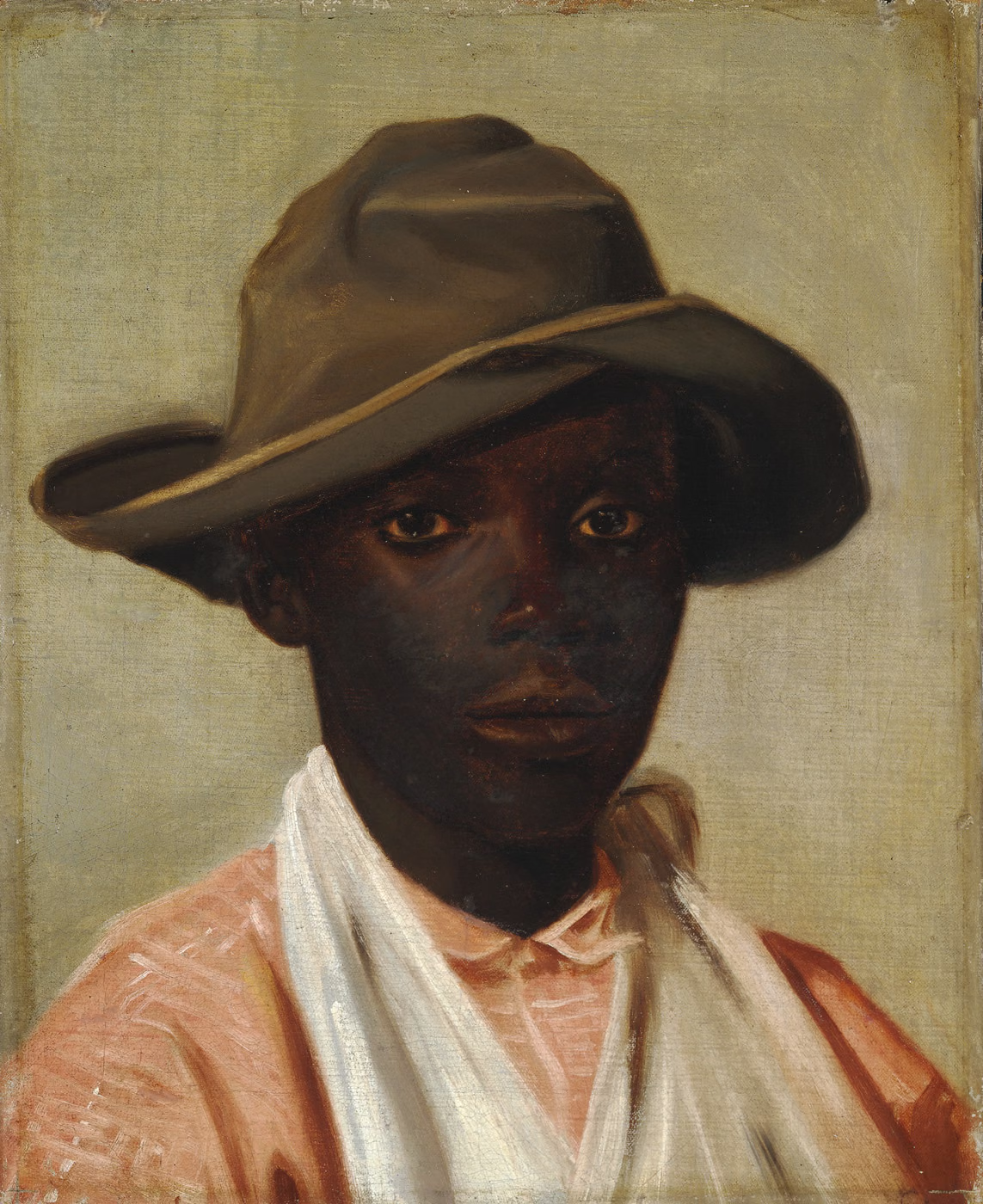
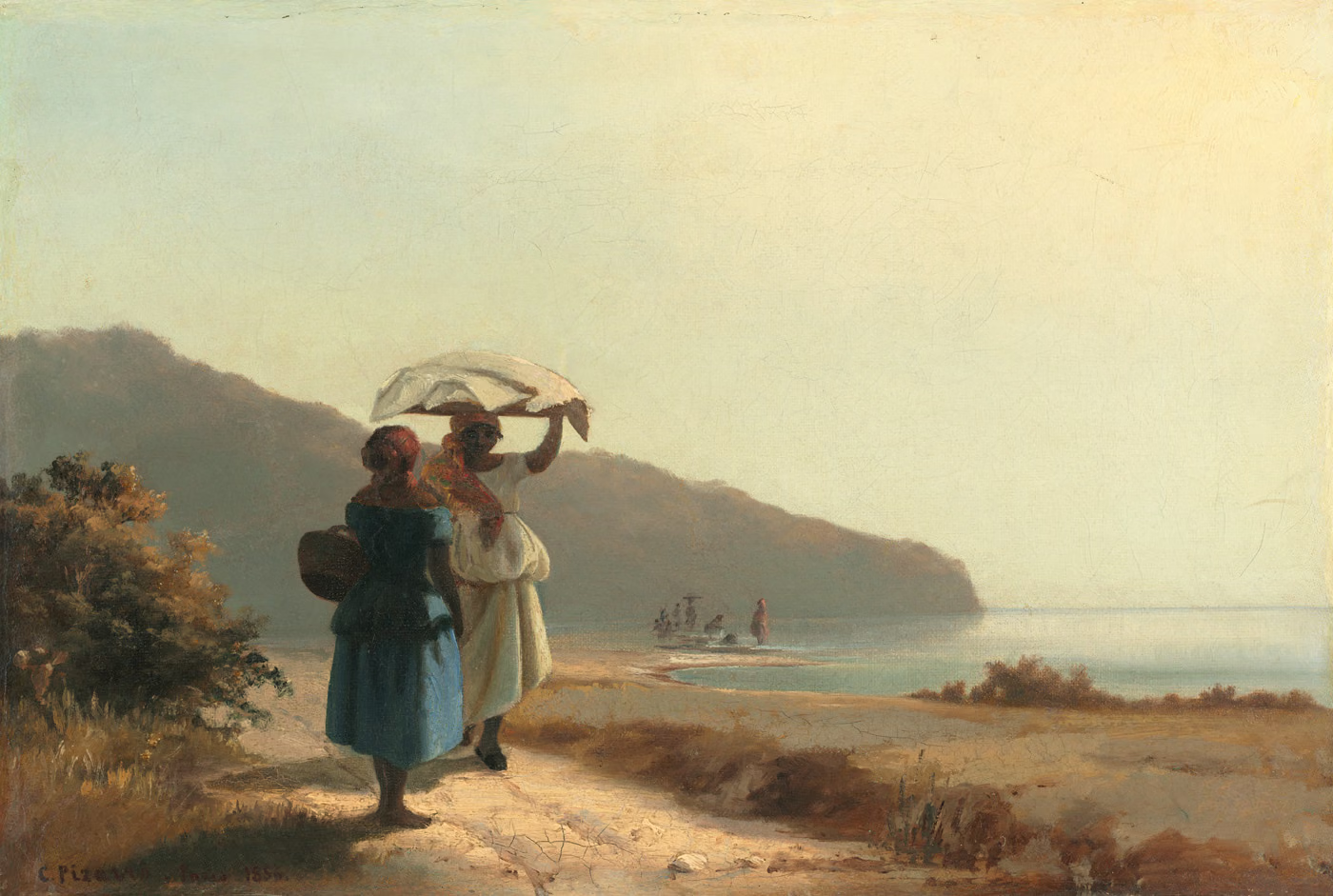
He was sent to France at twelve to study in Passy, where he revealed his gifts for drawing. Back on St Thomas in 1847, he worked in his father's shop while drawing and observing life in the harbour. In 1852, a decisive encounter: the Danish painter Fritz Melbye took him to Venezuela, where the two men spent two years painting landscapes and scenes of local life. This first experience of painting outdoors, in intense tropical light, left a lasting impression.
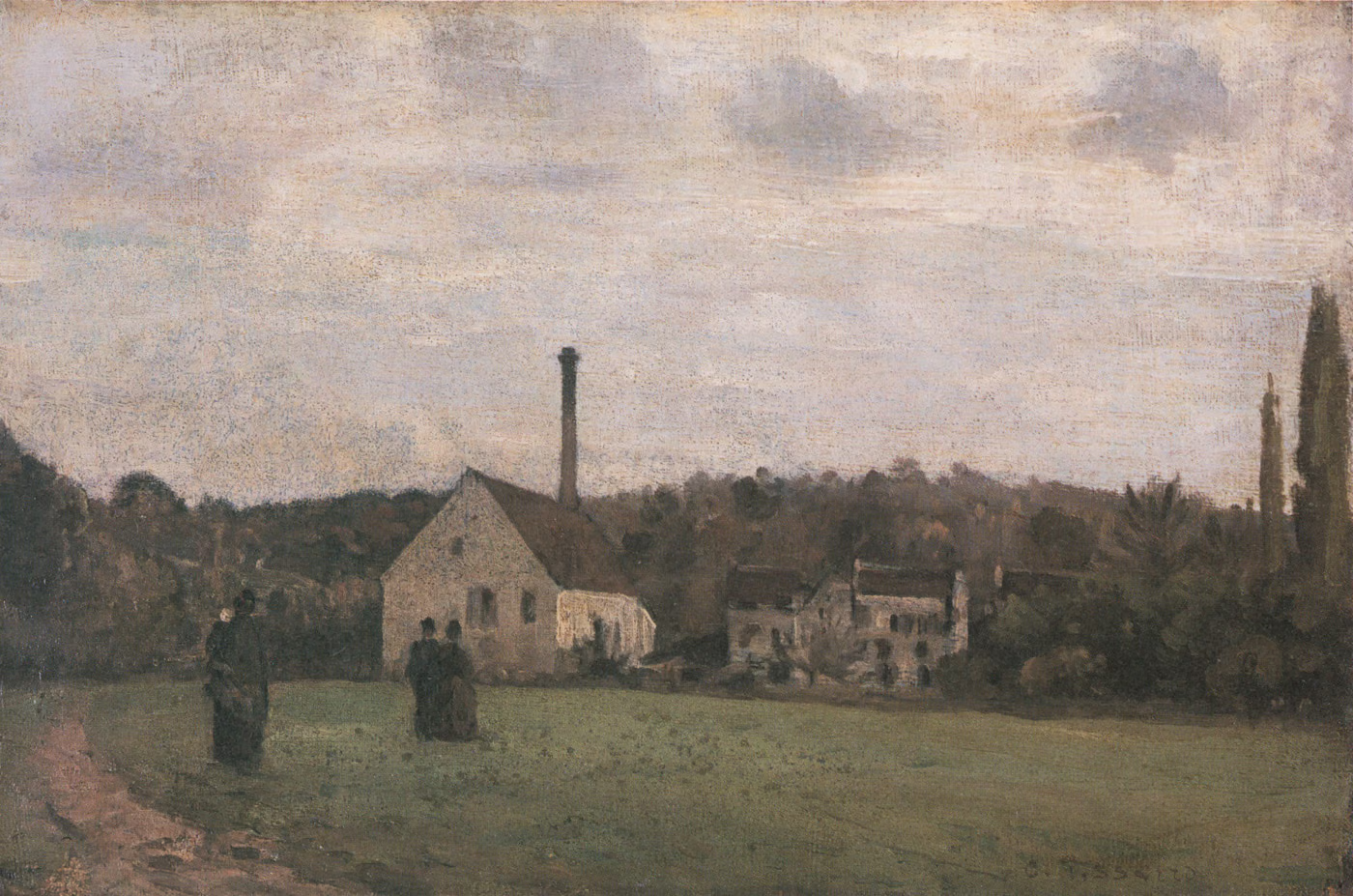
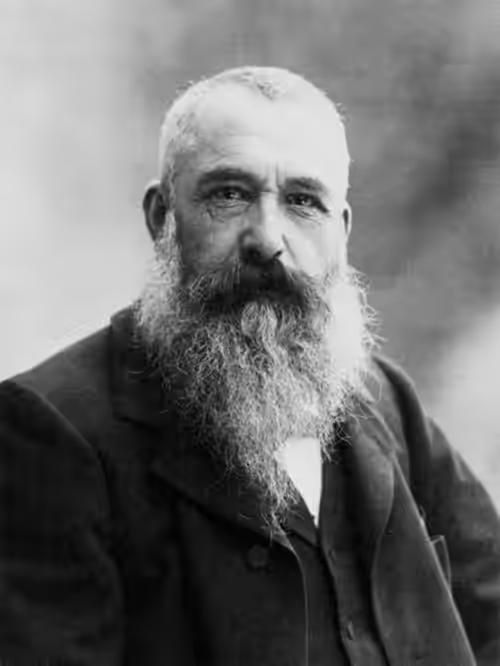
In 1855, Pissarro settled permanently in Paris, where he enrolled at the École des Beaux-Arts and frequented the free studio of the Académie Suisse. There he met Claude Monet and Paul Cézanne, with whom he formed deep and lasting friendships. He admired Corot, whose influence on his early landscapes is clear, as well as Courbet and Millet, whose attention to nature and agricultural workers matched his own anarchist political convictions.
Impressionism: A Founding Pillar
Pissarro was one of the founding members of the Impressionist group and participated in the first exhibition held outside the official Salon, in April 1874 at the photographer Nadar's studio. He was the only one to exhibit in all eight successive editions of the group, between 1874 and 1886 — a collective commitment without equal among his contemporaries.
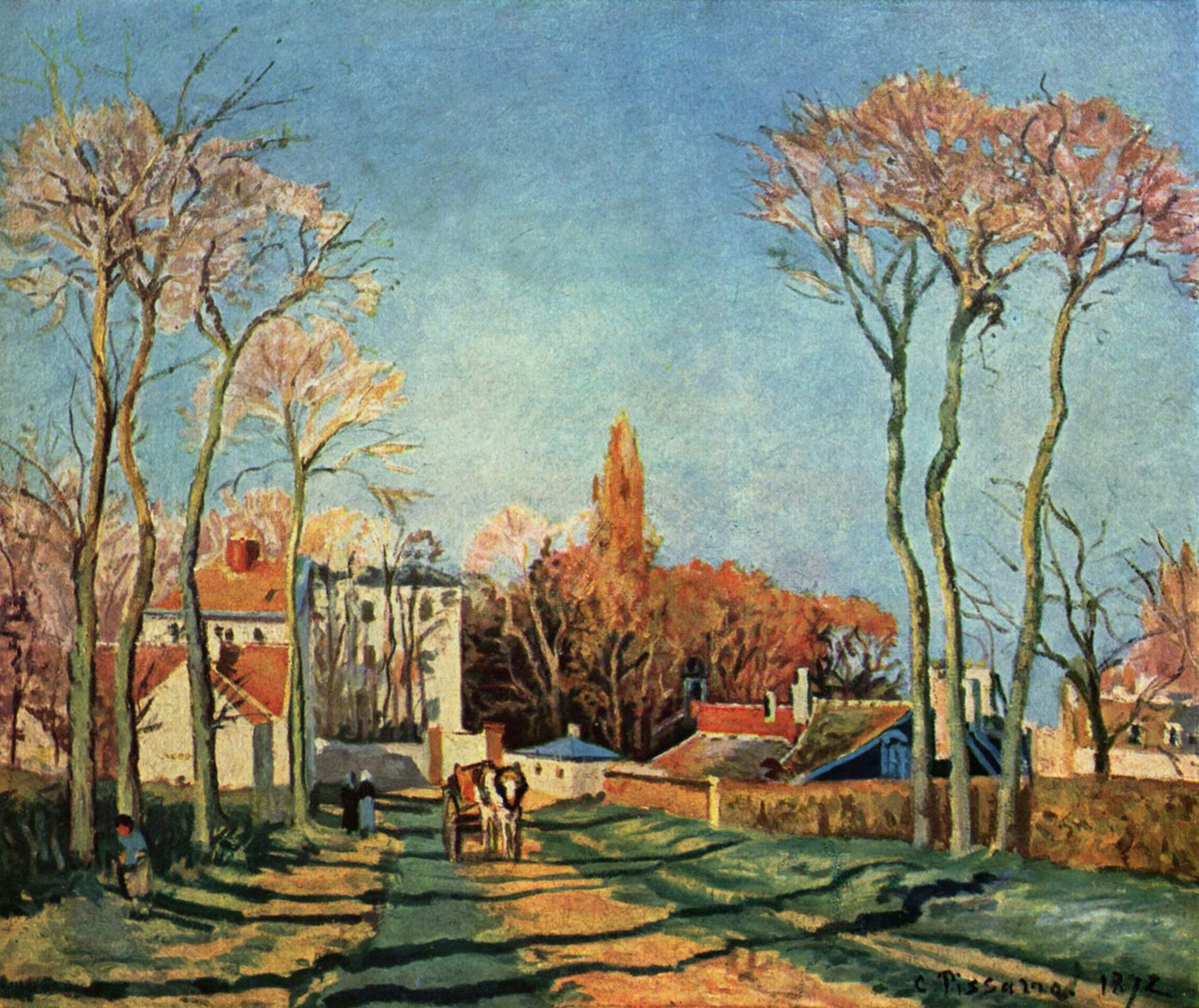
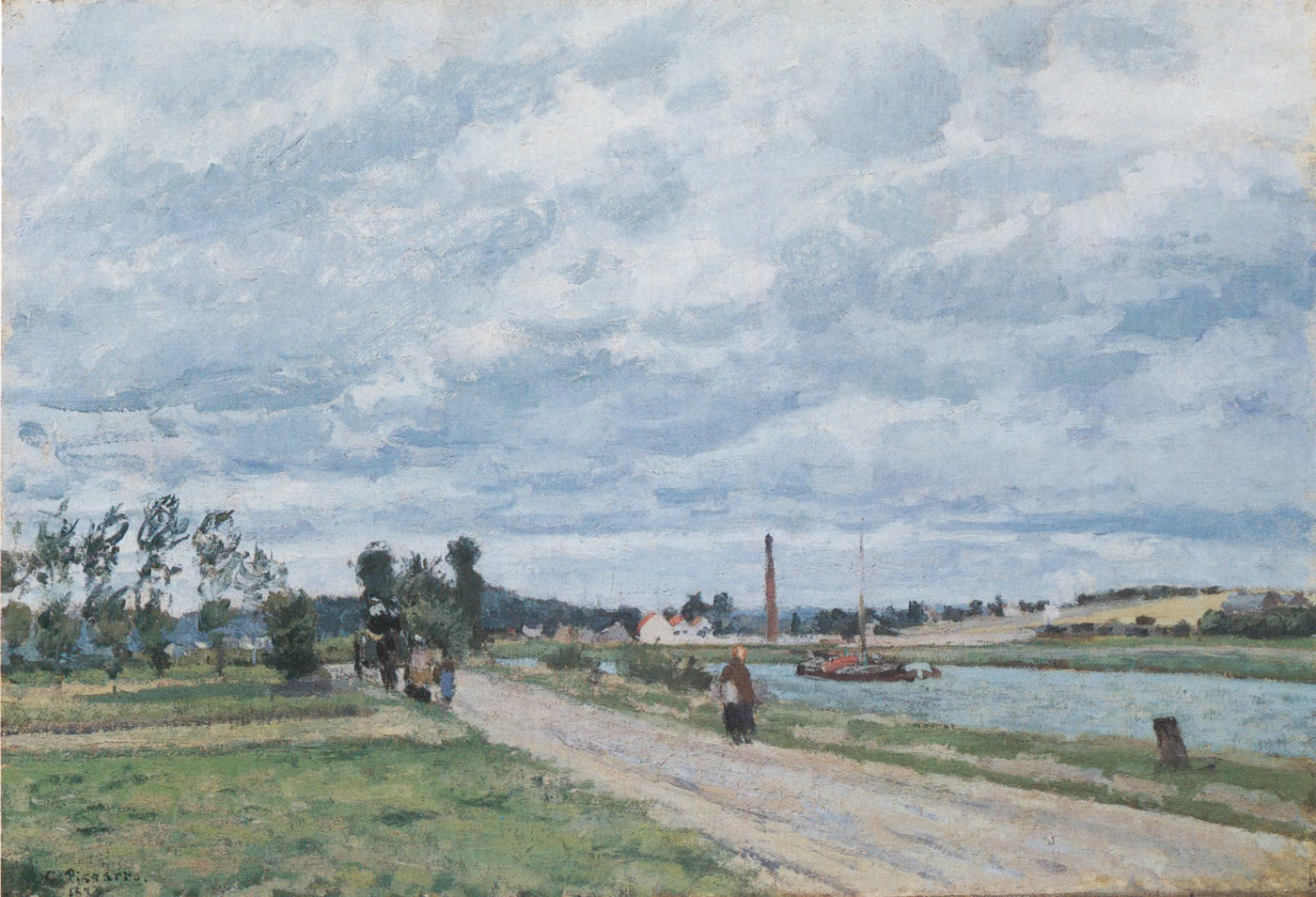
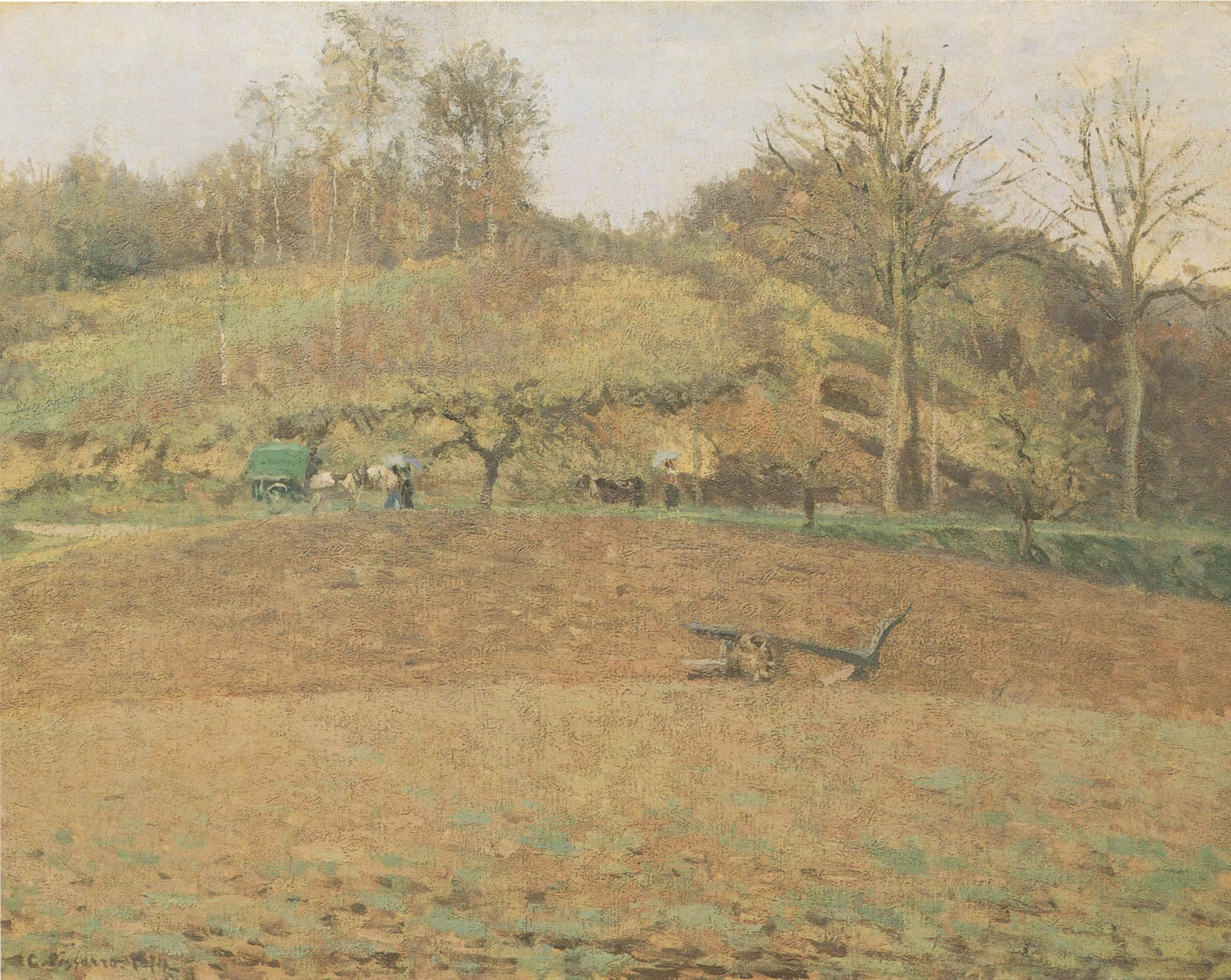
His landscapes of the Île-de-France countryside — Pontoise, Auvers-sur-Oise, Éragny-sur-Epte, where he settled in 1884 and lived until his death — form the heart of his work. The banks of the Oise, orchards in bloom, muddy roads lined with poplars, ploughed fields and kitchen gardens: Pissarro painted the countryside with constant attention to the variations of light and season, and a tenderness for the workers who animated it. His peasant figures — women in the fields, goose-girls, apple-pickers — are treated with a dignity and presence that recall Millet, but bathed in the fragmented light characteristic of Impressionism.
His technique evolved constantly. In the 1880s, under the influence of his son Lucien and especially after his encounter with Georges Seurat and Paul Signac, he adopted Pointillism for several years — before abandoning it around 1890, finding it too constraining and poorly suited to his sensibility.
An Exceptional Mentor
One of Pissarro's most remarkable characteristics was his generosity towards other artists. He was one of the very few painters of his generation to have exercised a direct and decisive influence on artists as different as Cézanne, Gauguin and Seurat — three giants of modern art who each owed him an important part of their formation.
Paul Cézanne, whom he met at the Académie Suisse in 1861, worked regularly alongside him at Pontoise and Auvers-sur-Oise in the 1870s. Pissarro taught him the patience of observation, construction through colour and the discipline of working from nature. Cézanne would say he was "humble and colossal" and considered him a father in painting. Paul Gauguin, who began painting in the 1870s, was also guided by Pissarro, who taught him the basics of Impressionist technique and invited him to exhibit with the group. As for Seurat, it was Pissarro who campaigned for his inclusion in the eighth and final Impressionist exhibition of 1886, imposing his Neo-Impressionists within a group already weakened by internal dissension.
Paris from the Window: The Boulevard Series
From 1893 until the end of his life, Pissarro, whose ailing eyes no longer permitted him to work outdoors in cold and windy weather, undertook to paint Paris from the windows of the hotels where he stayed. These series — the Boulevard Montmartre at different hours of day and night, the Boulevard des Italiens, the Rue Saint-Lazare, the Place du Théâtre-Français, the quays of the Seine — constitute one of the most ambitious and admirable undertakings of his career.
Like Monet with his cathedrals or haystacks, Pissarro systematically explored the variations of light, atmosphere and season on the same urban motif. But where Monet tended towards the dissolution of form in light, Pissarro maintained a living presence of passers-by, carriages and street vendors — the human swarming that gives the city its flesh.
Final Years and Death
Pissarro died on 13 November 1903 in Paris, aged seventy-three, from blood poisoning following a liver infection. He left an immense body of work — more than a thousand paintings, as well as thousands of drawings, watercolours, prints and pastels — and a considerable artistic legacy: several of his seven children became painters, notably Lucien Pissarro, who settled in England and built a career there.
His work is today held in the greatest museums in the world — the Musée d'Orsay in Paris, the Metropolitan Museum of Art in New York, the National Gallery in London — and continues to be regularly presented in monographic exhibitions that finally give him the central place he deserves in the history of Impressionism. A man of conviction, an artist of integrity, a natural teacher, Pissarro remains one of the most endearing figures in nineteenth-century art.