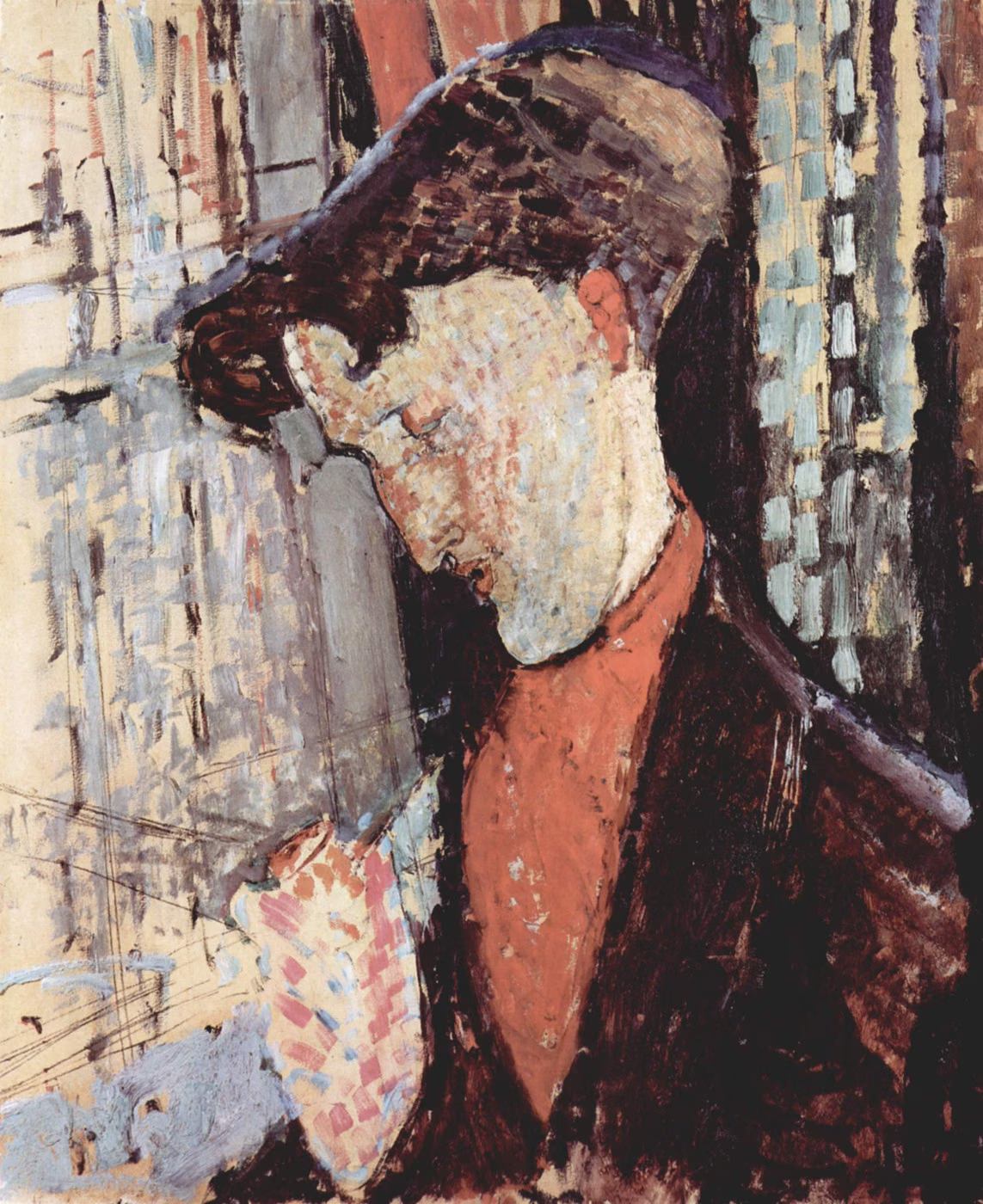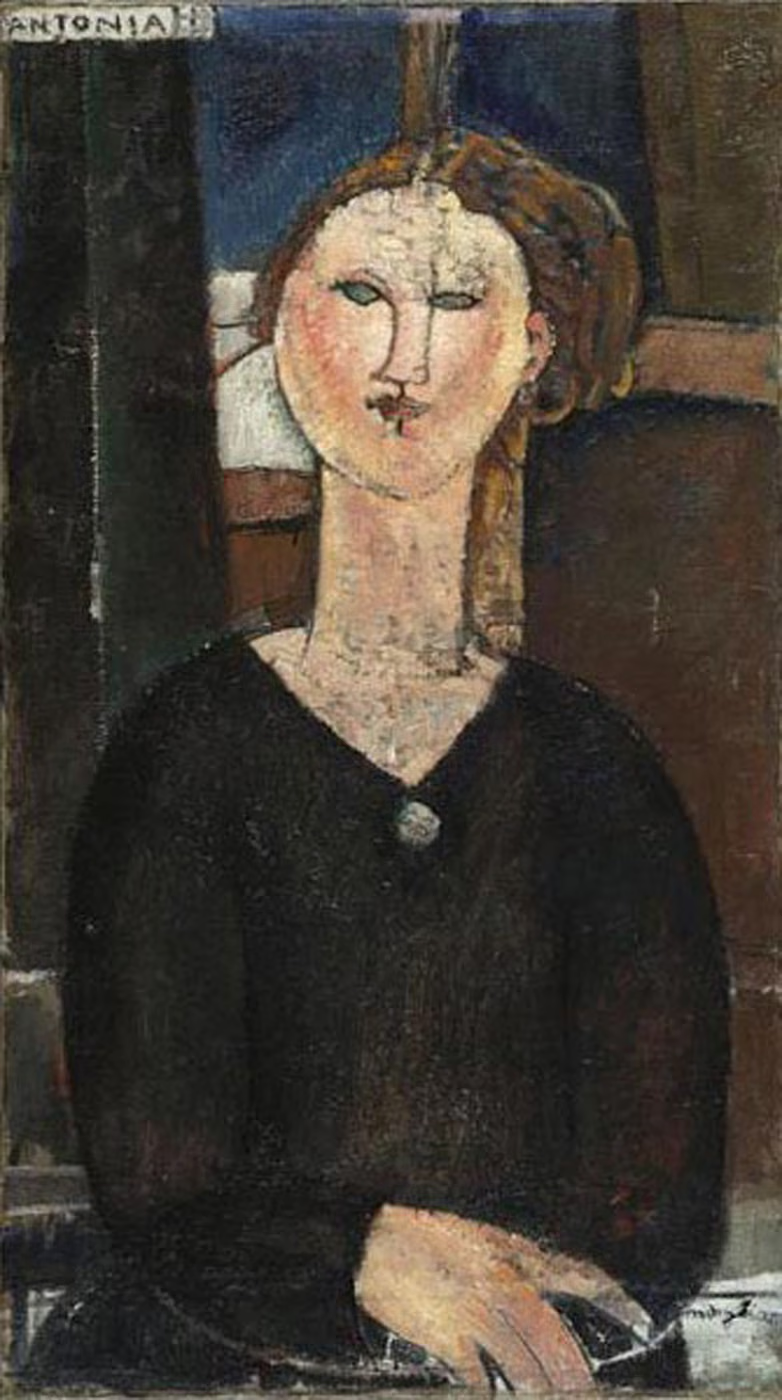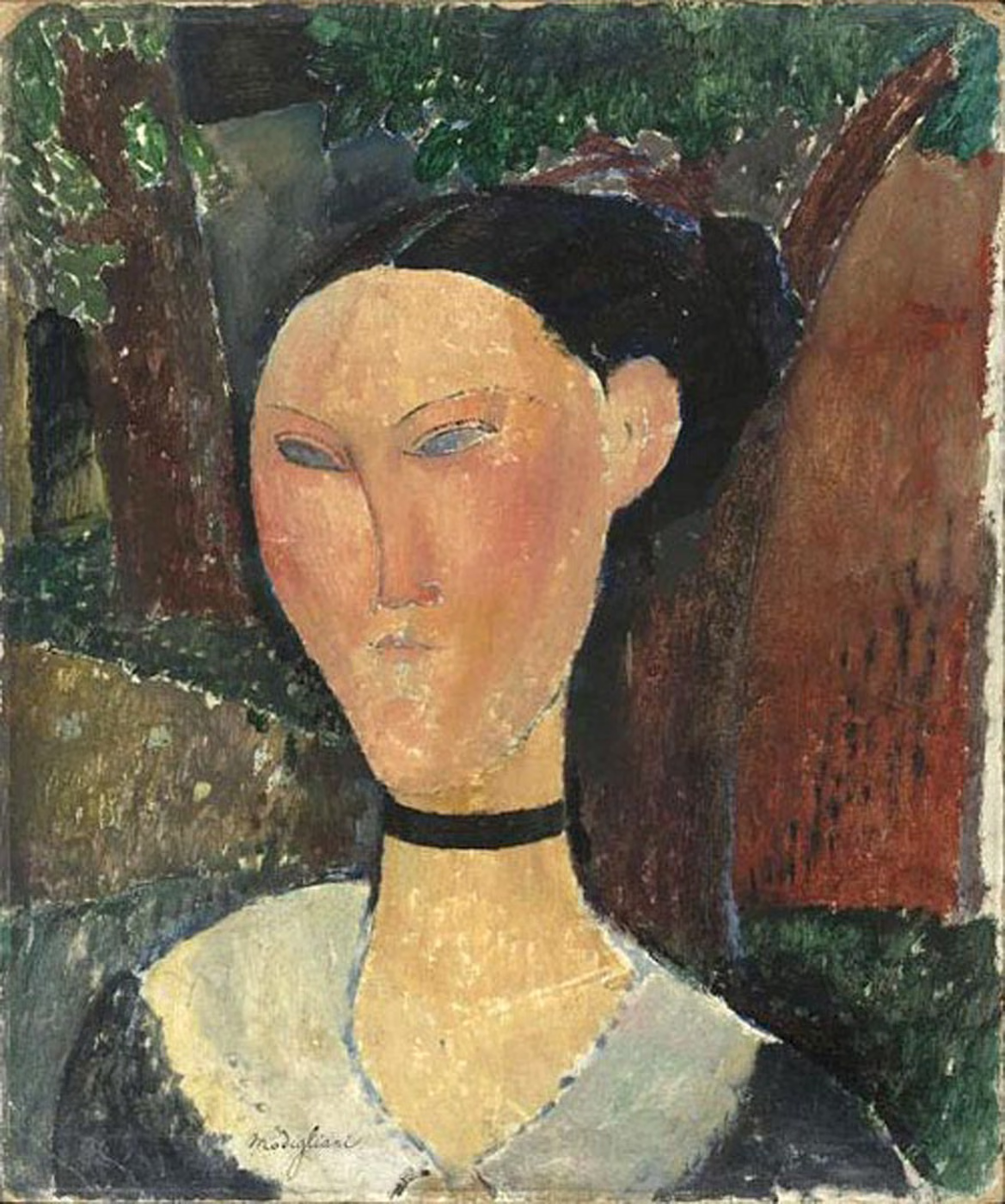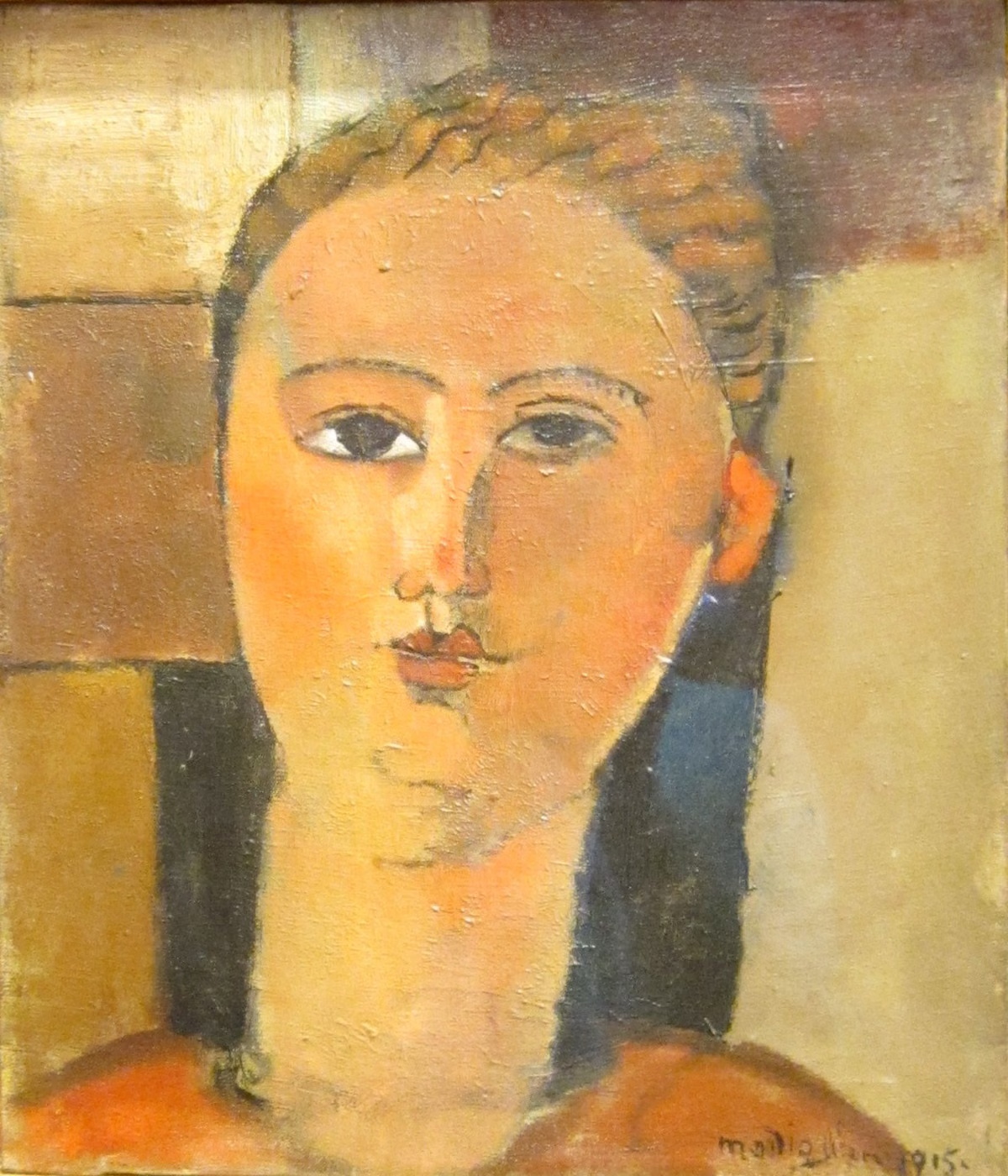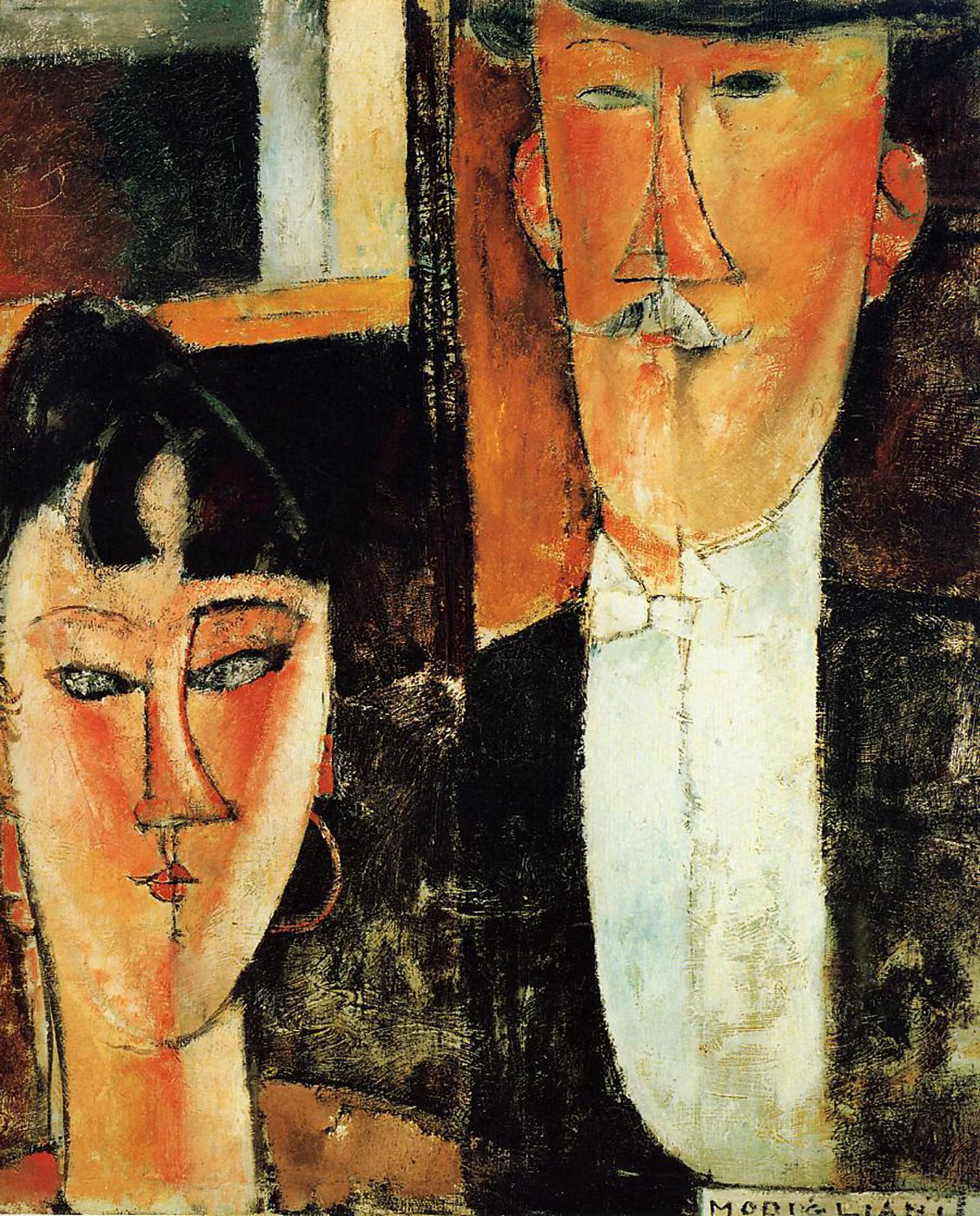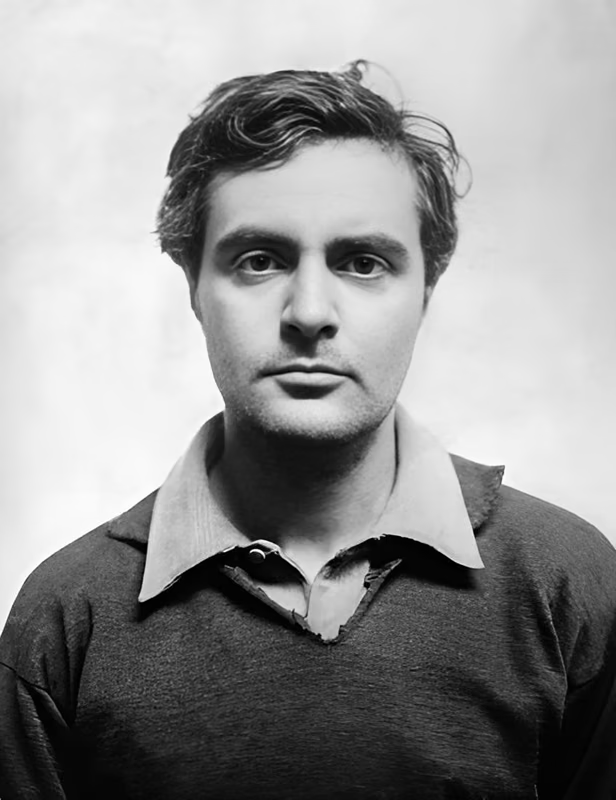
Amedeo Modigliani is one of the most endearing and most singular figures of the Parisian art scene in the early twentieth century. An Italian painter and sculptor settled in Montparnasse, he developed an immediately recognisable style — elongated necks, almond-shaped faces, almond-shaped eyes often lacking pupils, lines of arabesque suppleness — that resembles no other artist. Neither Cubist nor Fauvist nor Expressionist, he occupies a place apart in modern art, that of a profoundly humanist artist whose entire body of work is a song dedicated to the beauty of the human body and the singularity of each face. His brief life, consumed by illness, alcohol and poverty, has contributed to forging around his name a Romantic legend that should not, however, obscure the rigour and depth of his art.
A Jewish and Cultivated Childhood in Livorno
Amedeo Clemente Modigliani was born on 12 July 1884 in Livorno, a Tuscan port city with a commercial tradition, into a well-educated Sephardic Jewish family. His father, Flaminio Modigliani, ran a business that was in serious financial difficulty at the very moment of Amedeo's birth — according to tradition, the creditors who arrived to seize the family's goods could not touch the mother's childbed, and so a portion of the family possessions was saved by being piled onto it. His mother, Eugenia Garsin, was a woman of considerable culture, of French-Tunisian origin, who kept a journal, read the philosophers and ardently encouraged her son's artistic vocation.
Modigliani's childhood was marked by illness: he contracted pleurisy at eleven, then typhoid fever at sixteen. It was during one of these convalescences that his mother, to occupy him, introduced him to the museums and galleries of Tuscany. The revelation was total. In 1898, he began attending classes with the painter Guglielmo Micheli in Livorno, his first serious teacher.
In 1901, after another relapse of tuberculosis that obliged him to stay in southern Italy to recover, he visited Naples, Capri, Rome and Amalfi — places where he absorbed the riches of ancient and Renaissance art. In 1902, he enrolled at the Florence School of Fine Arts, then in 1903 at the Venice Institute of Fine Arts, where he became familiar with Venetian art and discovered the works of Toulouse-Lautrec and the Symbolists, which would have a lasting influence on him.
Paris and the Montparnasse Bohème
In 1906, Modigliani moved to Paris, the world capital of art and crucible of all the avant-gardes. He settled first in Montmartre, then in Montparnasse, which became his permanent territory. He frequented La Ruche — the artists' residence on the rue Dantzig — and the neighbourhood cafés, the Dôme, the Rotonde, the Closerie des Lilas, where Picasso, Apollinaire, Max Jacob, Brancusi, Soutine, Utrillo, Kisling and dozens of other artists, poets and intellectuals from across Europe rubbed shoulders.
Modigliani was immediately noticed for his physical beauty — tall, elegant, always well-dressed despite the poverty, speaking several languages and quoting Dante and Nietzsche from memory. He was also noticed for his excesses: alcohol, hashish, endless nights, debts, tumultuous love affairs. This image of the poète maudit, which he sometimes cultivated with a certain theatricality, masked a rigorous and exacting artistic discipline. He drew incessantly — his sketchbooks testify to relentless work on line, simplification of form, the search for essential expression.
His meeting with the Romanian sculptor Constantin Brancusi, around 1909, was decisive. Brancusi introduced him to direct stone carving, a technique that required working the material without an intermediate maquette, in direct dialogue with the substance. Modigliani devoted the years 1909–14 to sculpture, producing a series of limestone heads of striking power and originality, directly influenced by African and Khmer art that he discovered at the Trocadéro. These sculptures — some twenty known pieces — directly prefigure the elongated and stylised manner of his later paintings.
A Unique Style: The Line as Soul
From 1914–15, Modigliani progressively abandoned sculpture — too dusty and harmful to his diseased lungs — to devote himself exclusively to painting. In these years he definitively forged his own style, a synthesis of all his influences and a wholly original sensibility.
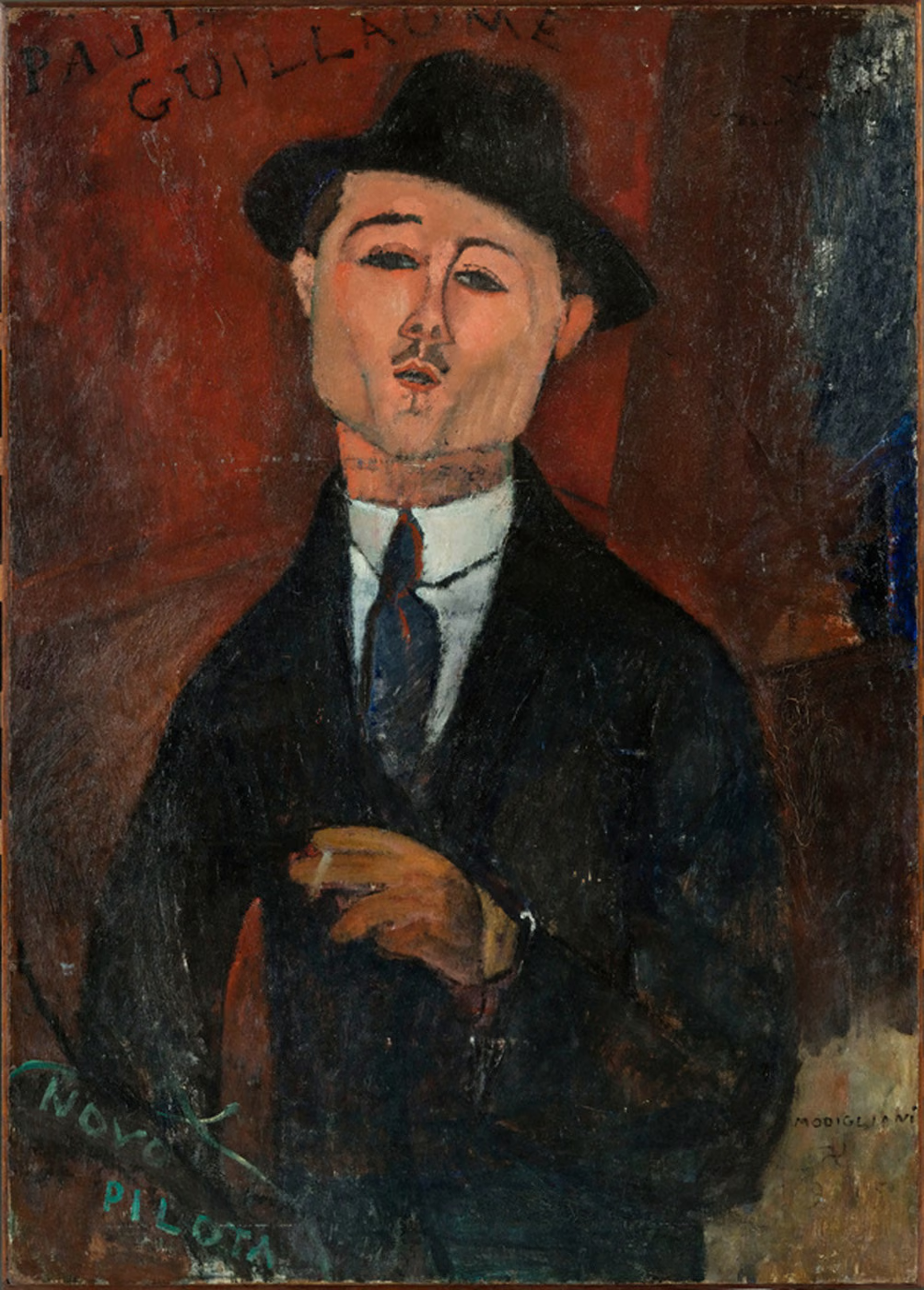
His portraits and nudes are recognisable among any: faces stretched into ovals, necks disproportionately elongated, noses displaced to one side in the manner of African sculptures, eyes often painted as a single flat area of colour, without pupil or reflection — as if the gaze were turned inward rather than towards the world. Far from being gratuitous distortion, these deformations were expressive tools: they allowed Modigliani to capture something essential in the personality of his sitters, an interiority that realistic portraiture could not reach.
His influences were multiple and acknowledged: the grace of Botticelli and the Italian primitives, the arabesque of Toulouse-Lautrec, the formal simplification of Cézanne, the frontality of African art and Cycladic sculpture. But the result was an entirely personal voice, immediately identifiable.
His models were his friends, his lovers, his Montparnasse neighbours: the dealer Paul Guillaume, the painter Chaïm Soutine, the poet Jean Cocteau, the poet Anna Akhmatova whom he met during her Paris stay in 1910 and of whom he made several portraits. Each face was treated with a unique attention and tenderness, as if each subject were the only one that mattered.
The Nudes and the Scandal of 1917
In 1917, the art dealer Léopold Zborowski, who had been supporting Modigliani for several years by buying his canvases and helping him survive, organised his first and only solo exhibition during his lifetime, at the Berthe Weill gallery in Paris in December. The exhibition included a series of female nudes of such frankness and sensuality that the authorities were alarmed: within a few hours, the police prefecture had the exhibition closed for obscenity, owing to the explicit depiction of pubic hair on the models. This was Modigliani's only solo show in his entire life.
Yet these nudes are among his most accomplished works. Far from any pornography, they celebrated the female body in its full carnal completeness, with a warmth and sensuality that recalled the great traditions of Venetian painting and Titian, but transposed into a resolutely new formal modernity.
Jeanne Hébuterne and the Final Flame
The most important encounter of Modigliani's last years was that of Jeanne Hébuterne in 1917. A young woman of nineteen, herself an artist, daughter of a bourgeois Catholic family who profoundly disapproved of the relationship, Jeanne became his companion and muse. She was absolutely faithful to him, enduring poverty, drinking bouts and absences, and bore him a daughter, Giovanna, born in November 1918. She was nine months pregnant with their second child when Modigliani died.
He painted her many times, in portraits of a tenderness and serenity that contrast with the agitation of his life. Jeanne's face, with its clear eyes often painted without pupils and its gracefully inclined neck, is one of the most emblematic images in his work.
These final years also saw a degree of commercial recognition, thanks notably to Zborowski's support and the sale of canvases to French and foreign collectors. But Modigliani's health was deteriorating irreversibly. The tuberculosis that had afflicted him since childhood worsened, aggravated by the excesses of bohemian life and Parisian winters spent in unheated studios.
A Death at Thirty-Five and a Tragic Mourning
Amedeo Modigliani died on 24 January 1920 in Paris at the Hôpital de la Charité, from tubercular meningitis. He was thirty-five. Jeanne Hébuterne, nine months pregnant, threw herself from the window of her parents' apartment the following morning, 25 January 1920, unable to survive the loss of the man she loved. She was twenty-one. The two lovers are buried together at the Père-Lachaise cemetery, reunited in death after Jeanne's family had initially refused her a shared burial. Her epitaph reads: "Devoted companion until the supreme sacrifice."
Their daughter Giovanna was taken in by the Modigliani family in Italy, where she grew up and devoted part of her life to defending her father's memory and work.
A Luminous Legacy
Modigliani's death immediately triggered a reassessment of his work. Canvases that Zborowski had struggled to sell a few months earlier were suddenly sought after at high prices — the tragic irony familiar to so many maudits. From the 1920s and 30s, his portraits and nudes entered major private and public collections across Europe and America.
Today his canvases are among the most highly valued on the international art market. In 2015, his Reclining Nude (1917–18) was sold at Christie's in New York for 170.4 million dollars — one of the highest prices ever reached for a work of art at auction. The Musée de l'Orangerie in Paris, MoMA in New York, Tate Modern in London and many other major museums hold his key works.
Modigliani's influence on twentieth-century painting is real, though difficult to precisely circumscribe: his style was so personal that it did not engender a school in the strict sense. But his way of fusing the classical Mediterranean tradition with the lessons of modernity, his search for a pure and essential line capable of capturing the soul of a face, and his deep humanism — the conviction that every human being deserves to be looked at with attention and tenderness — continue to inspire generations of painters and draughtsmen around the world.