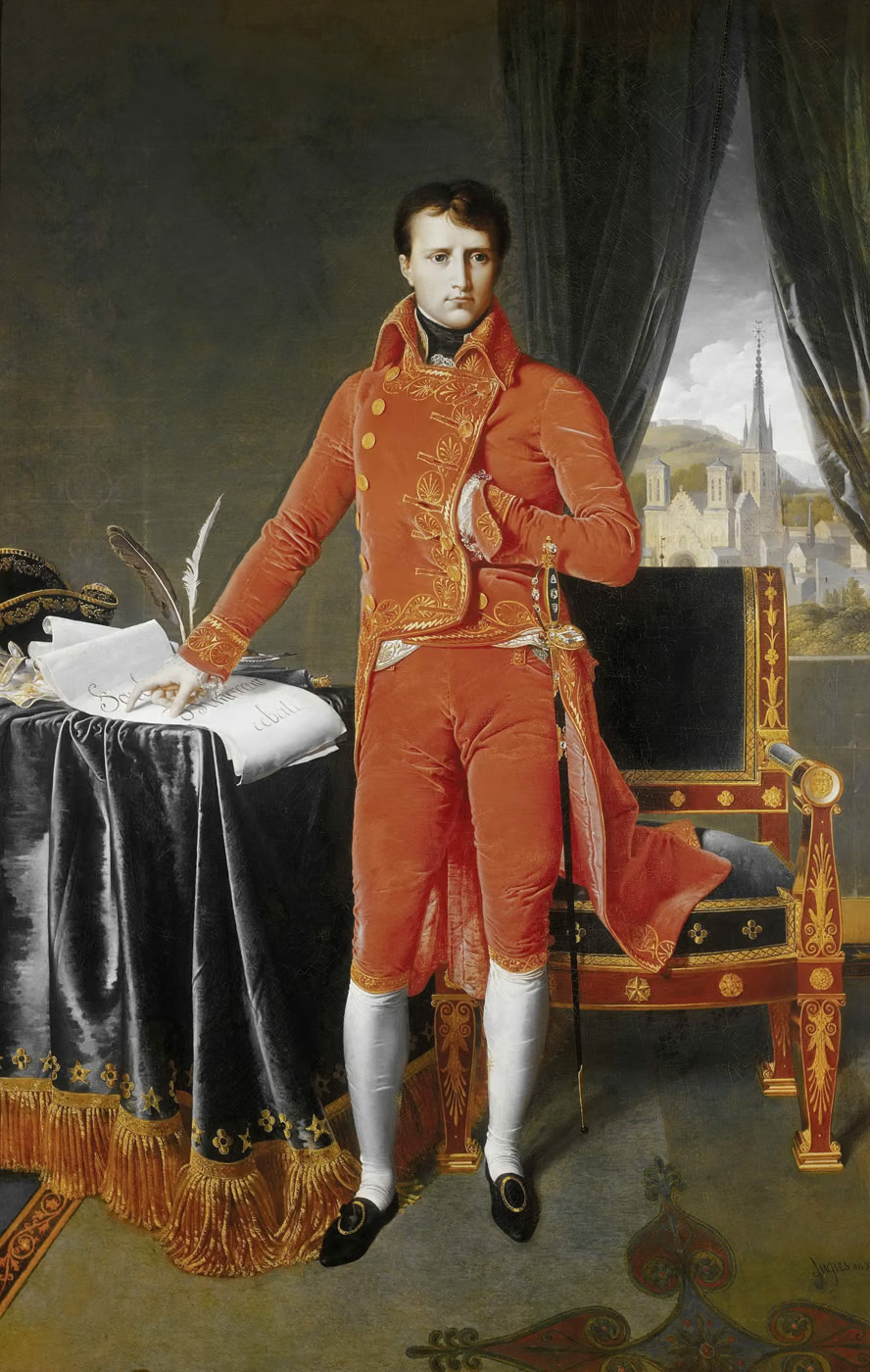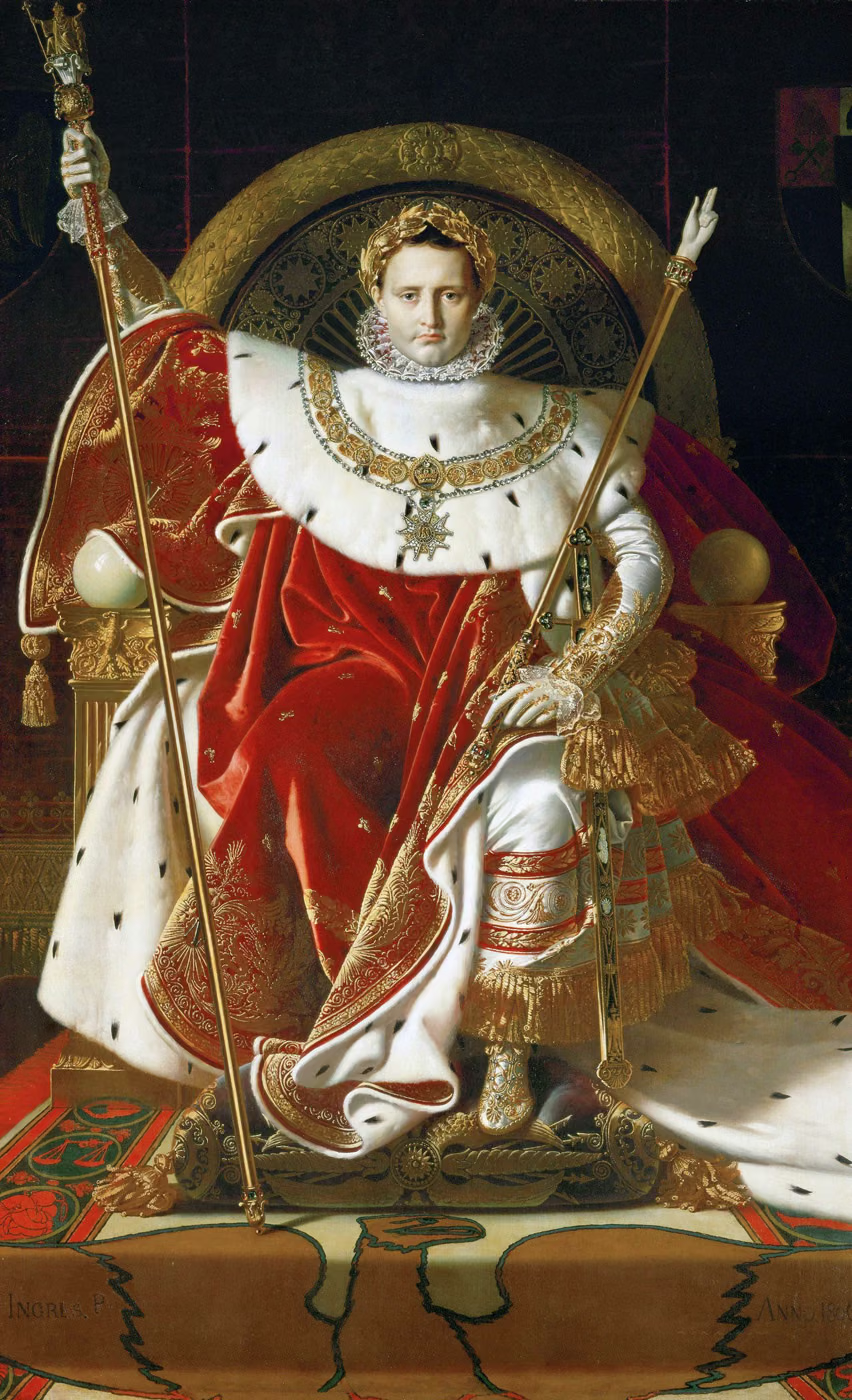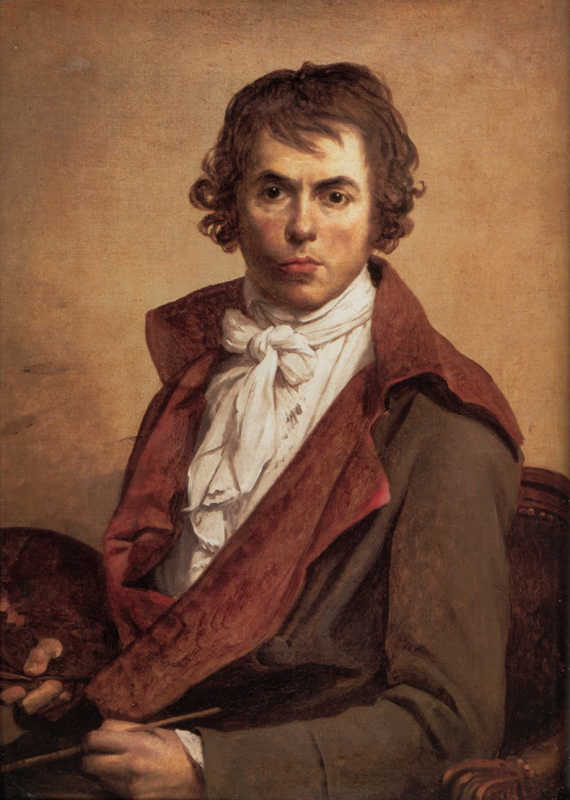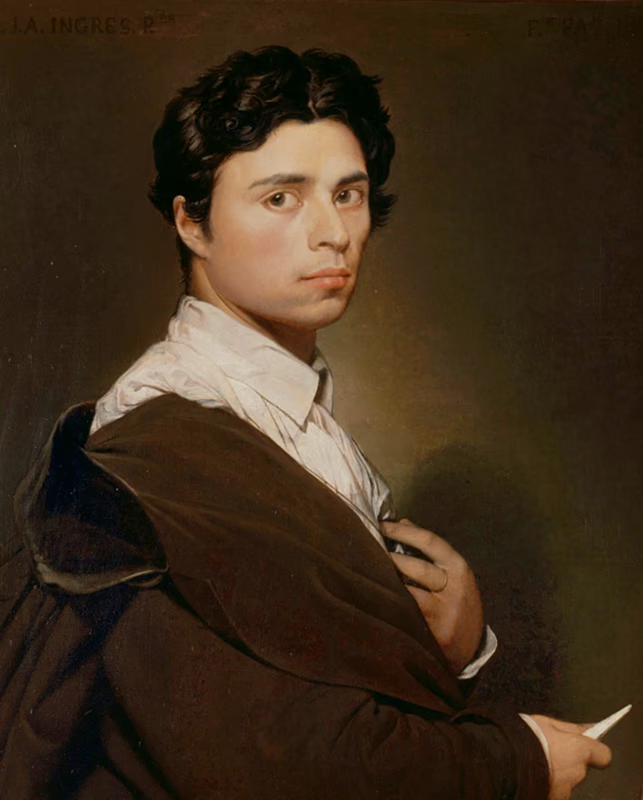
Jean-Auguste-Dominique Ingres is the most important and influential figure of Neoclassicism in nineteenth-century French painting. A pupil of David, a passionate admirer of Raphael and Greek Antiquity, and an uncompromising defender of drawing over colour, he embodied for nearly half a century the camp of order and tradition against the Romantic innovations of Delacroix — an opposition that structured the entire aesthetic debate of first-half-century France. An exceptional portraitist of subtle psychology and dazzling formal precision, a painter of large historical and mythological compositions, and the creator of a singularly sensuous Orientalist genre with his odalisques, Ingres is a complex figure whose work — often misunderstood — contains a strangeness and a modernity that the twentieth century eventually recognised.
A Toulouse Childhood at the Cradle of the Arts
Jean-Auguste-Dominique Ingres was born on 29 August 1780 in Montauban, in the Tarn-et-Garonne. His father, Jean-Marie-Joseph Ingres, was a versatile artist — painter, sculptor, miniaturist and musician — who recognised his son's exceptional talent early and encouraged it ardently. His mother, Anne Moulet, was the daughter of a wigmaker.
From childhood, Ingres showed a remarkable double aptitude: for drawing and for music. He would always be both — a passionate violinist whose talent earned him a place in the Toulouse Capitole orchestra as a teenager, and a draughtsman of stupefying precocity. The French expression "violon d'Ingres" — meaning a favourite hobby or secondary passion — owes its origin to him.
In 1791, at eleven, he entered the École des Beaux-Arts in Toulouse, where he studied painting and drawing under Guillaume-Joseph Roques and Joseph Briant. In 1797, at seventeen, he went to Paris to enter the studio of Jacques-Louis David, then at the peak of his glory and influence — first painter to the Republic and later to the Napoleonic Empire. Ingres remained there until 1800, absorbing the master's lessons while developing a personal sensibility clearly distinct from David's — one closer to Raphael and the Italian primitives than to the Roman stoicism that David embodied.
The Prix de Rome and Italy
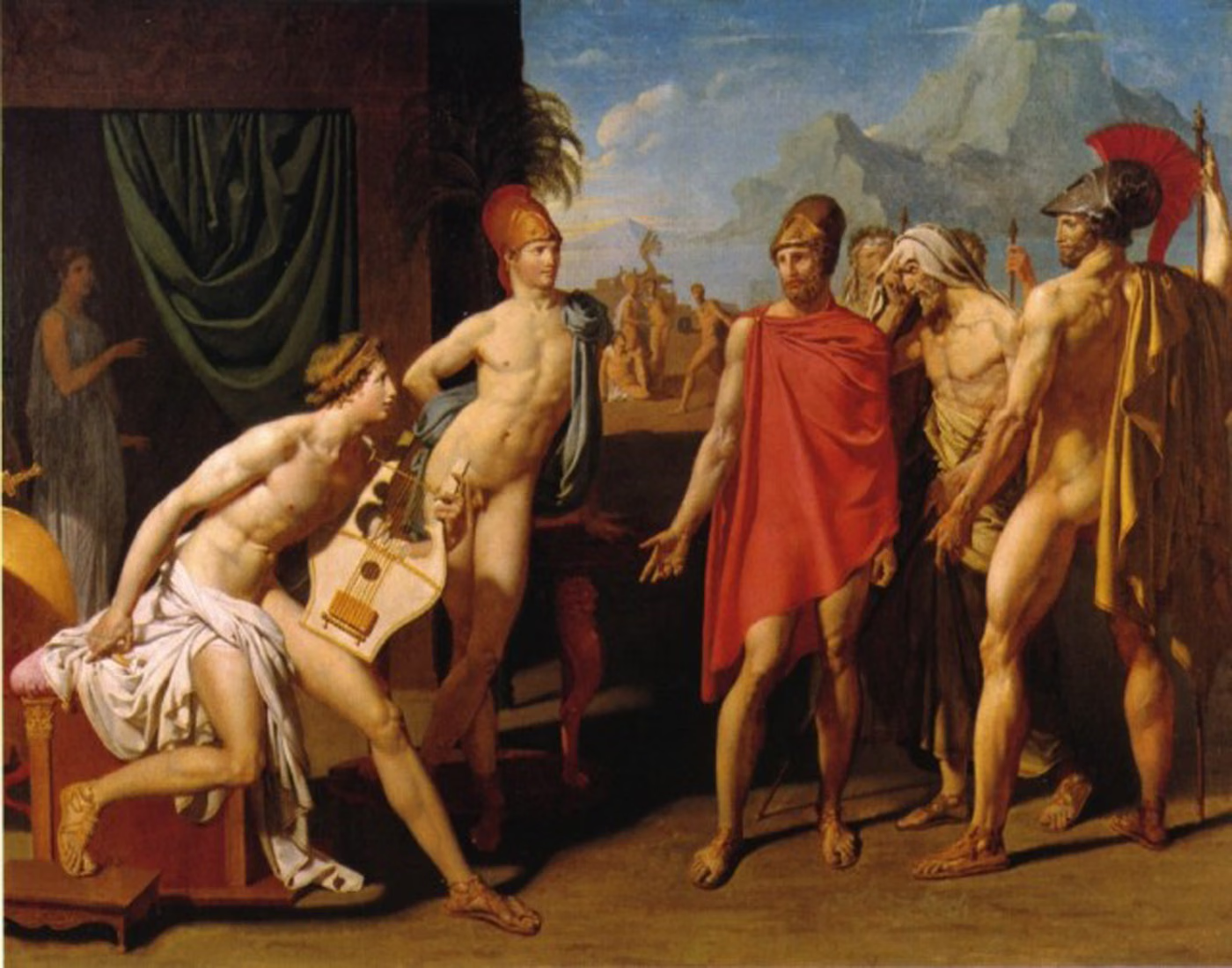
In 1801, Ingres won the Prix de Rome with his painting The Ambassadors of Agamemnon (École des Beaux-Arts, Paris), opening the way for a state-funded study stay in Italy. But the Napoleonic wars delayed his departure: he was unable to join the Villa Medici in Rome until 1806. He would end up staying eighteen years — far beyond the standard four-year period — such was his profound attachment to Italy, and above all to Raphael.
His Roman years (1806–1824) were decisive. He studied the Renaissance masters tirelessly — Raphael above all, whose portraits and Vatican frescoes represented for him an unsurpassable ideal — but also the Italian primitives, Giotto and the painters of the Trecento and Quattrocento, whose linear purity attracted him as much as Raphaelesque perfection. He visited Naples, Florence, Venice. He drew the Antique, copied Greek sculptures, steeped himself in the beauty of ruins.
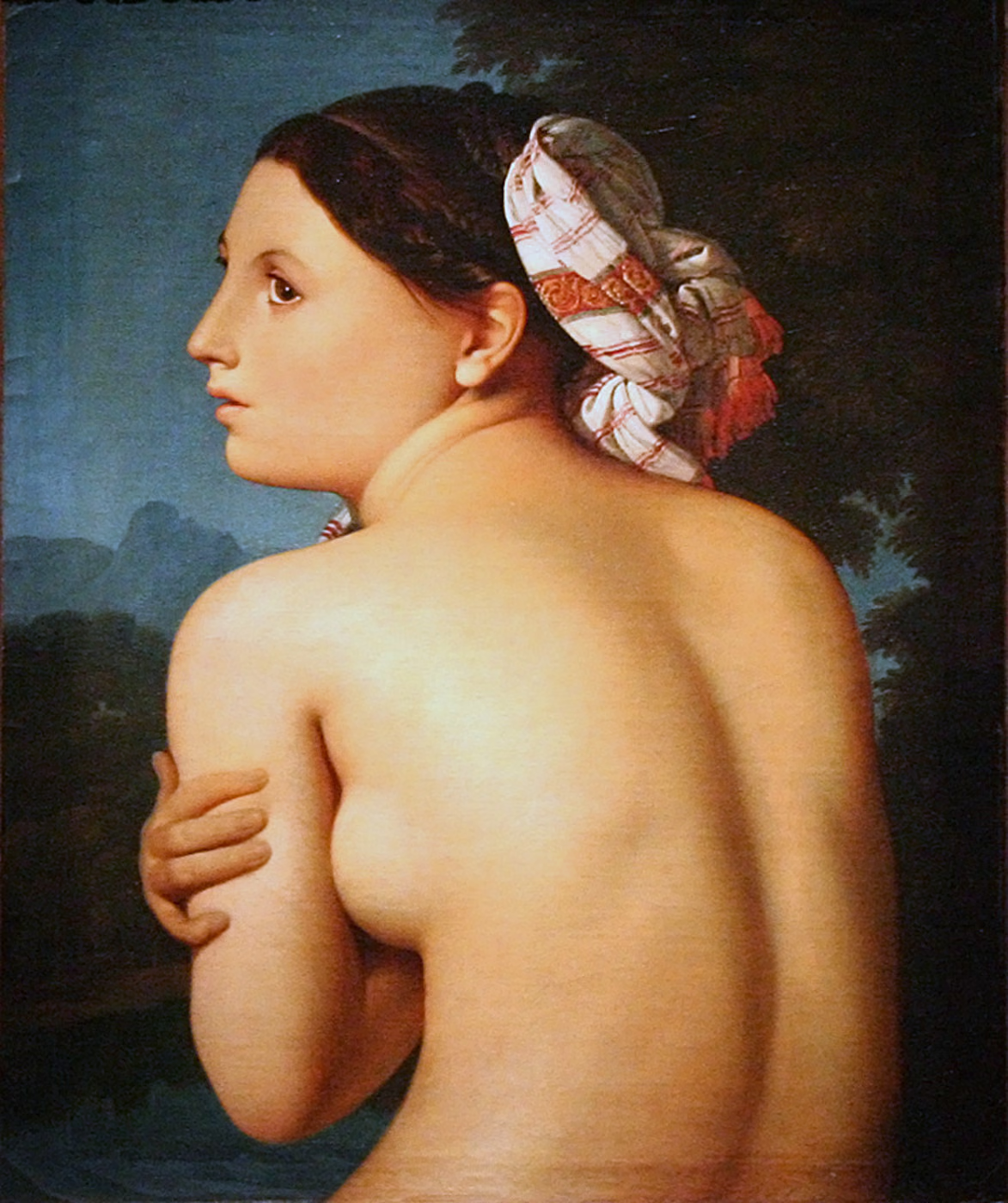
It was in Rome that he produced his first major history paintings, sent as "Roman submissions" to Paris: Oedipus and the Sphinx (1808, Louvre), Jupiter and Thetis (1811, Musée Granet, Aix-en-Provence), and The Valpinçon Bather (1808, Louvre). These works, often poorly received in Paris when they arrived — critics faulting Ingres for deliberate archaism and anatomical distortions that shocked academic convention — already testify to a fully personal vision: the back of the Valpinçon Bather, of a contour and luminosity of astonishing beauty, is perhaps the first work that clearly announces the mature Ingres.
Portraits: An Incomparable Genius
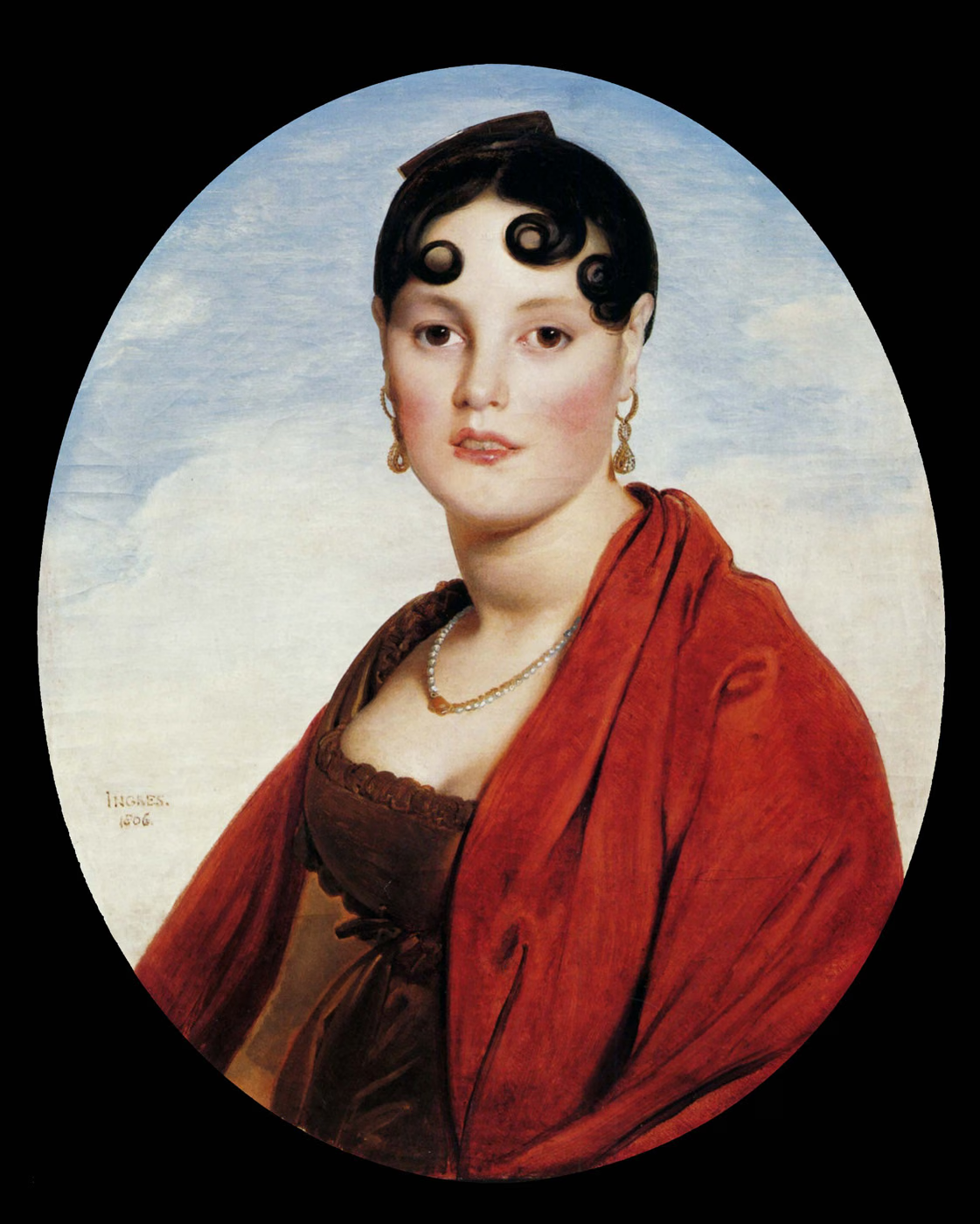
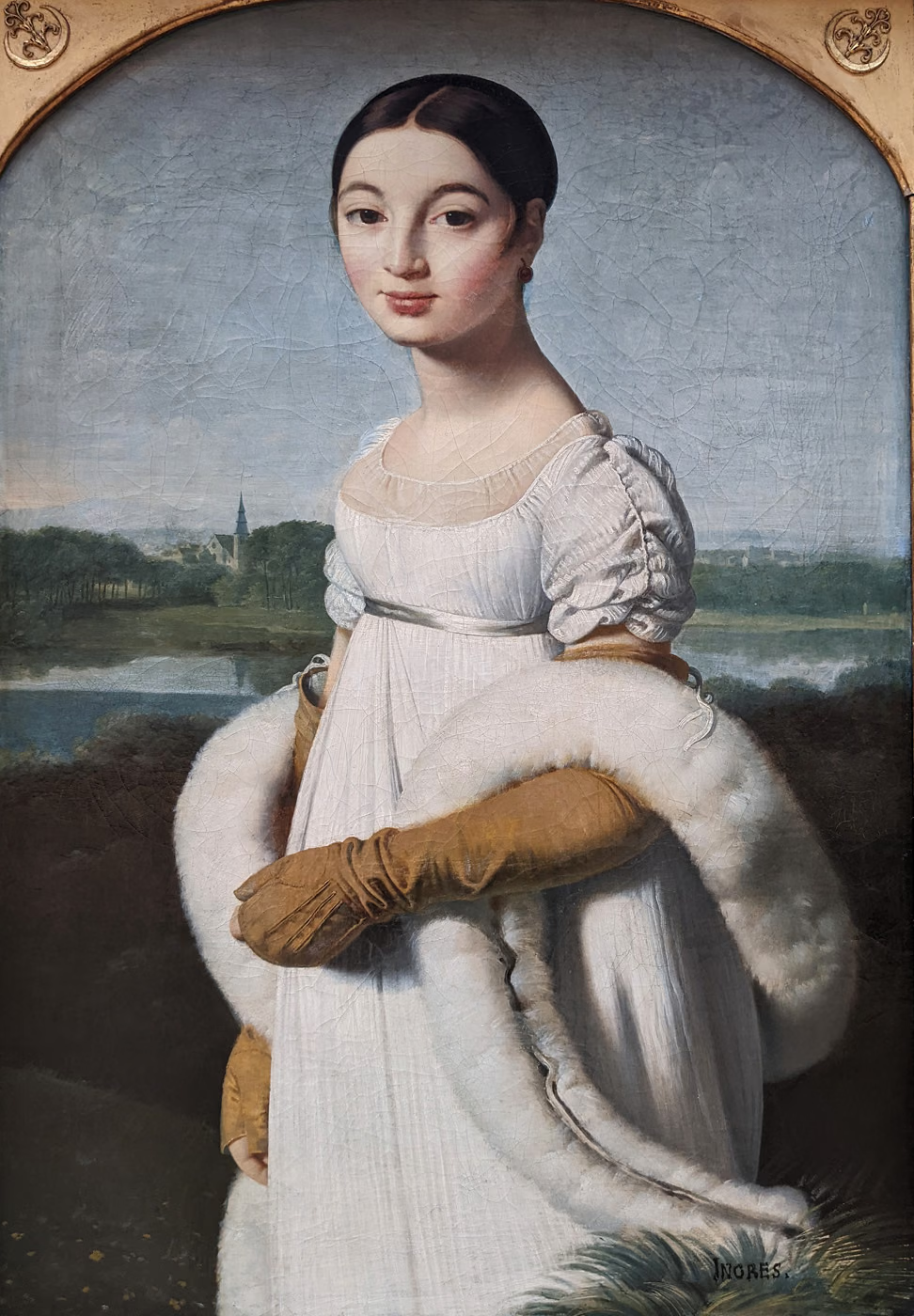
During his Roman and Florentine years, Ingres largely supported himself through portrait commissions, particularly from travellers and foreign diplomats passing through Italy. These portraits — in pencil for less wealthy sitters, in oil for the more prosperous — rank among the finest in the entire history of the genre.
The Portrait of Monsieur Bertin (1832, Louvre), produced after his definitive return to Paris, is universally considered his masterpiece in this field. Louis-François Bertin, director of the Journal des Débats, is shown half-length, hands resting on his knees, in an attitude of quiet power and concentrated intelligence that embodies the triumphant spirit of the July Monarchy bourgeoisie. The painting's psychological mastery is arresting: Ingres captured not only an impeccable physical likeness but a character, a way of being in the world.
His pencil portrait drawings — which he himself dismissed as mere commercial work and which are today among the most admired sheets of the nineteenth century — demonstrate a dazzling technical perfection: the line is of absolute delicacy and precision, the faces of a presence and vitality that defy time.
The Odalisques and the Imagined Orient
Ingres never set foot in the Orient, and yet he was one of the most influential creators of an Orientalist imagery that captivated all of nineteenth-century Europe. His Grande Odalisque (1814, Louvre), painted for the Queen of Naples, Caroline Murat, shows a nude woman from behind, stretched out on silk cushions, turning her head to look at the viewer with a calm and distant gaze. The canvas caused a scandal when shown at the Salon of 1819: critics denounced the three extra vertebrae in the figure's back, the anatomically impossible proportions. Ingres did not defend himself — for him, the beauty of the line took precedence over anatomical truth.
This freedom from actual anatomy in favour of formal, ideal beauty is at the heart of his approach. His odalisques — The Little Bather (1828, Louvre), Odalisque with a Slave (1839–40, Fogg Art Museum, Cambridge), and above all The Turkish Bath (1862, Louvre), a vast circular composition of nude women in a hammam painted at the age of eighty-two — form a body of work of singular sensuality, poised between reverie and formal perfection.
The Quarrel with Delacroix and the Aesthetic Debate
In the Parisian art world of the 1820s to 1860s, Ingres embodied the camp of classicism and drawing against the Romanticism and colour represented by Eugène Delacroix. This opposition, often oversimplified, nonetheless structured the entire French aesthetic debate of the period: the modernised "Poussinists" led by Ingres against the revitalised "Rubenists" led by Delacroix. Ingres, as director of the Académie de France in Rome (1834–41) and presiding figure of the École des Beaux-Arts, exercised considerable authority over the formation of French painters — an authority that would outlast him by decades.
He returned to Paris in 1824 after eighteen years away, welcomed enthusiastically at the Salon with his Vow of Louis XIII (Montauban Cathedral). In 1834, after a fresh disappointment at the Salon with his Martyrdom of Saint Symphorian (Autun Cathedral), cruelly criticised, he left again for Rome to direct the Villa Medici, which he ran until 1841. He returned permanently to Paris in 1841 and reigned over the official art scene until the end of his life.
Final Years and Death
Ingres lost his first wife, Madeleine Chapelle, whom he had married in Rome in 1813, in 1849. This bereavement plunged him into great distress. In 1852, at the age of seventy-two, he married for a second time Delphine Ramel, forty years his junior, who brought him a serenity and affection by which he remained deeply moved until the end.
He continued to paint to an advanced age, with remarkable vitality and productivity. He died on 14 January 1867 in Paris, aged eighty-six, from pneumonia. He bequeathed to his birthplace of Montauban the bulk of his works, drawings and paintings — an exceptional collection that today forms the heart of the Musée Ingres-Bourdelle.
A Paradoxical Legacy
Ingres's legacy in modern art is paradoxical. The Impressionists, who defined themselves partly against the academicism of which he was the presiding figure, could not help paying him an ambiguous tribute. Degas, who considered himself Ingres's spiritual heir in the cult of drawing, copied his works and collected them. Picasso, in his Neoclassical period of the 1920s, clearly drew on the anatomical distortions and linear purity of Ingres's odalisques. Matisse owes him something of his way of treating nudes. Beyond the labels of "classical" or "academic," Ingres remains one of the most accomplished draughtsmen in the history of Western art, and his finest canvases — the Valpinçon Bather, the Bertin portrait, the Grande Odalisque, the Turkish Bath — rank among the absolute masterpieces of French painting.