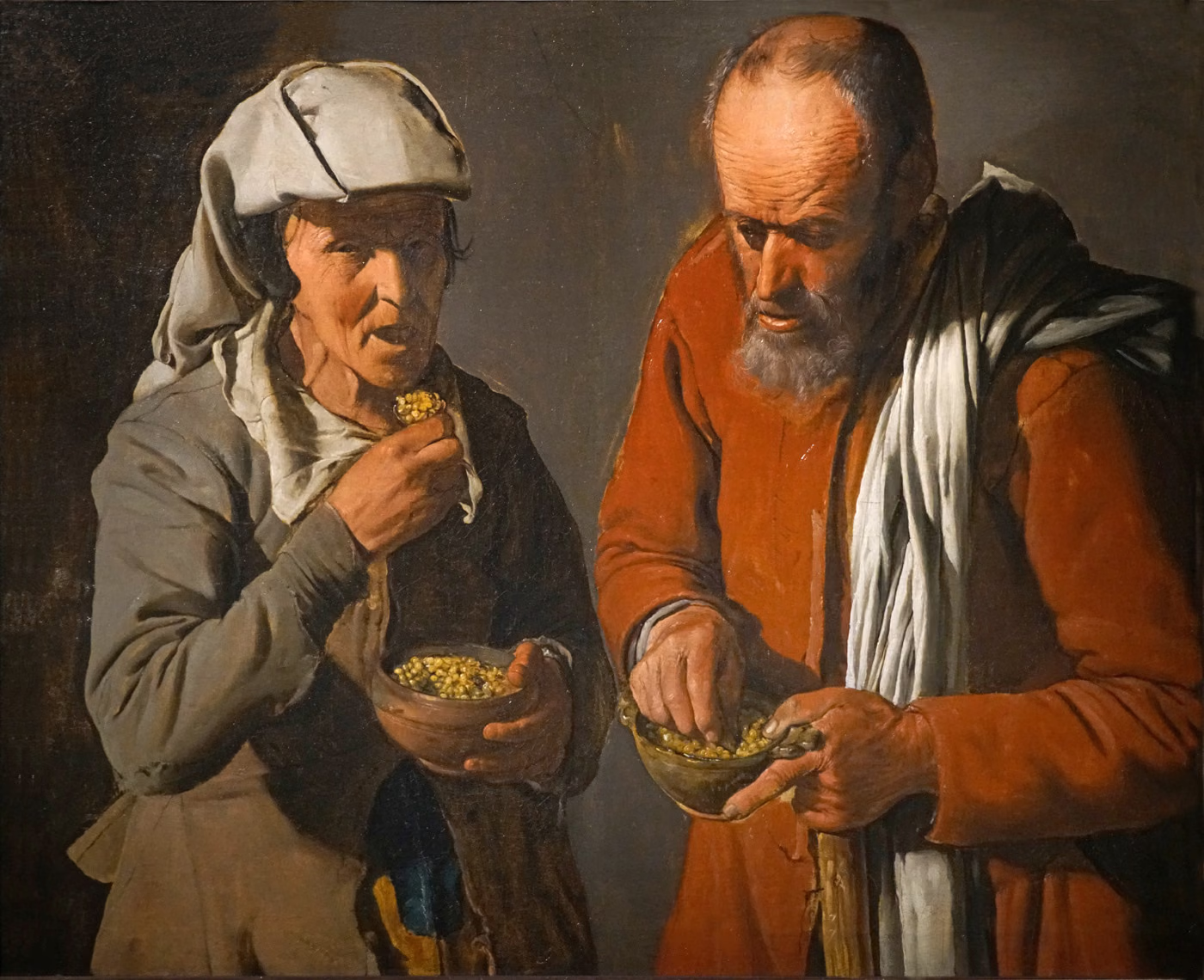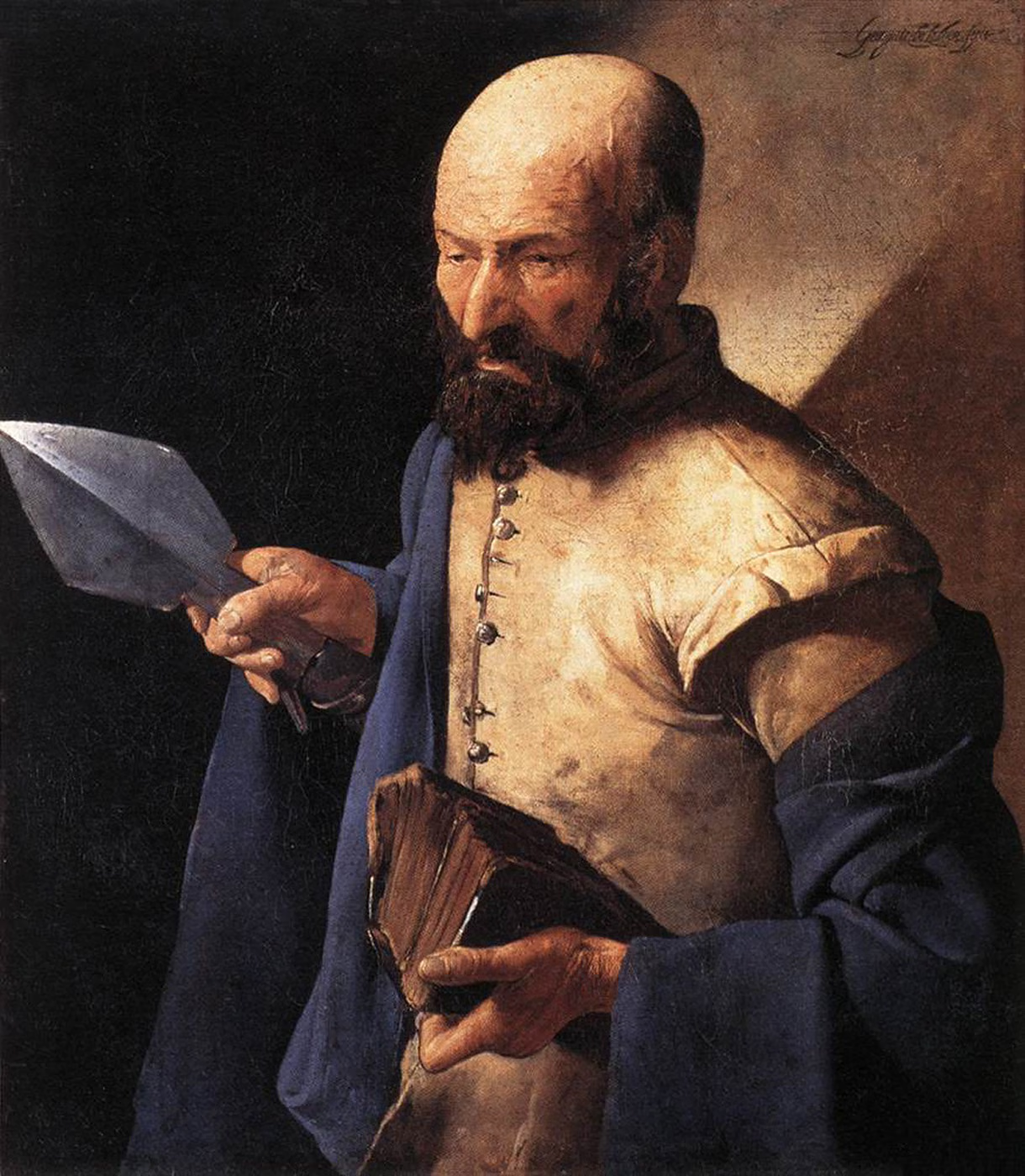
Georges de La Tour is one of the most mysterious and haunting figures in seventeenth-century French painting. A Lorraine painter whose work, largely forgotten for more than two centuries, was rediscovered in the early twentieth century with astonished wonder, he specialised in two registers between which his genius moved with equal mastery: daytime scenes peopled with popular figures and biblical subjects treated with vigorous realism, and above all nocturnal scenes lit by the single flame of a candle or torch, of incomparable poetry and spirituality. In these painted nights, silence is almost palpable, light becomes prayer, and the mystery of the human condition is revealed in the half-dark.
A Life in Lorraine, Between War and Prosperity
Georges de La Tour was born on 13 March 1593 in Vic-sur-Seille, a small Lorraine town then under the authority of the bishopric of Metz. His father, Jean de La Tour, was a baker; his mother, Sybille Molian, came from a family of local craftsmen. We know very little about his artistic training: no document allows us to identify with certainty his master or his years of apprenticeship. Some historians have suggested a stay in the Netherlands or Italy — where he might have come into contact with the Caravaggist current — but no direct evidence has been established.
In 1617 he married Diane Le Nerf, daughter of a wealthy bourgeois of Lunéville, the city where he settled and would spend most of his life. This marriage opened the doors of Lunéville's prosperous society and gave him access to well-off clients. He quickly acquired a local and then regional reputation as a quality painter. In 1620 he was mentioned as a painter in the city's records.
Lorraine in the seventeenth century was a region devastated by wars: the Thirty Years' War (1618–48) caused considerable damage, with armies pillaging towns, plague epidemics and repeated famines. Lunéville itself was occupied several times by French troops. De La Tour seems to have navigated these trials with relative prosperity, drawing on his social position and artistic reputation. He was known for his authoritarian and litigious character — the local archives preserve the traces of numerous conflicts with neighbours and suppliers.
Royal Recognition
Around 1630–39, Georges de La Tour reached the full maturity of his style and the peak of his reputation. He received commissions from the greatest figures in the region: Charles IV, Duke of Lorraine; the Cardinal de La Valette, the king's governor of the province. In 1639, one of his canvases — most likely a Saint Sebastian Tended by Irene — was presented to King Louis XIII during a stay at La Fère, and the monarch appreciated it so much that he reportedly had all the other paintings in his chamber removed so that this one alone would remain. He was accorded the title "ordinary painter to the king" — a national consecration for a provincial artist.
His works were also collected by wealthy Parisian individuals, notably the Councillor of State Brûlart de La Borde, whose posthumous inventory (1668) mentions several paintings by de La Tour. These references attest to a reputation that extended well beyond Lorraine during his lifetime.
The Daytime Work: Realism and Popular Figures
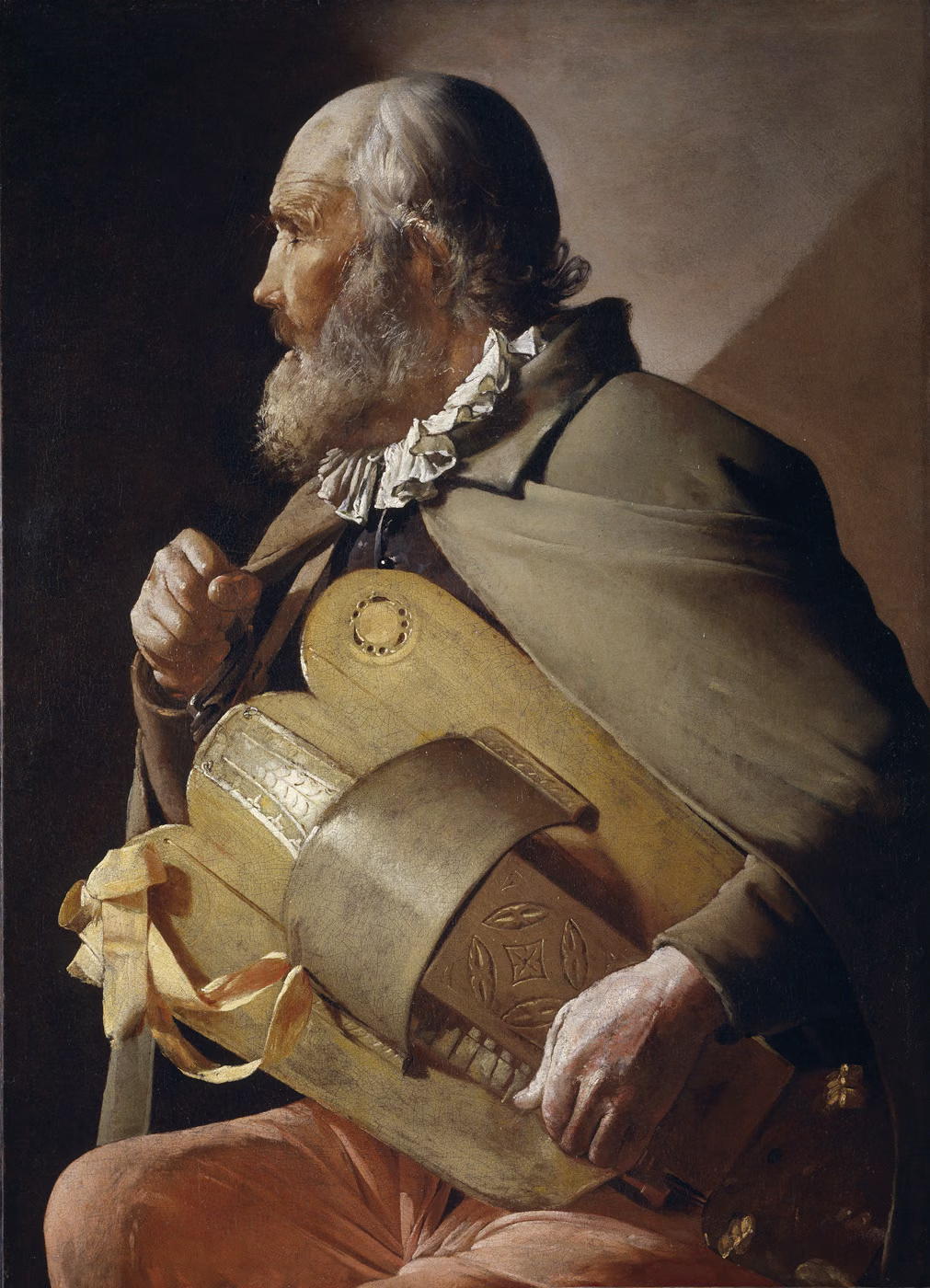
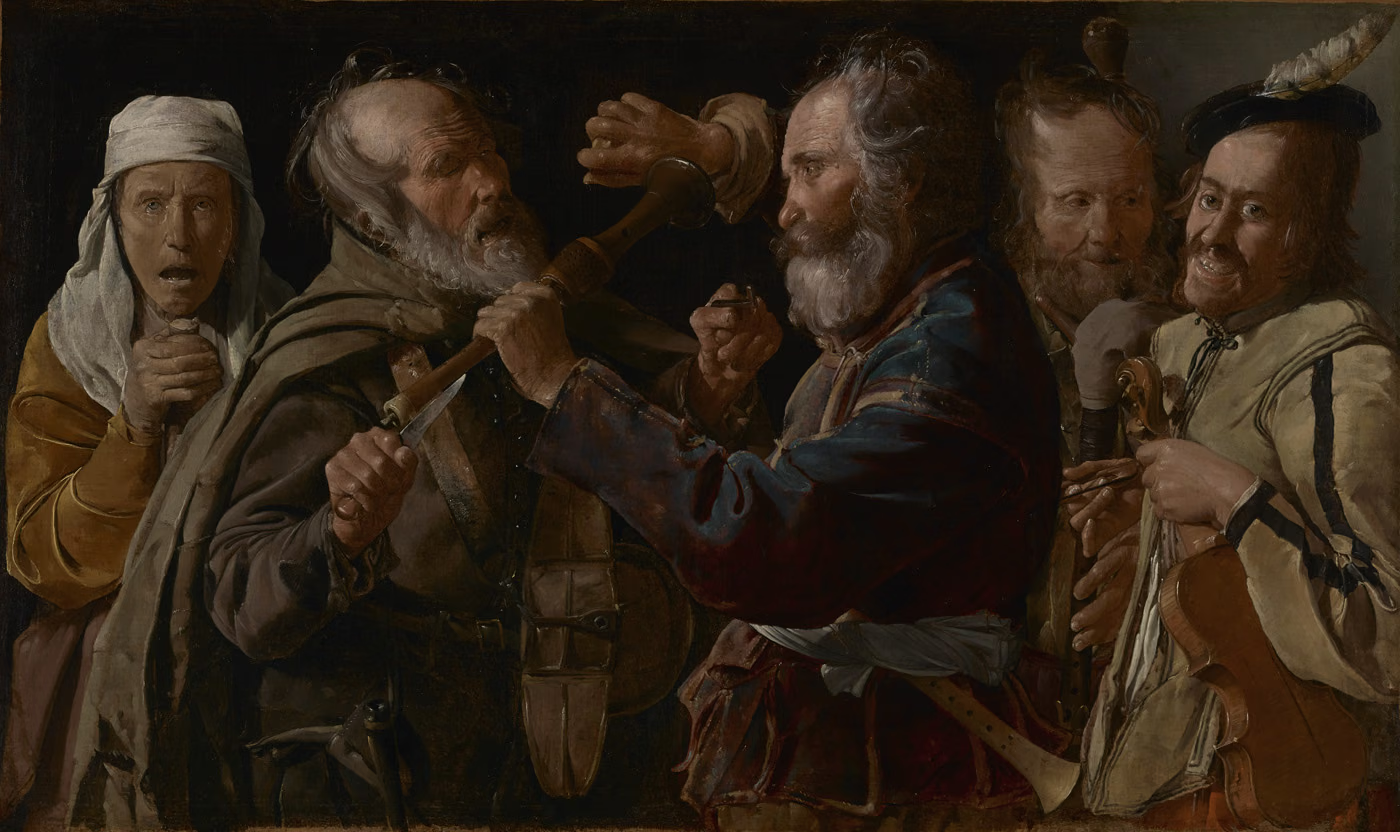
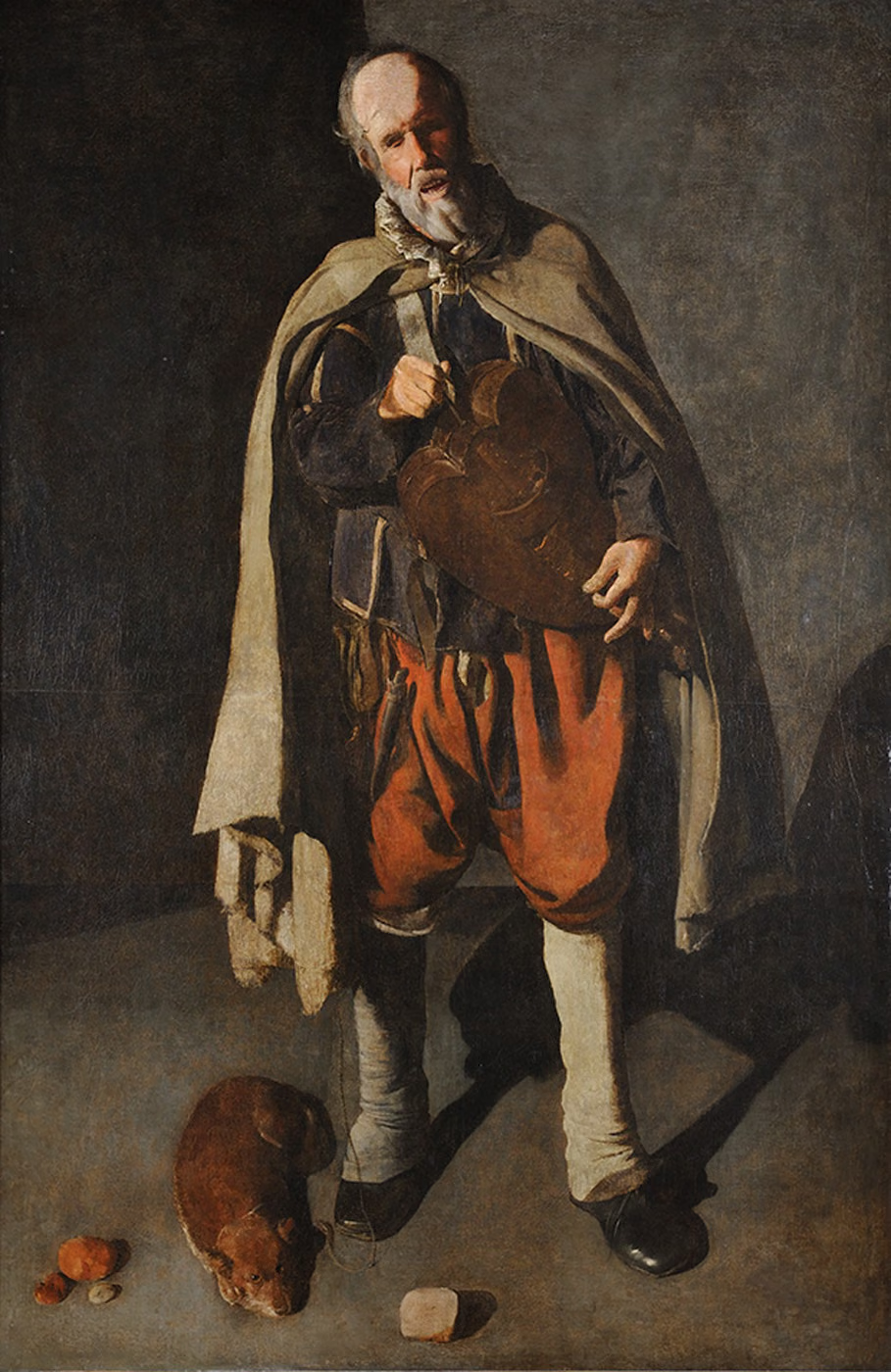
De La Tour's work is traditionally divided into two stylistic groups. His "daytime" paintings — produced principally in the 1620s and 30s — depict genre scenes inspired by the Northern Caravaggist current: card players, beggars, itinerant musicians, scenes of daily life peopled with popular figures caught with vigorous, unsparing realism.
The Hurdy-Gurdy Player (Musée des Beaux-Arts, Nantes), The Cheat with the Ace of Diamonds (Louvre, Paris), The Fortune Teller (Metropolitan Museum of Art, New York): these compositions, in which sharp observation of human types combines with an almost theatrical staging of gestures and glances, testify to direct or indirect knowledge of Caravaggism, probably filtered through the Utrecht school or through Lorraine intermediaries.
The Nocturnal Work: The Candle as Theology
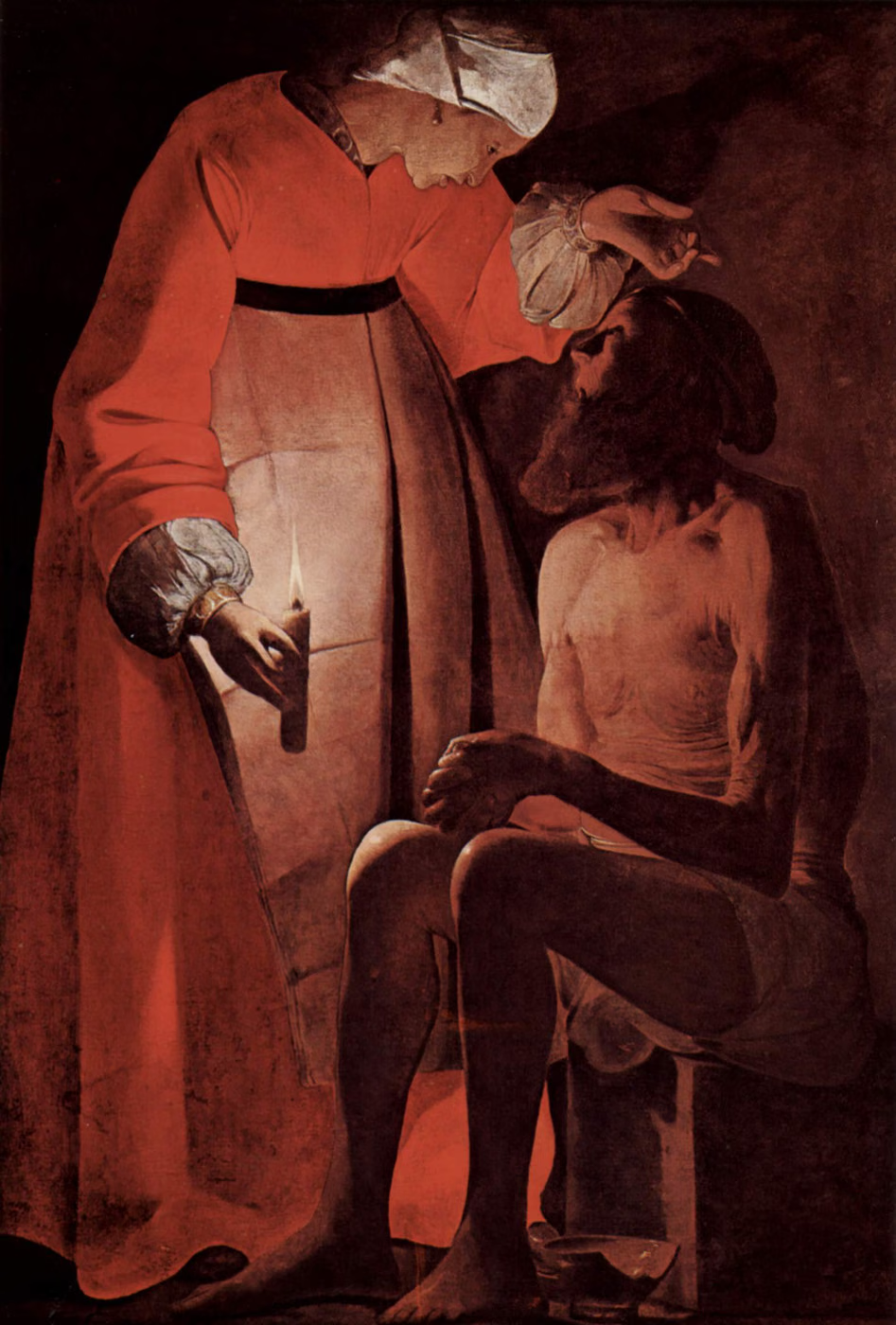
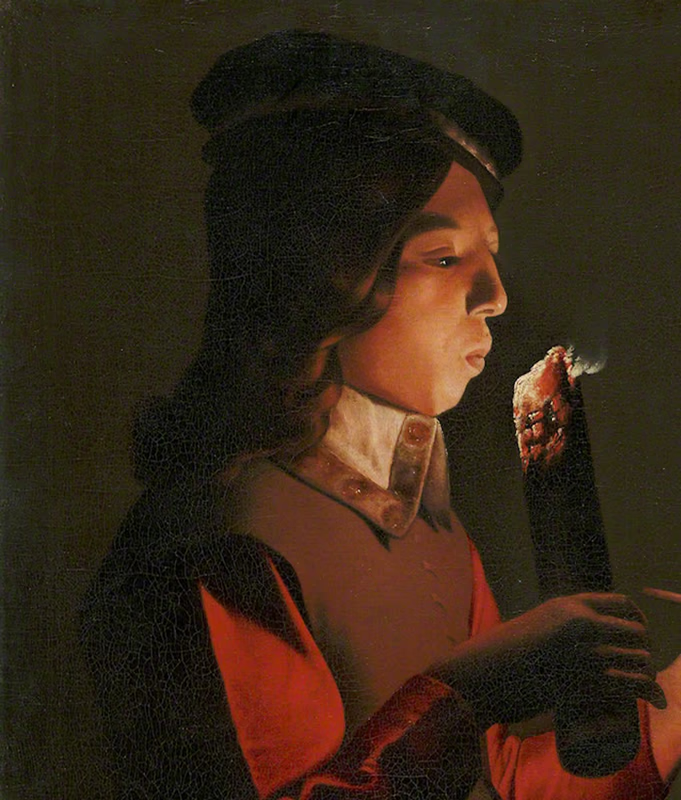
It is in his nocturnal scenes that de La Tour's genius reaches its full dimension. From the 1630s, and especially in the decade of the 1640s, he specialised in compositions lit by a single artificial light source — a candle, a torch, sometimes a lamp — that plunges the scene into deep shadow, from which faces and hands emerge in warm, trembling light.
These paintings are mostly religious subjects treated in a register of rare intimacy and humility. The Newborn (Musée des Beaux-Arts, Rennes), perhaps the finest of his canvases, shows a woman holding a sleeping infant in her arms while another woman holds a lit candle whose flame is partially masked by a translucent hand. The composition, of absolute simplicity, radiates a gentleness and peace that verge on the sacred — without anything in the iconography being explicitly Christian, unless one sees in it a disguised Nativity.
The Penitent Magdalene (Louvre), Saint Joseph the Carpenter (Louvre), The Dream of Saint Joseph (Musée des Beaux-Arts, Nantes), Saint Sebastian Tended by Irene (several versions, including the Louvre's): these nocturnal works share the same economy of means, the same concentration on the essential, the same capacity to transform the representation of reality into spiritual meditation.
De La Tour's technical mastery in the treatment of artificial light is extraordinary: he could render the transparency of a hand traversed by candlelight, the difference between direct light on a face and reflected light on a wall, the way a flame flickers and creates moving shadows. This optical science in the service of a spiritual vision makes him an absolutely unique artist in seventeenth-century French painting.
Death and Oblivion
Georges de La Tour died in Lunéville on 30 January 1652, probably carried off by an epidemic of dysentery that ravaged the city that winter. His wife Diane and a servant died of the same illness a few days later. He left several children, including his son Étienne who continued to paint in his father's style, sometimes making certain attribution of late works difficult.
After his death, his work fell into almost total oblivion for nearly two and a half centuries. His name appears in none of the major art history treatises of the eighteenth and nineteenth centuries. It was only in 1915 that the German art historian Hermann Voss restored to him several paintings then attributed to foreign painters and repositioned him in the history of French painting. The rediscovery continued in subsequent decades, notably through the retrospective exhibition organised at the Musée de l'Orangerie in Paris in 1934, and through the research of the historian François-Georges Pariset in the 1940s and 50s.
Today, Georges de La Tour is recognised as one of the greatest French painters of all time, and his nocturnal canvases count among the best-loved works visited at the Louvre and in the museums that hold them. His painted output is small — about sixty paintings are attributed to him with certainty, some known only through copies — but each of these canvases is an invitation to silence and contemplation that has no equivalent in French art.