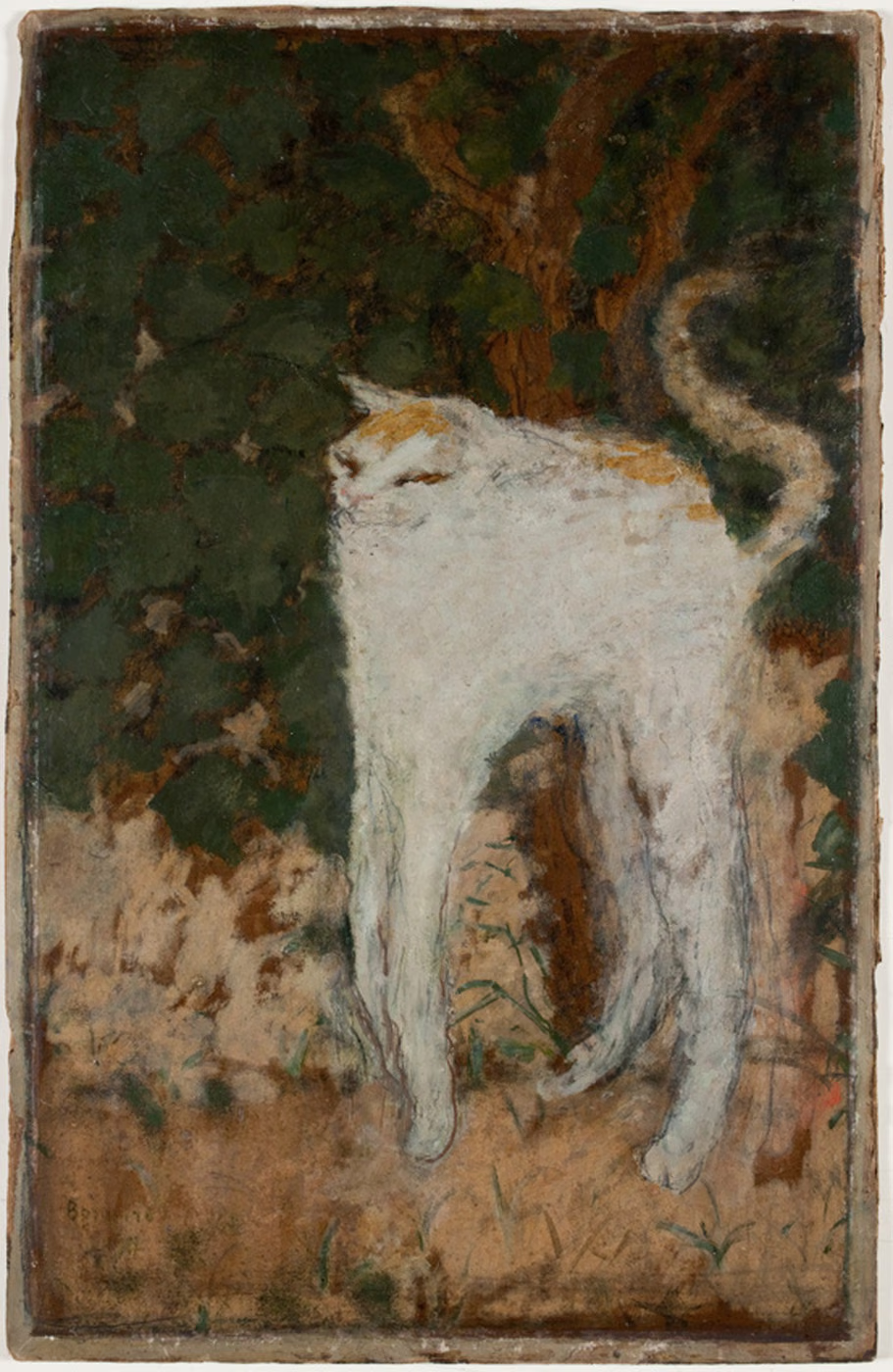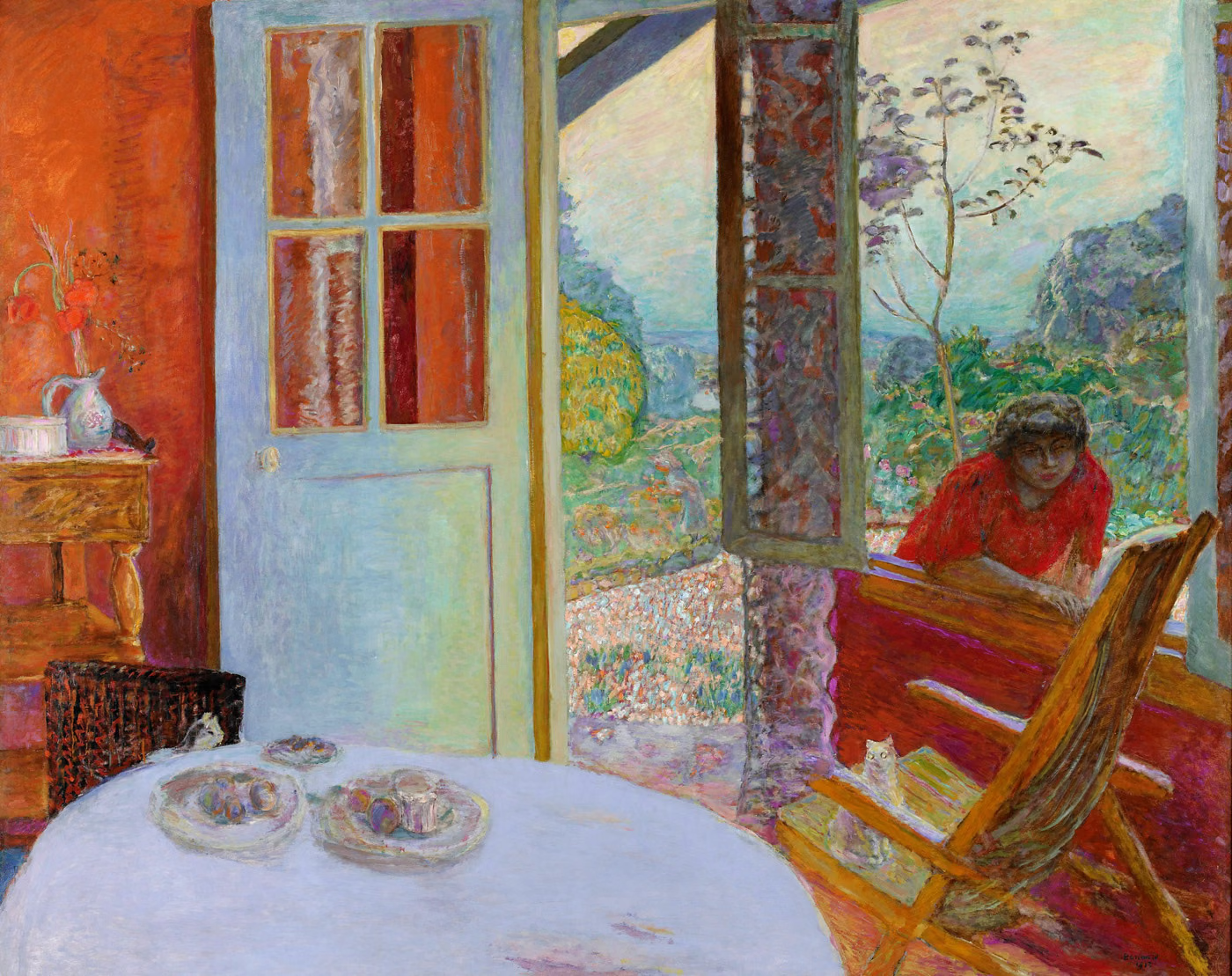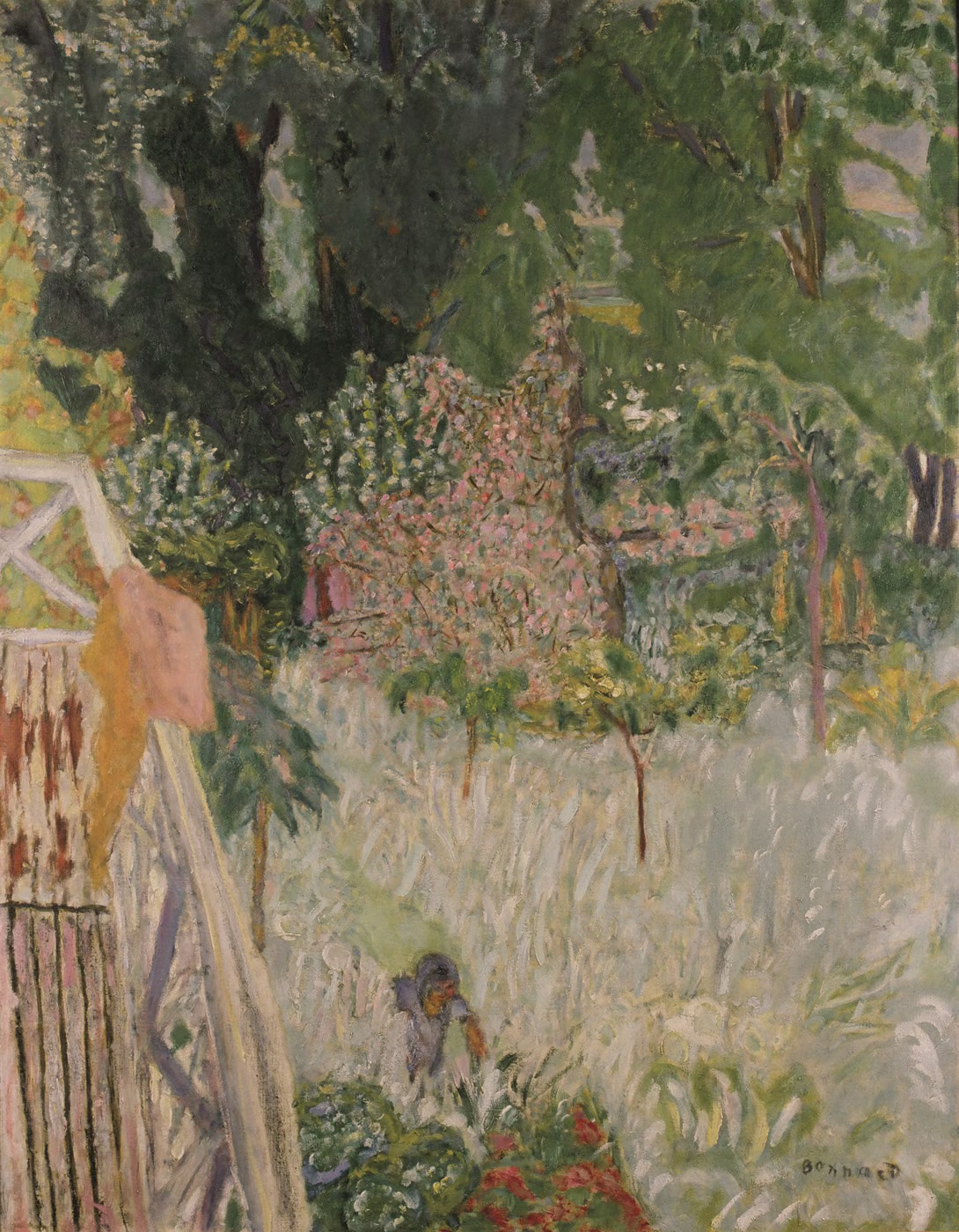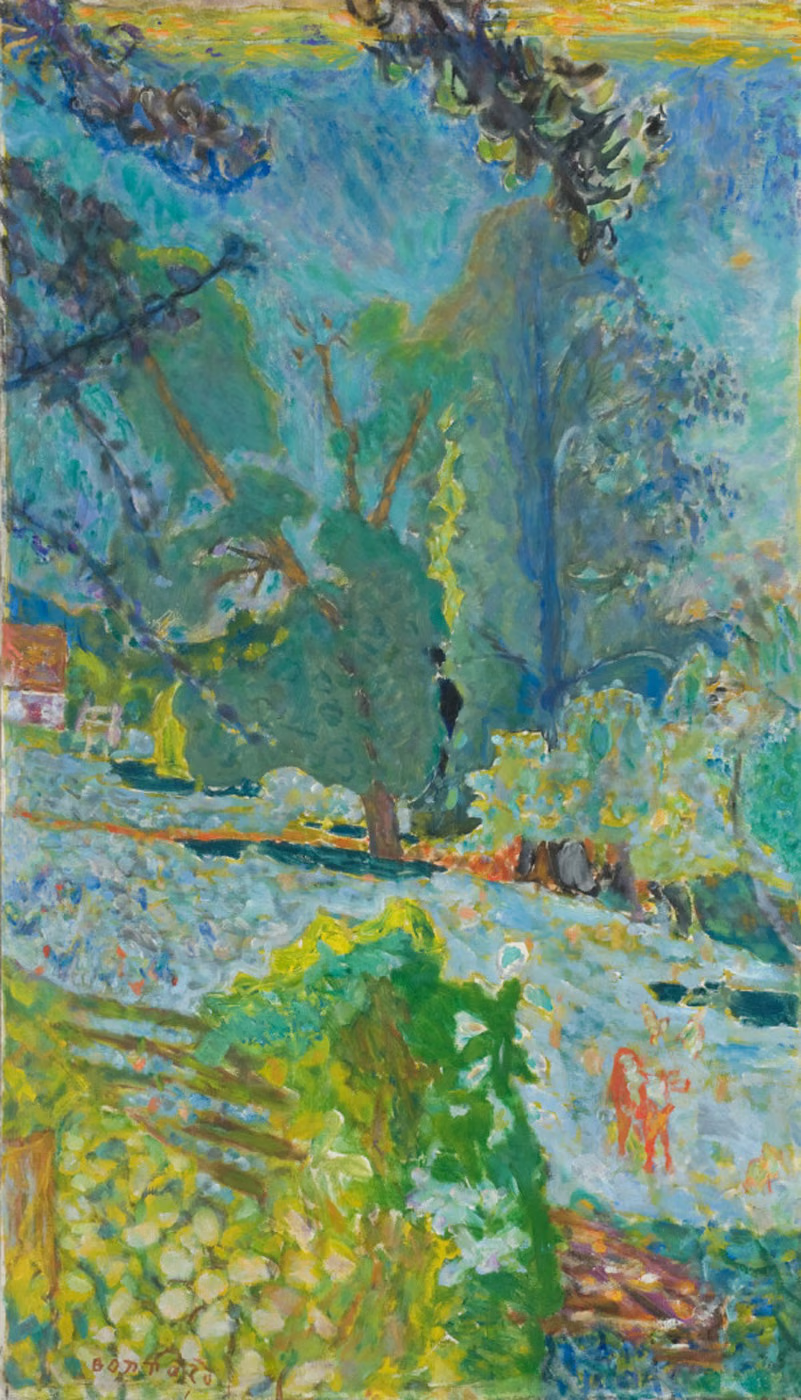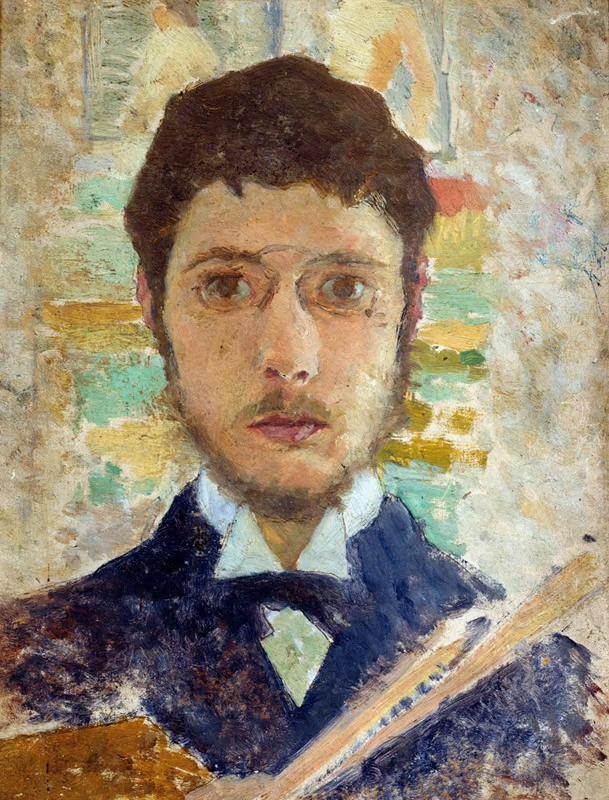
Pierre Bonnard is one of the most luminous and endearing painters of twentieth-century French art. A Nabi in his youth, then an unclassifiable solitary in his maturity, he developed over the decades a style of extraordinary chromatic richness, grounded in pure and vibrant colour, intuitive composition and a deep taste for the simple pleasures of domestic life and the Mediterranean landscape. His sunlit interiors, tables covered in fruit and crockery, bathroom nudes, and Midi gardens overflowing with colour form a pictorial world of incomparable warmth and generosity — one that was long underestimated before being recognised as one of the most original voices of modernism.
A Bourgeois Childhood and a Quiet Vocation
Pierre Bonnard was born on 3 October 1867 in Fontenay-aux-Roses, on the southern outskirts of Paris, into an upper-middle-class family. His father, Eugène Bonnard, was a senior civil servant at the Ministry of War; his mother, Élisabeth Mertzdorff, was Alsatian. The family regularly stayed at Le Grand-Lemps, in the Dauphiné, at the property of his maternal grandparents — this luminous, verdant landscape of the Dauphinois countryside would remain present in Bonnard's memory and imagination throughout his life.
Following family expectations, he studied law and took it through to completion, graduating in 1888. But at the same time he was attending drawing classes at the École des Beaux-Arts and at the Académie Julian, where he met Maurice Denis, Paul Sérusier, Paul Ranson and Édouard Vuillard — those who would soon form the Nabis group ("prophets" in Hebrew).
In 1889, the success of a poster for France-Champagne — commissioned by a drinks firm and noticed by Toulouse-Lautrec himself — confirmed his vocation and convinced him to give up the law for good. He joined the Nabi circle with the shared conviction that painting should not imitate nature but transfigure it, and that the surface of a canvas is above all a surface of colours organised in a certain order.
The Nabis and the Japoniste Phase
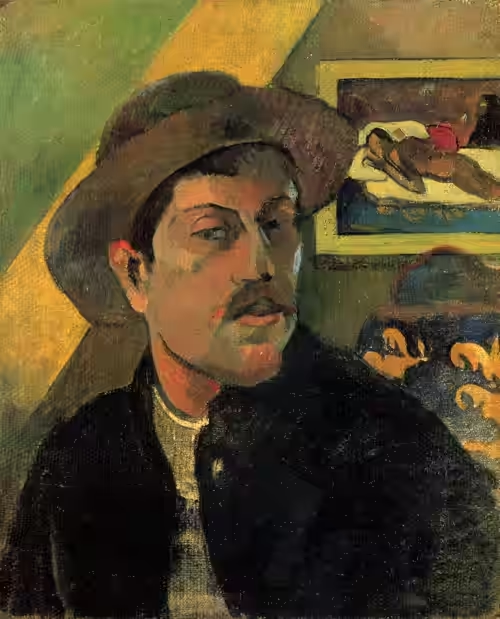
In the 1890s, Bonnard was one of the most active and original members of the Nabis, sharing their influences: Gauguin's Post-Impressionism, Japanese decorative art (ukiyo-e prints) and Symbolism. His style of this period — flat areas of colour bounded by sinuous outlines, decorative compositions, a taste for intimate scenes of Parisian life — earned him the nickname "the very Japonard Nabi" within the group.
He produced posters, book illustrations, folding screens and theatre sets, participating enthusiastically in the Nabi ideal of a total art that refused to separate painting from the decorative and applied arts. His lithographs for the journal La Revue Blanche (1894–1903), to which Vuillard and Toulouse-Lautrec also contributed, show remarkable graphic mastery and inventiveness.
Marthe and the Interior Life
Around 1893, Bonnard met Maria Boursin, a young woman who called herself Marthe de Méligny. He fell for her for the rest of his life, living with her for more than forty years before marrying her in 1925, when both were well past fifty. Marthe was a discreet woman, of fragile health and complex personality, given to obsessive hygiene that led her to spend hours in the bath. These daily soakings became one of Bonnard's favourite subjects, which he painted relentlessly for decades — a series of bathroom nudes of an intimacy and poetry unique in the entire history of painting.
Marthe is also present in his interiors, table scenes and gardens. A small figure, often seen from behind or at a distance, she inhabits Bonnard's paintings as a presence that is simultaneously familiar and elusive. Their relationship, though not without tensions and complications — Bonnard had a long affair with the painter Renée Monchaty, who would take her own life shortly after his marriage to Marthe in 1925 — was the emotional and artistic centre around which his entire work revolved.
The South and the Revolution of Colour
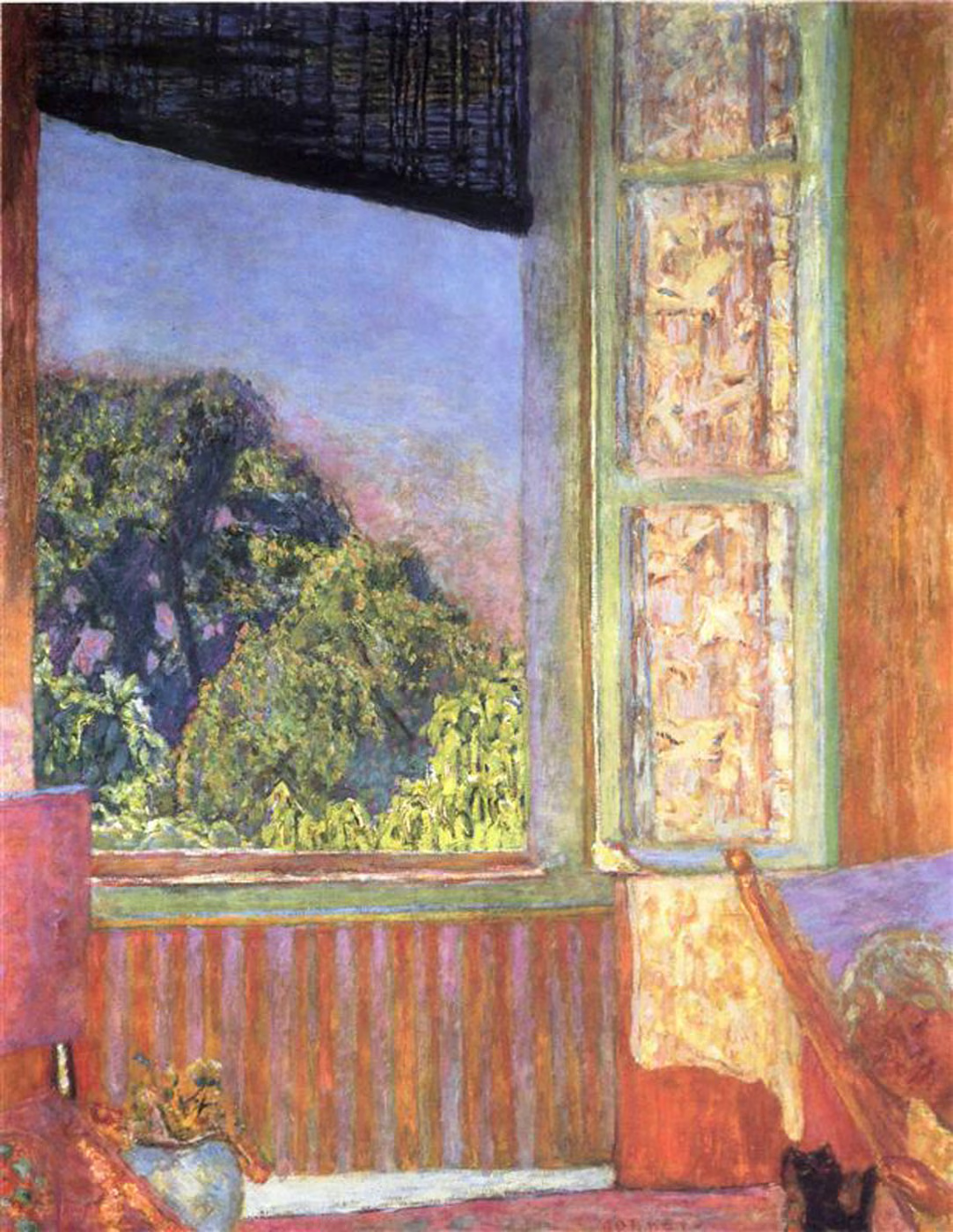
From the early 1900s, and above all from 1910, Bonnard began spending extended periods in the south of France — Saint-Tropez, Antibes, then Le Cannet, a small hillside town above Cannes, where he bought a villa he called "Le Bosquet" in 1926 and where he would live and work until the end of his life. The southern light was for him a chromatic revelation: it liberated his colours, intensified them, set them against each other in harmonies and dissonances that have no equivalent in contemporary painting.
His mature paintings — the large compositions of the 1920s and 1940s — are among the most colourful and audacious in all of twentieth-century French art. Yellows, oranges, violets, acid greens and vibrant pinks jostle in compositions that seem to defy the laws of optical coherence, and yet work with a strange and luminous rightness. Bonnard often painted from memory or imagination, reworking his canvases for years, changing colours or proportions long after the first working session.
The bathroom and the table were his two preferred territories. The Bathroom or The Nude in the Bath (1936, Musée d'Art Moderne de Paris) — Marthe in her tiled bathtub, her body stretched in yellow and green light, the window letting the blue of the garden enter — is one of his most hypnotic works. The Table (1925, Tate Modern, London): these domestic still lifes are in reality studies in the vibration of light and the infinite richness of ordinary colour.
War and Marthe's Death
Bonnard spent the Second World War at Le Cannet, cut off from Paris and from his friends, in relative solitude. He continued to paint with remarkable fervour and productivity despite his age. Marthe died in January 1942 after years of illness. Her death left Bonnard in a profound void. He continued to work nonetheless, and his last paintings — The Almond Tree in Bloom (1946–47, Musée d'Orsay), painted a few months before his death — are full of a light and a joy that seem to defy grief and old age.
Pierre Bonnard died at Le Cannet on 23 January 1947, aged seventy-nine. It is said that he had asked his nephew Charles Terrasse to modify slightly the patch of green grass in the foreground of his Almond Tree, which he felt was not luminous enough — a final gesture from an artist whose pursuit of light never ceased.
A Late but Immense Legacy
For much of the twentieth century, Bonnard was underestimated by critics who accused him of a decorative hedonism out of step with the times. Matisse, who was his friend, defended him ardently. The reassessment of his work, begun in the 1960s and 70s, deepened in subsequent decades. Today his mature paintings fetch considerable prices at auction, and the major retrospectives regularly devoted to him — notably those at the Musée d'Orsay (1984) and Tate Modern (2019) — confirm his place among the great masters of modern painting.
The Musée Bonnard in Le Cannet, opened in 2011, holds an important collection of his works and allows visitors to explore the Provençal landscapes that nourished his palette. His work remains an invitation to look at the world with renewed attention and gratitude — to see in the ordinary light of a window or a set table an inexhaustible source of beauty.