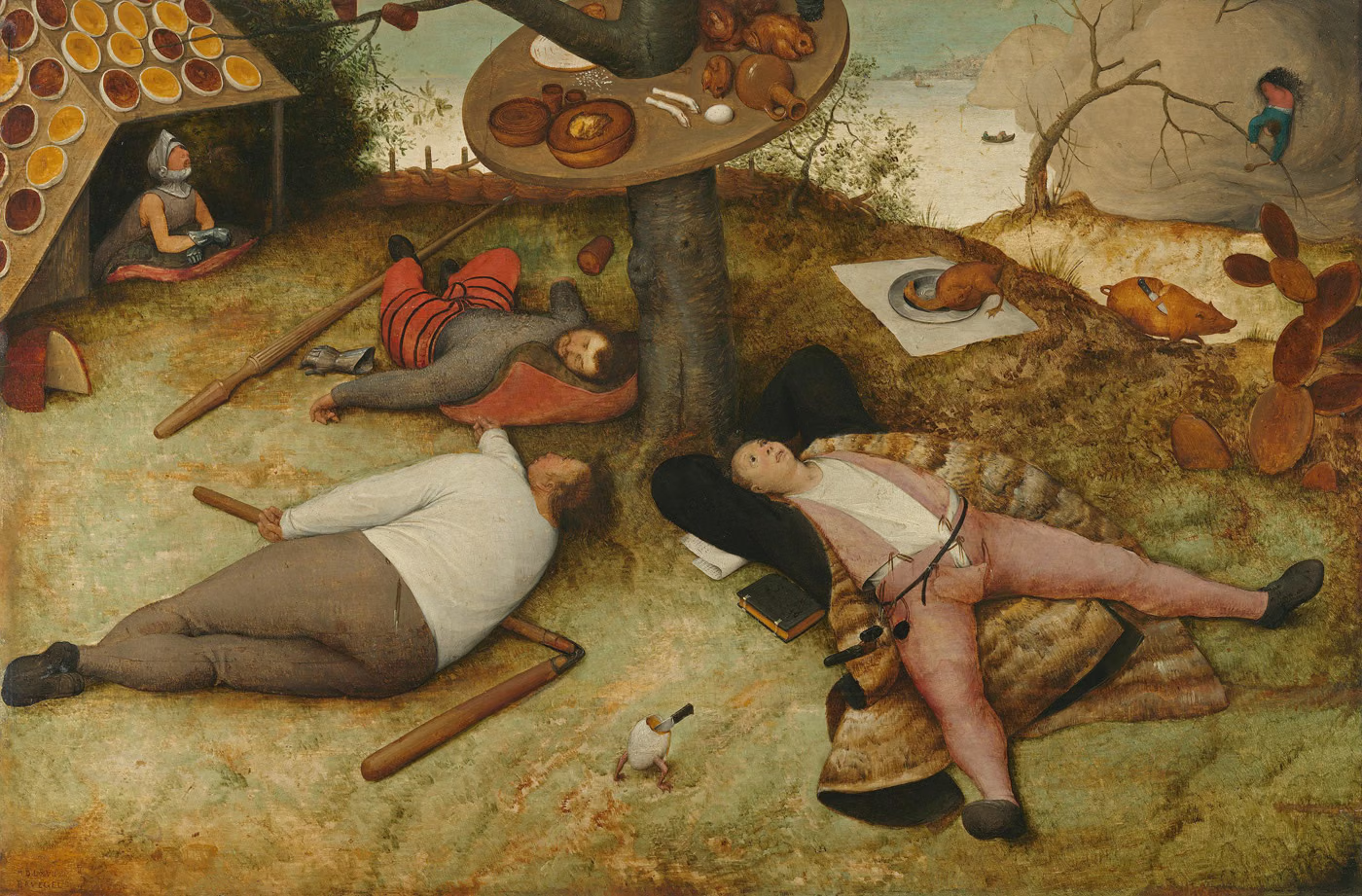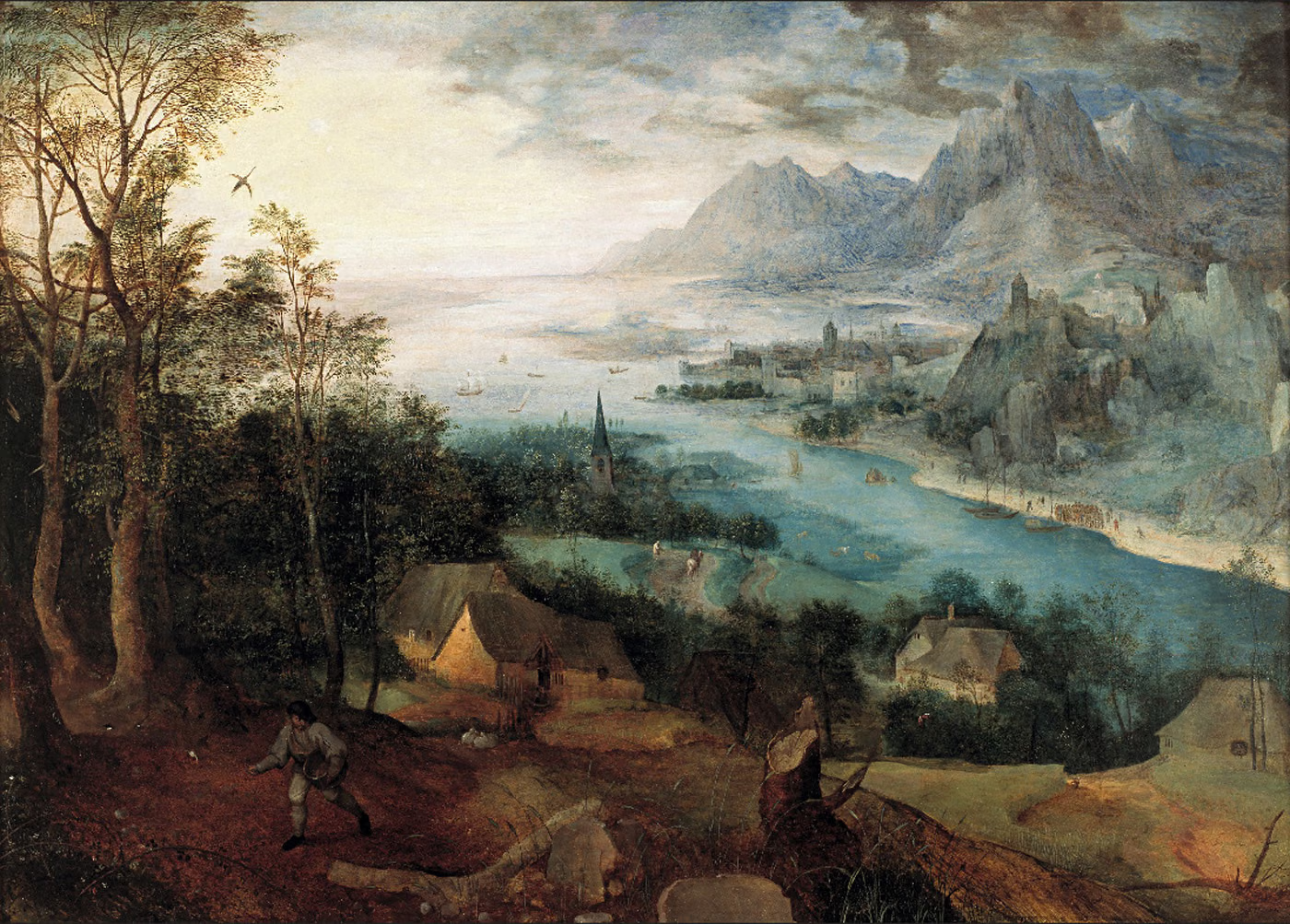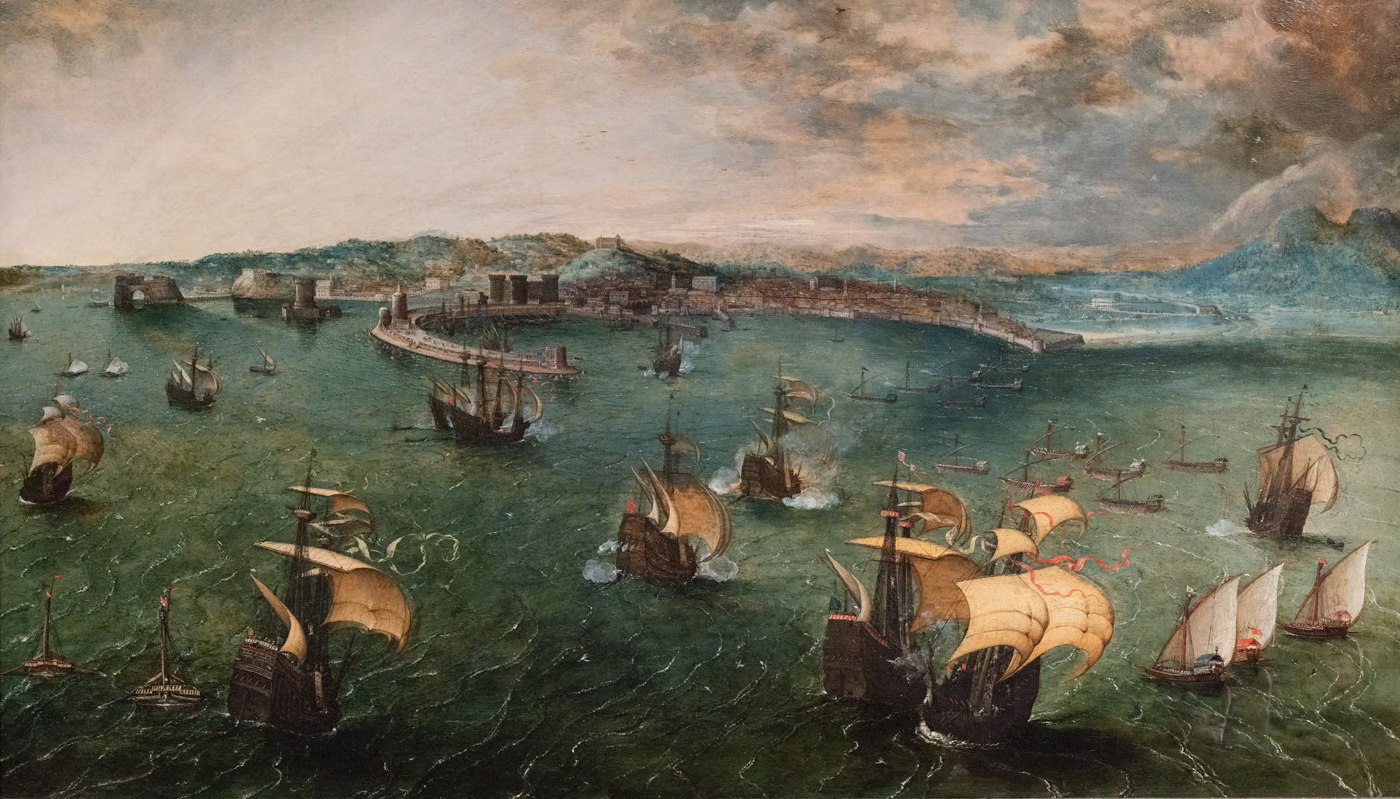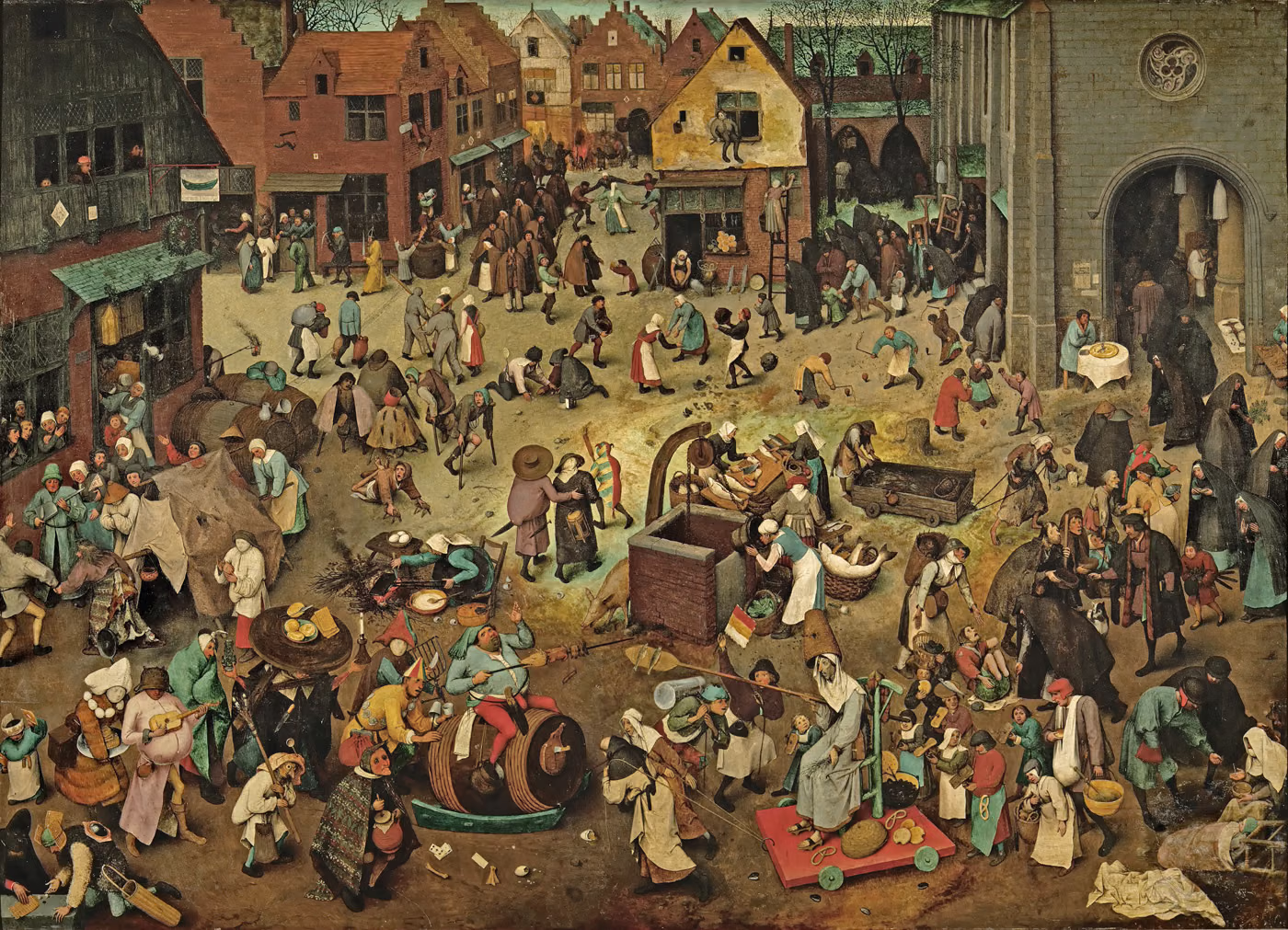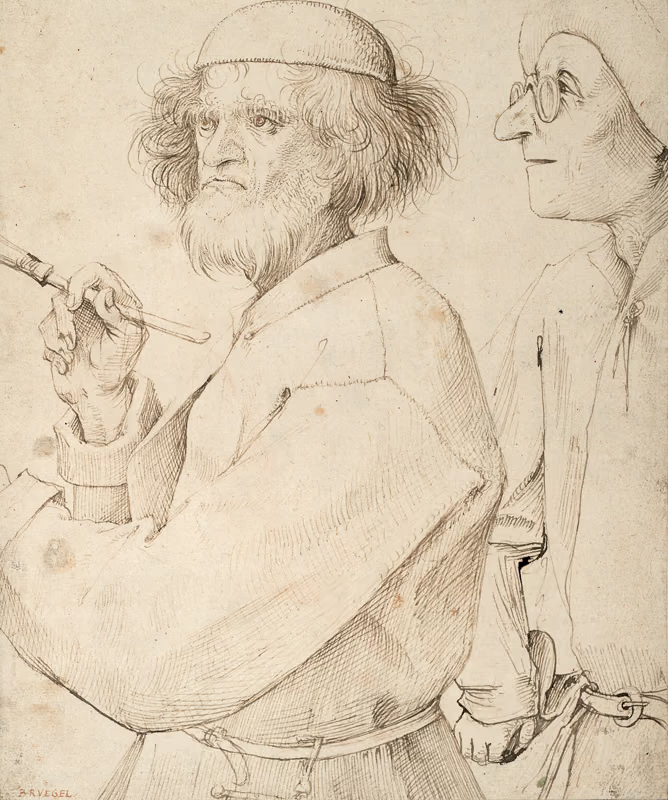
Pieter Bruegel the Elder is one of the most original and profound painters of the Northern Renaissance. Born in the Spanish Netherlands — the territory corresponding to present-day Belgium and the Netherlands — he managed, in an age torn apart by religious wars and political oppression, to create a body of work of extraordinary human and symbolic richness. His representations of the peasant world, of winter, village festivals and popular proverbs, his visions of Hell and human folly, his great allegorical compositions peopled with hundreds of tiny figures: all of this forms a unique pictorial universe, rooted in the most concrete reality yet open to the most universal questions. Bruegel is often presented as the first great painter to have made the lives of ordinary people a pictorial subject worthy of the largest formats.
Obscure Origins, a Flemish Training
We know very little about Pieter Bruegel's origins. His birth date is estimated between 1525 and 1530, perhaps in Breda (in present-day Dutch Brabant) or in the region of 's-Hertogenbosch. His name is sometimes spelled Brueghel in old documents — he himself simplified the patronymic to Bruegel around 1559, while his sons Pieter and Jan retained the "h." The confusion between him and his descendants (Pieter Bruegel the Younger, Jan Bruegel the Elder) long complicated the study of his work.
Around 1545 he entered as an apprentice the workshop of the painter Pieter Coecke van Aelst in Antwerp, then one of the most prosperous and cosmopolitan cities in Europe, a major commercial and artistic centre. At Coecke van Aelst's death in 1550, Bruegel was admitted as a master in the Antwerp painters' guild of Saint Luke — proof that he had completed his training and had the competence to work independently. He would later marry his master's daughter, Mayken Coecke.
In 1552–53 he made a journey to Italy, passing through France, crossing the Alps and travelling as far as Reggio di Calabria and possibly Sicily. This trip, standard in the training of Northern artists of the period, left on Bruegel marks different from those expected: where his contemporaries absorbed Italian painting and the classical ideal of beauty, Bruegel retained above all the grandeur of the Alpine landscapes, which he would transpose with visionary power into his great mountain compositions.
Antwerp and the Collaboration with Hieronymus Cock
Back in Antwerp, Bruegel entered into collaboration with Hieronymus Cock, a publisher of prints and engravings whose house — the Four Winds — was one of the most active in Europe. For Cock, Bruegel produced numerous drawings intended to be engraved and distributed: Alpine and Italian landscapes, moralising scenes, and above all compositions in the vein of Hieronymus Bosch, whose fantastic and satirical language he appropriated — infernal visions, hybrid creatures, crowds of sinners — adapting it to his own commentary on the human condition.
It was in these Antwerp years that the themes and procedures that would characterise his painted work took shape: the anonymous crowd seen from above, the landscape as moral as well as geographical space, the use of proverbs and popular traditions as vehicles for reflection on wisdom and folly.
The Major Works: Peasants, Proverbs and Catastrophes
Bruegel moved to Brussels in 1563, where he would remain until his death. It was there that he produced most of his painted masterpieces. His paintings can be grouped into several thematic categories.
The peasant scenes — The Peasant Wedding (c.1568) and The Peasant Dance (c.1568), both in the Kunsthistorisches Museum, Vienna — depict the Flemish rural world with precise observation and overflowing vitality. These scenes are not simple ethnographic documents: they carry a simultaneously loving and satirical gaze on human gluttony, sensuality and stupidity, grounded in a worldview inherited from Erasmus and the Northern humanists.
The series of Seasons or Months (1565), commissioned by the wealthy merchant Niclaes Jonghelinck, is one of the summits of sixteenth-century Northern painting. Five panels survive from this series: The Hunters in the Snow (Kunsthistorisches Museum, Vienna), The Gloomy Day, Haymaking, The Harvesters and The Return of the Herd. These panoramic compositions, in which human activities are inscribed in the immutable rhythm of the seasons and in a landscape of sublime breadth and poetry, founded an entire tradition of Northern landscape representation.
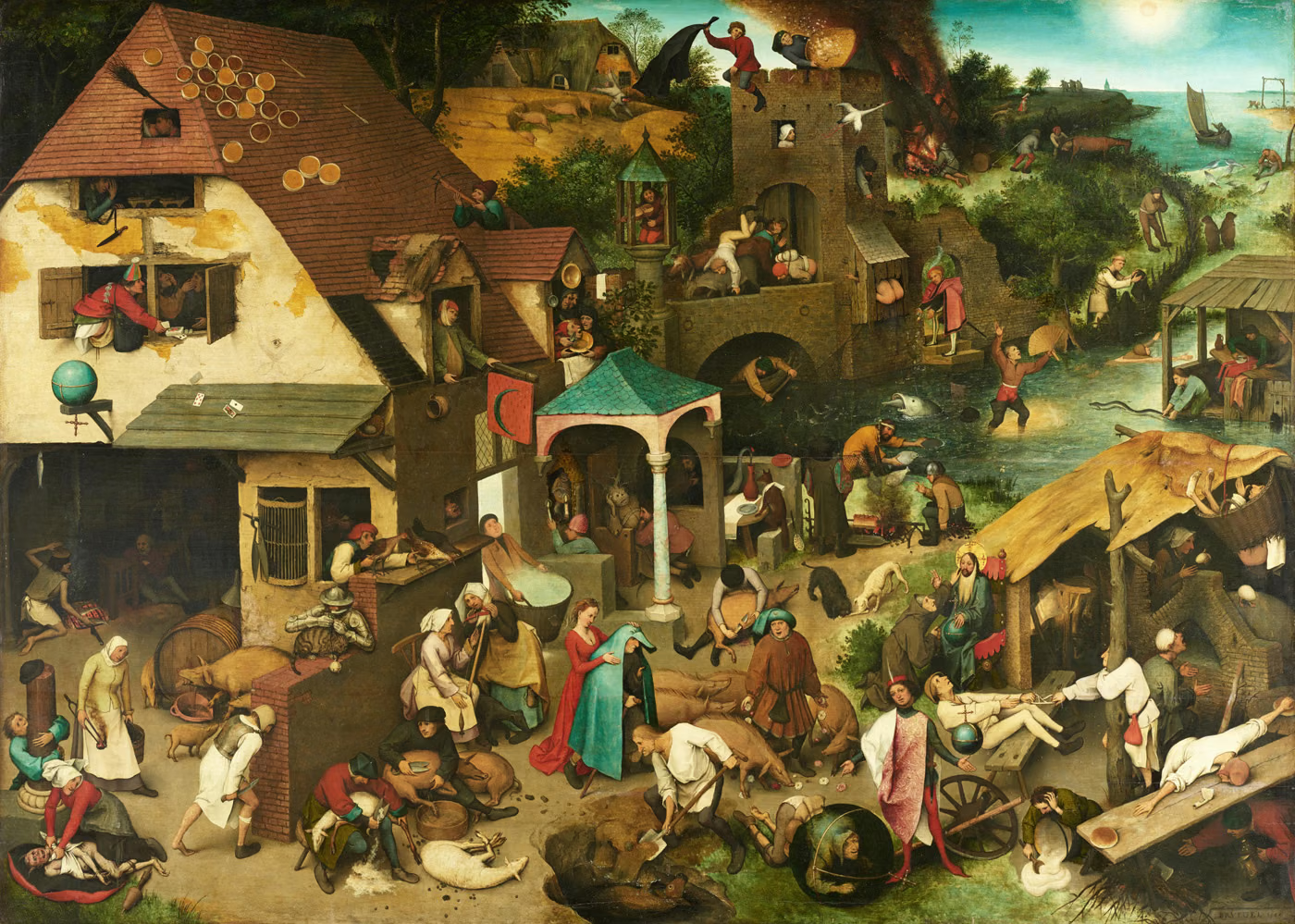
The allegorical and moral compositions count among his most celebrated works: Netherlandish Proverbs (1559, Gemäldegalerie, Berlin), in which more than a hundred Dutch proverbs are depicted simultaneously in a village turned upside down; Children's Games (1560, Kunsthistorisches Museum, Vienna), in which more than two hundred children engage in a multitude of games — an allegory of human frivolity as much as an encyclopaedia of childhood play.
The Tower of Babel (1563, Kunsthistorisches Museum, Vienna) is one of his most monumental and widely known works: the colossal and futile construction rises towards a veiled sky while thousands of workers swarm at its sides in frenzied, disorganised activity — a bitter commentary on human pride and the vanity of grandeur.
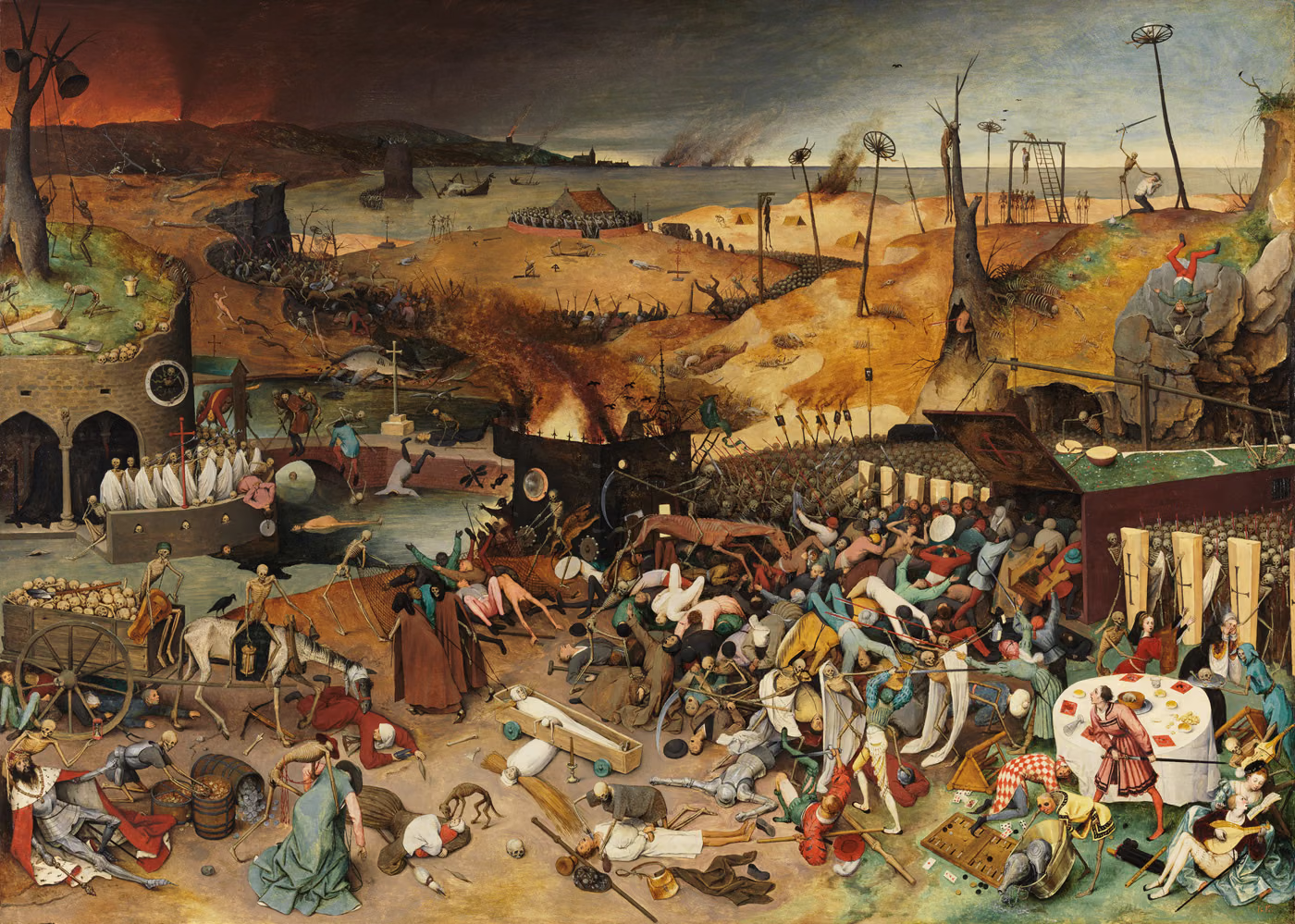
The Triumph of Death (c.1562, Museo del Prado, Madrid), of exceptional darkness and visionary power, shows an army of skeletons invading and destroying the world of the living — a vision often related to the climate of terror maintained by the Duke of Alba's troops in the Spanish Netherlands.
Politics and Historical Context
Bruegel lived during a period of intense political and religious violence. The Spanish Netherlands were then under the grip of King Philip II of Spain, who intended to eradicate Protestantism by any means, including the Inquisition. The repression under the Duke of Alba, appointed governor in 1567, claimed thousands of victims. Paintings such as The Parable of the Blind (1568, Museo di Capodimonte, Naples) — in which six blind men follow one another to fall into a ditch — or The Procession to Calvary (1564, Kunsthistorisches Museum, Vienna) — where Christ's way of the cross is lost in the indifferent crowd of contemporary Flanders — have often been read as allegories of the political situation of the Netherlands, a blind people led to ruin by incapable rulers.
Bruegel is sometimes called "Droll Bruegel" or "Peasant Bruegel" (Boeren Bruegel) by contemporaries — designations that, while highlighting his taste for popular scenes, can be misleading: he was in reality a cultivated man, close to the humanist circles of Antwerp and Brussels, a friend of the geographer Abraham Ortelius and of Cardinal Granvelle.
Death and Legacy
Pieter Bruegel the Elder died in Brussels in September 1569, at approximately forty years of age, leaving two young sons — Pieter and Jan — who would themselves become painters and perpetuate his work, at the risk of drowning it in copies and imitations. His wife Mayken Coecke would have to raise them alone.
His painted output is relatively small: about forty paintings are attributed to him with certainty. But Bruegel's influence on Northern painting in the sixteenth and seventeenth centuries is immense — it can be found in Rubens, in the Dutch genre painters of the Golden Age, and as far as the Romantic landscape painters of the nineteenth century. In the twentieth century, his Hunters in the Snow inspired filmmakers such as Andrei Tarkovsky (in Solaris and The Mirror), and his visions of human folly found echoes in Expressionism and Surrealism. Five centuries after his death he remains one of the most alive and most modern painters in all of the Renaissance.