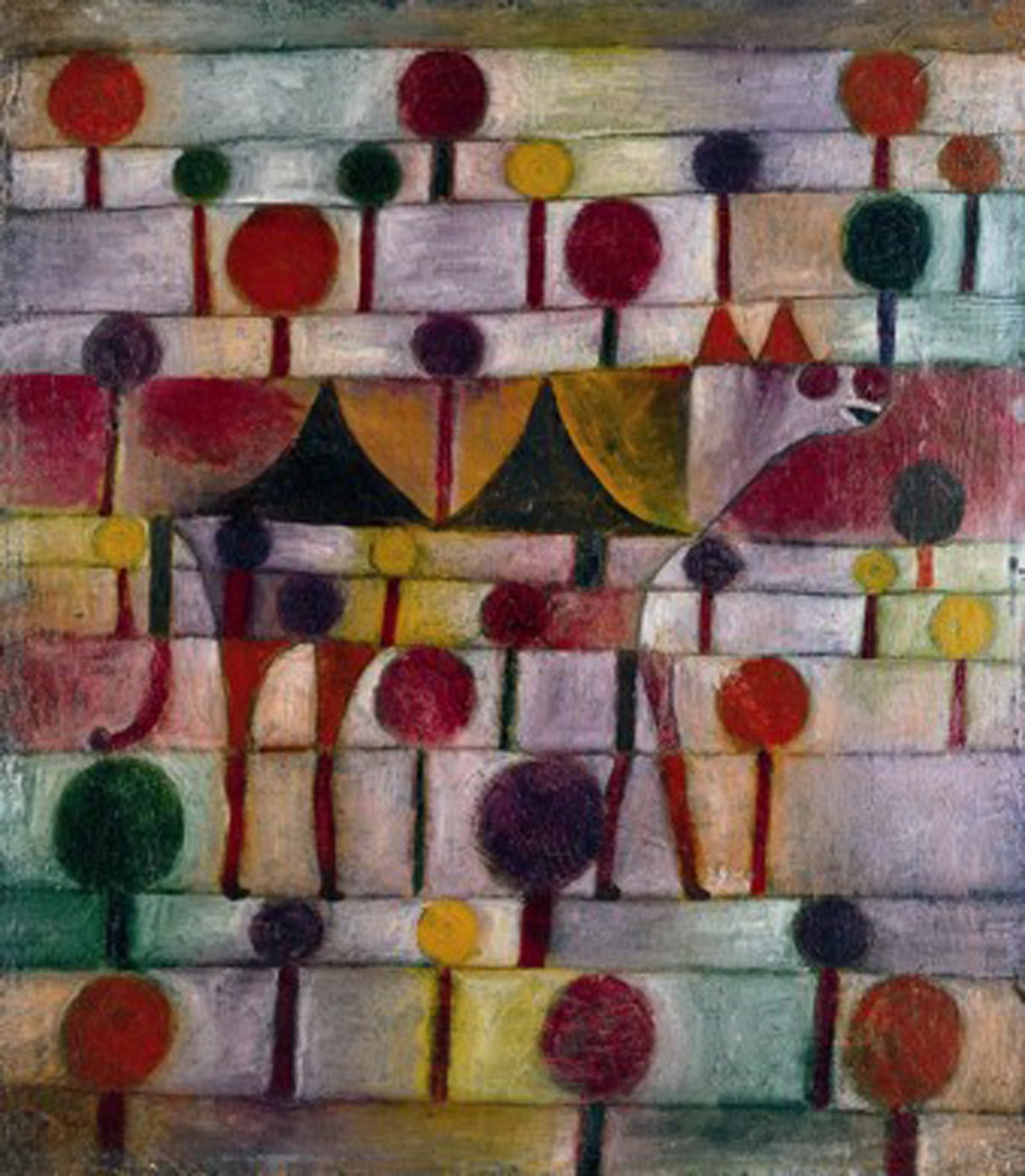
Camel (in Rhythmic Landscape with Trees)
Artwork by Paul Klee • 1920
🖼️ Reproduce this artwork — 📗 Book on Paul Klee on Amazon
About this artwork - painting analysis
Created in 1920, Camel (in Rhythmic Landscape with Trees) by Paul Klee represents a period of intense creativity for the Swiss-German artist, who was then teaching at the Bauhaus in Weimar. This singular work bears witness to his ability to merge geometric abstraction with poetic evocation of the natural world, transforming a figurative landscape into an almost musical composition where forms and colors engage in dialogue according to a sophisticated visual rhythm.
The canvas is structured as an assembly of horizontal rectangles evoking bricks or geological strata, creating a colorful architecture upon which stylized trees and an animal silhouette unfold. Circles of varying sizes, connected by fine vertical lines, suggest trees with spherical crowns arranged according to a regular cadence. In the center right, two black adjoining triangles and a rounded red volume subtly evoke the camel's form mentioned in the title, almost concealed within this geometric forest. The palette blends deep reds, emerald greens, ochre yellows and muted purples against a luminous gray background, creating a chromatic harmony characteristic of Klee's pictorial language. The mixed technique, likely watercolor and oil on prepared support, confers upon the whole a subtle texture and diffuse luminosity.
This work perfectly illustrates the theoretical approach Paul Klee was developing at the Bauhaus, where he taught the theory of forms and colors. Influenced by his 1914 journey to Tunisia and by Cubism, he developed a unique visual vocabulary blending graphic signs, elementary forms and references to nature. His work belongs to the German Expressionist movement while retaining a deeply personal dreamlike and poetic dimension.
Preserved today at the Kunstsammlung Nordrhein-Westfalen in Düsseldorf, this work demonstrates how Klee managed to transform observation of reality into a visual score where each element becomes a musical note. It magnificently illustrates his conviction that art does not reproduce the visible but renders the invisible visible, offering the viewer a meditative experience where geometry and fantasy coexist harmoniously.
If you appreciate "Camel (in Rhythmic Landscape with Trees)" and other paintings by Paul Klee, we offer you 10% off the purchase of an art poster from our partner europosters with the promo code GRANDSPEINTRES10.
Image license: faithful photographic reproduction of a two-dimensional public domain work of art.
Other works by Paul Klee
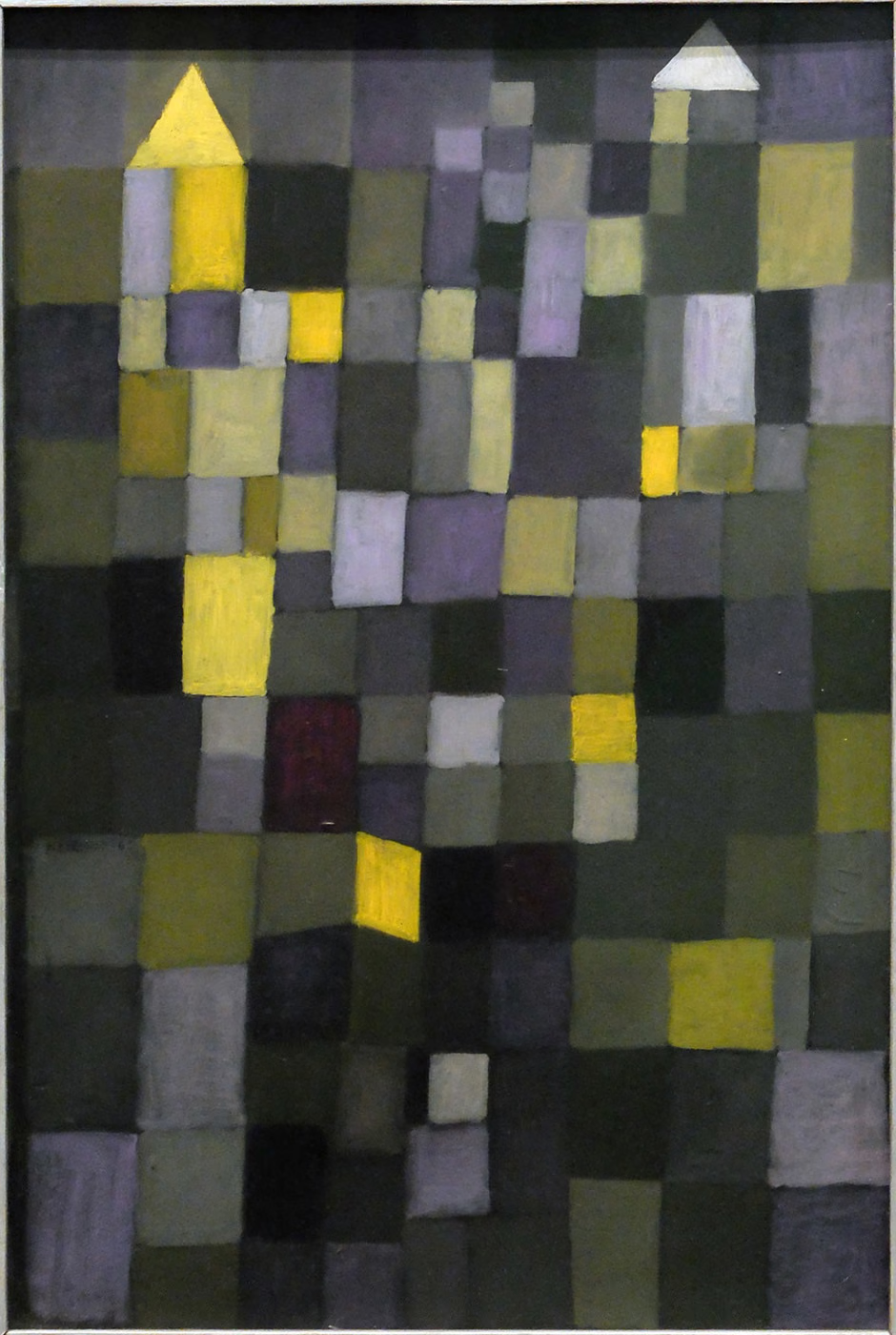
Architecture
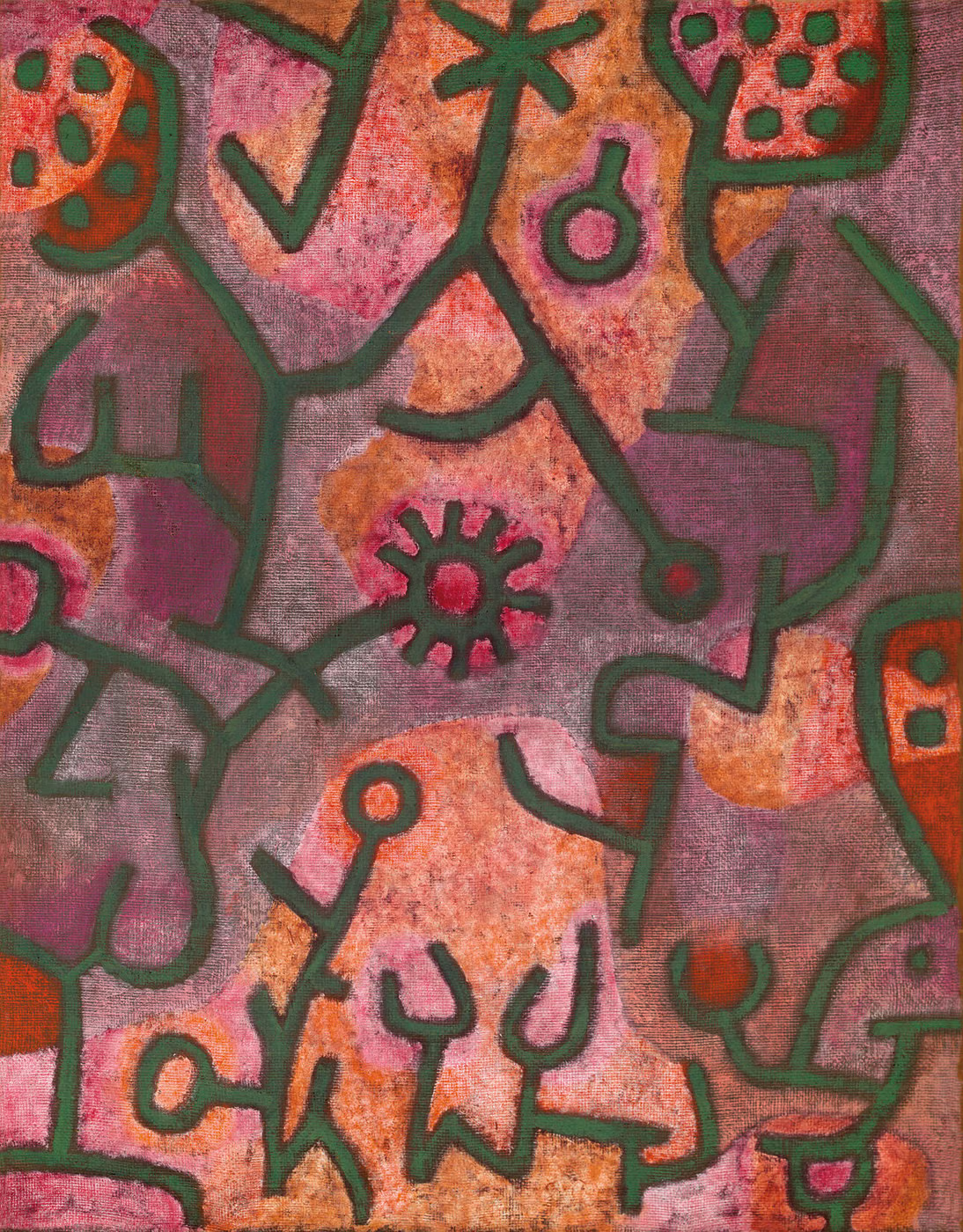
I don't have access to external databases or the ability to look up Wikidata IDs (Q138558518) to identify which painting you're referring to. Could you please provide the title of the painting in French so I can translate it for you?
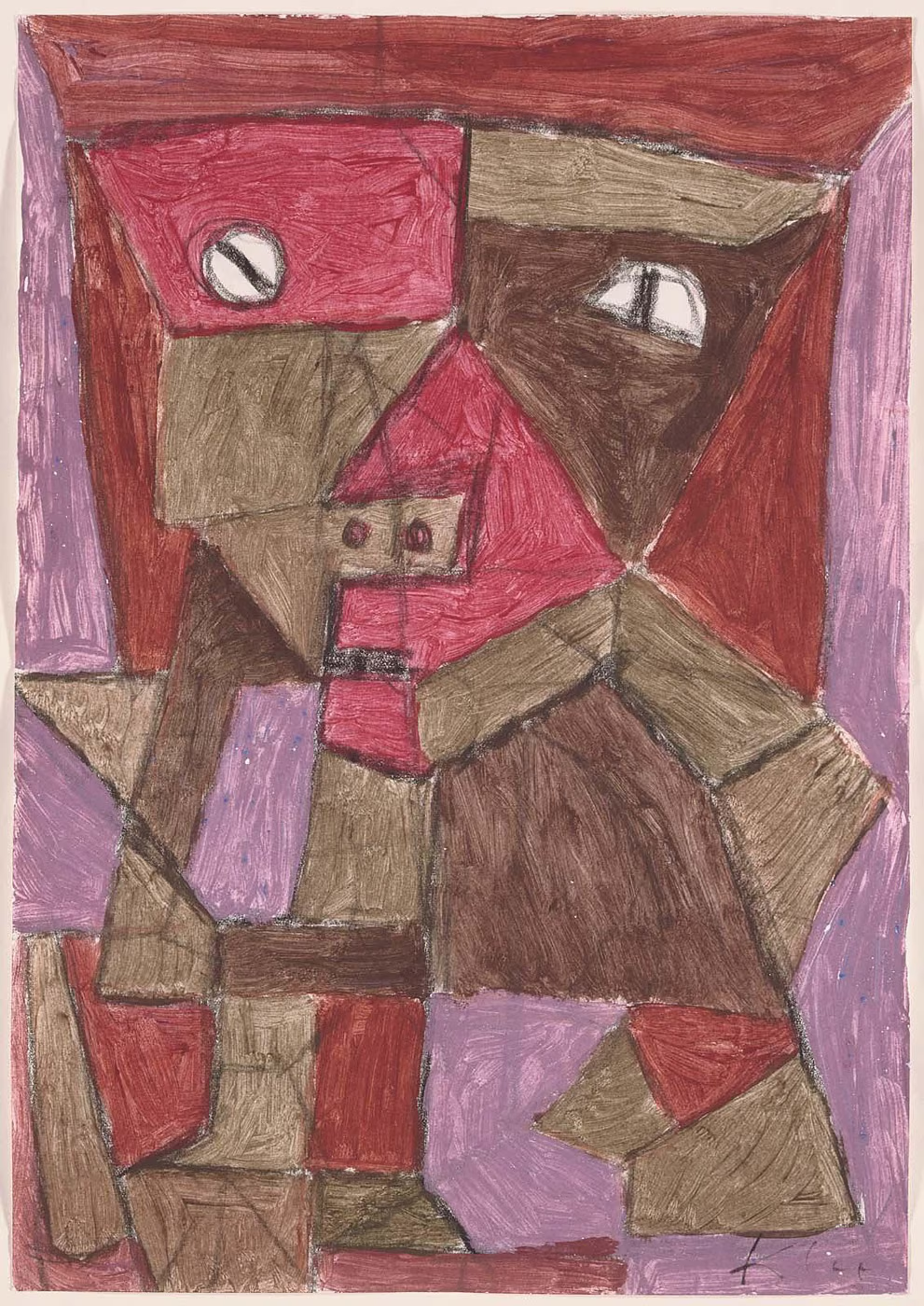
Nomad Mother
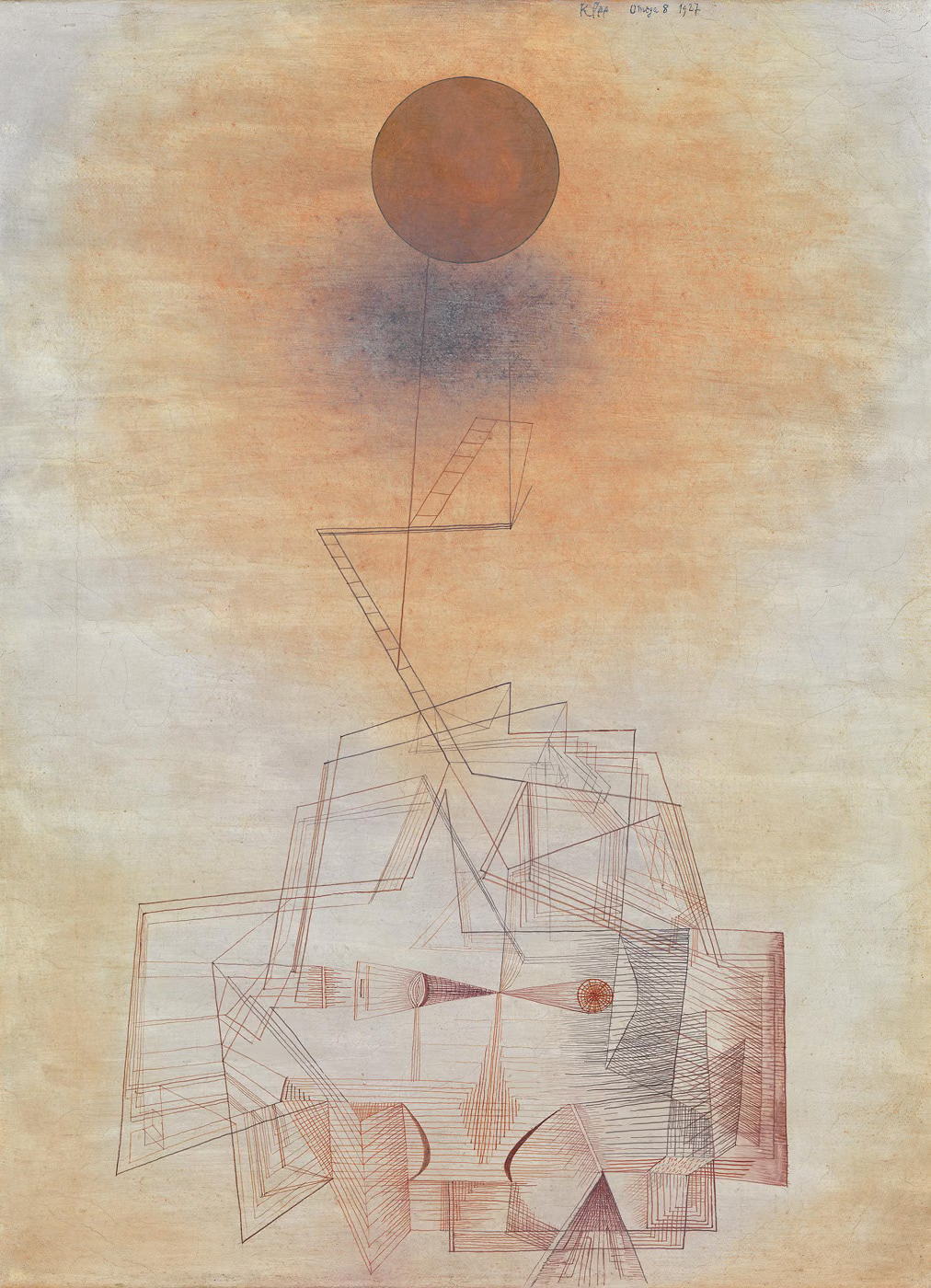
The translation of "Limits of Reason" from French to English is: Limits of Reason (Note: This title is already in English, so no translation is needed.)