Oedipus Explaining the Sphinx's Riddle
Artwork by Jean-Auguste-Dominique Ingres • 1808
🖼️ Reproduce this artwork — 📗 Book on Jean-Auguste-Dominique Ingres on Amazon
About this artwork - painting analysis
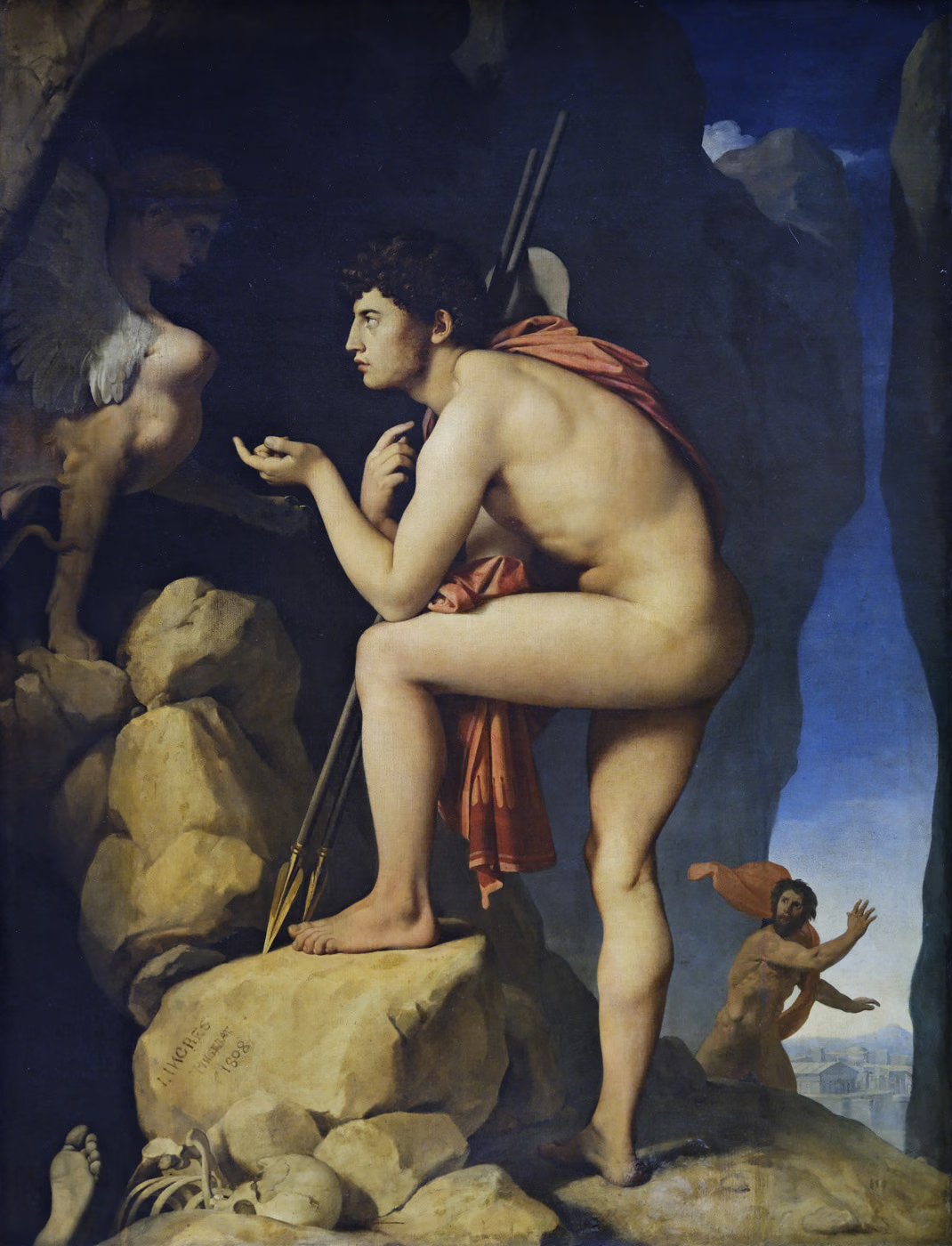
Presented at the 1808 Salon, Oedipus and the Sphinx marks a decisive turning point in the career of Jean-Auguste-Dominique Ingres. This ambitious canvas transposes the famous mythological episode into a composition of pure neoclassical rigor, where the Theban hero confronts the monstrous creature on a rocky outcrop. The young Oedipus, depicted naked save for a red-orange drapery carelessly draped over his shoulder and hips, embodies the ideal of antique masculine beauty. His sculptural musculature, his regular profile and confident posture contrast sharply with the unsettling silhouette of the sphinx, whose feminine face emerges from a darkness laden with mystery.
The composition reveals Ingres' technical mastery at the age of twenty-eight, when he was a resident fellow at the Villa Medici in Rome. The cold light that caresses the hero's body highlights the anatomical precision and perfect modeling of the flesh, while the background divides between oppressive darkness and a luminous opening onto a distant landscape. In the foreground, human bones recall the tragic fate of travelers who failed to solve the riddle, while to the right, a fleeing figure probably symbolizes a survivor witnessing the scene. This pyramidal construction, the predominance of drawing over color, and the clarity of contours perfectly illustrate the principles of neoclassicism that Ingres championed against the romantic colorists.
Preserved in the Louvre Museum, this work provoked mixed reactions at its first exhibition. While its formal perfection was praised, some critics reproached Ingres for excessive coldness and overly academic fidelity to antique canons. Yet this canvas already asserts the master's stylistic signature: absolute linear purity, an idealization pushed to extremes, and a constant pursuit of classical harmony. It remains today one of the most eloquent manifestos of French neoclassicism and testifies to Ingres' ambition to rival the masters of the Italian Renaissance.
If you appreciate "Oedipus Explaining the Sphinx's Riddle" and other paintings by Jean-Auguste-Dominique Ingres, we offer you 10% off the purchase of an art poster from our partner europosters with the promo code GRANDSPEINTRES10.
Image license: faithful photographic reproduction of a two-dimensional public domain work of art.