Jupiter and Thetis
Artwork by Jean-Auguste-Dominique Ingres • 1811
🖼️ Reproduce this artwork — 📗 Book on Jean-Auguste-Dominique Ingres on Amazon
About this artwork - painting analysis
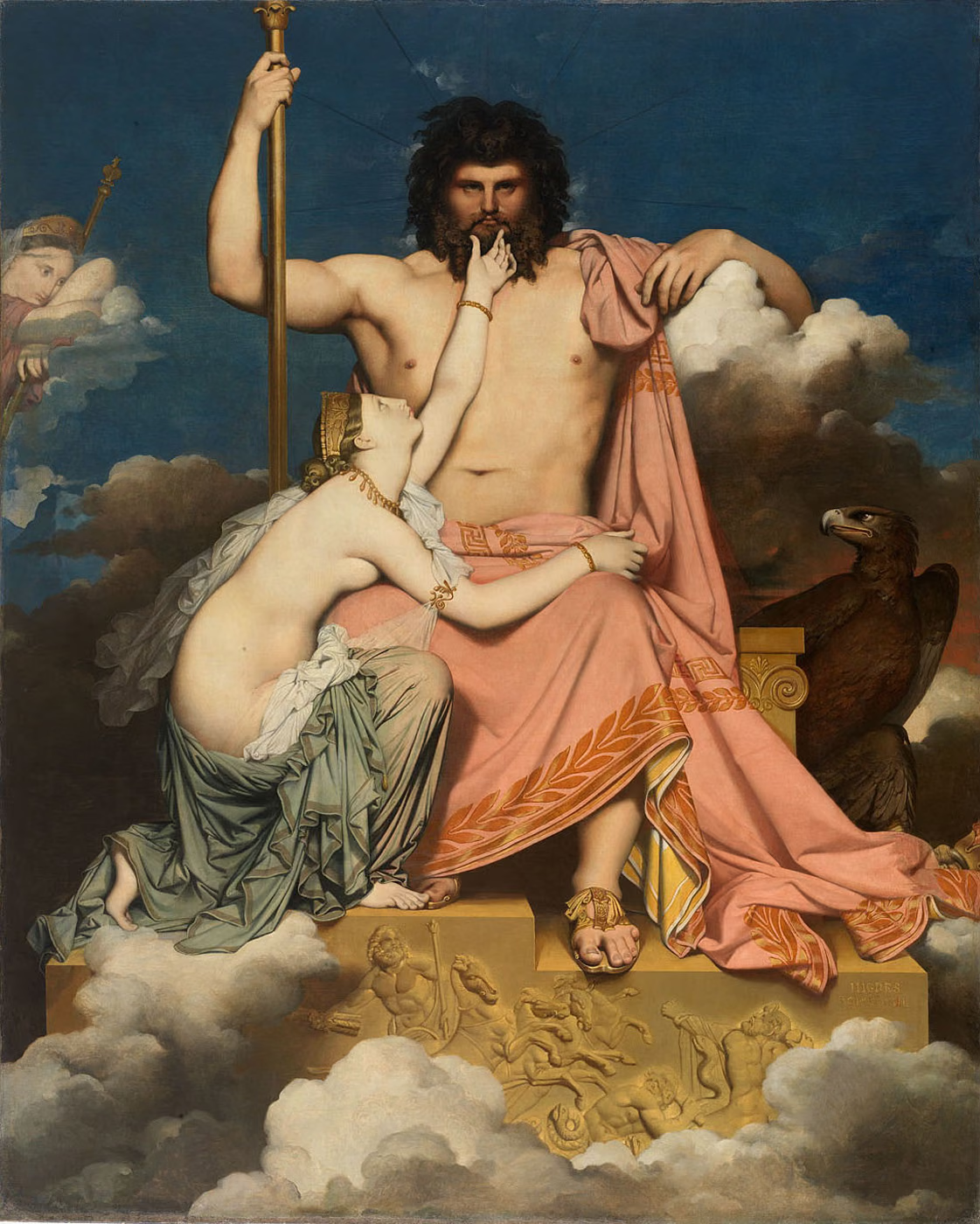
Painted in 1811, Jupiter and Thetis by Jean-Auguste-Dominique Ingres stands as one of the most audacious and sensual representations of Greek mythology in nineteenth-century art. The painting illustrates an episode from Homer's Iliad in which the nymph Thetis implores Zeus, king of the gods, to avenge the affront suffered by her son Achilles during the Trojan War. This desperate supplication comes to life in a theatrical composition where the Nereid surrenders herself entirely against the body of the Olympian god, her arm tenderly embracing his beard whilst her naked body winds with serpentine grace around the celestial sovereign.
Ingres's technical mastery expresses itself magnificently in the treatment of flesh and drapery. Thetis's body—of an almost unreal milky whiteness—contrasts with Jupiter's bronzed musculature, draped in a sumptuous salmon-pink mantle adorned with golden Greek motifs. The artist demonstrates his drawing genius through the deliberate elongation of the suppliant's limbs, creating a serpentine line that guides the viewer's gaze. This anatomical distortion, characteristic of Ingres's neoclassical style, privileges ideal elegance over naturalistic accuracy. The celestial background, dominated by deep blues and cotton-like clouds, reinforces the divine dimension of the scene, whilst Jupiter's eagle and the ghostly presence of jealous Juno enrich the narrative.
Presented at the 1811 Salon, this painting provoked mixed reactions. While some admired the formal beauty of the composition, others criticized the anatomical liberties and latent eroticism of the scene. Ingres, then resident at the Villa Medici, pursued his quest for a reinvented classical ideal, drawing inspiration as much from Raphael as from antique sculpture. Held today at the Granet Museum in Aix-en-Provence, this work testifies to neoclassicism's evolution towards a more romantic sensuality, establishing Ingres as one of the greatest draughtsmen of his era.
If you appreciate "Jupiter and Thetis" and other paintings by Jean-Auguste-Dominique Ingres, we offer you 10% off the purchase of an art poster from our partner europosters with the promo code GRANDSPEINTRES10.
Image license: faithful photographic reproduction of a two-dimensional public domain work of art.