Mary Magdalene at the Mirror
Artwork by Georges de La Tour • 1637
🖼️ Reproduce this artwork — 📗 Book on Georges de La Tour on Amazon
About this artwork - painting analysis
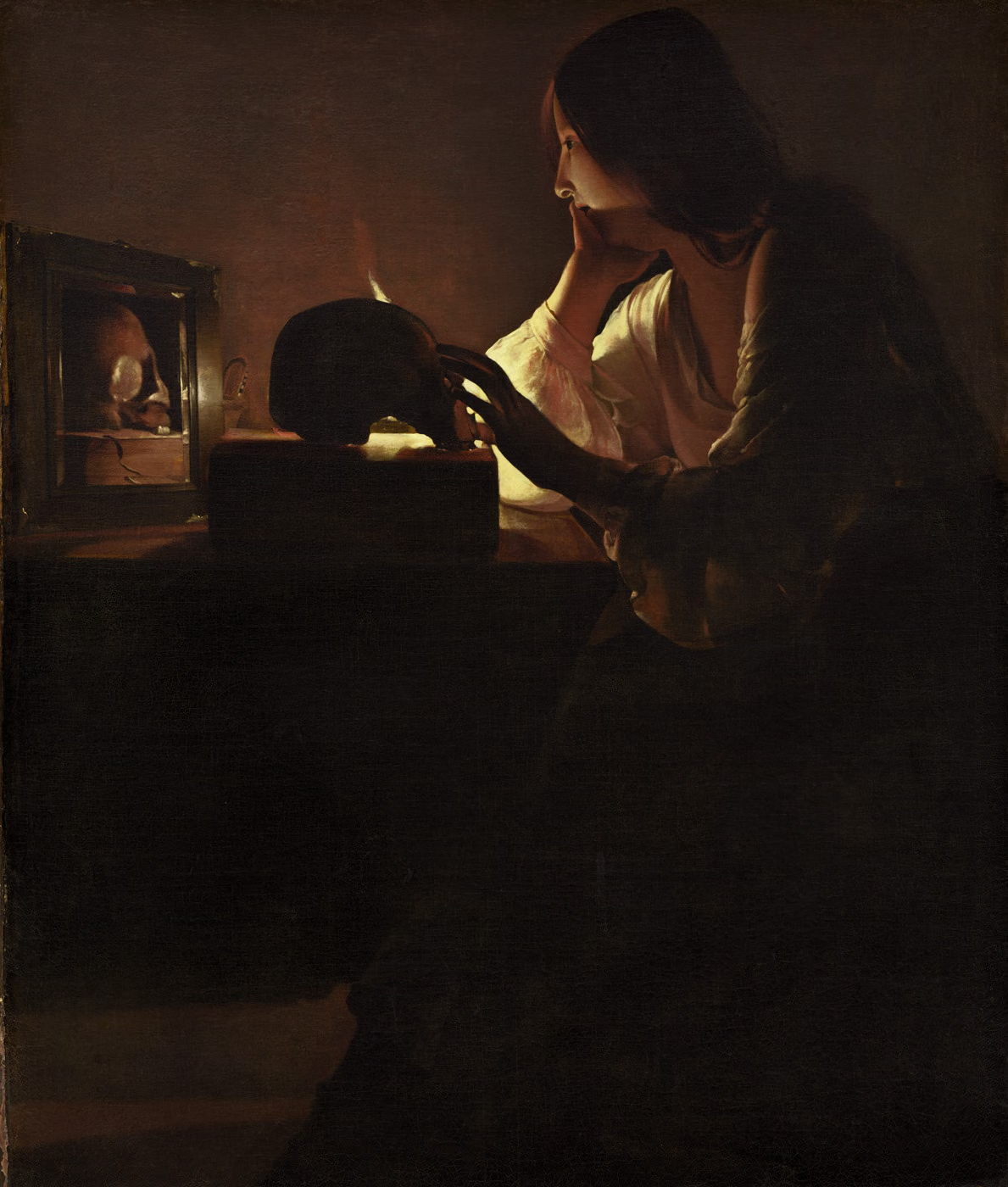
Immersed in a nocturnal meditation steeped in spirituality, Georges de La Tour's Magdalen at the Mirror embodies the quintessence of French Caravaggism in the seventeenth century. Painted in 1637, this oil on canvas captures the contemplative moment of Mary Magdalene, the biblical figure of the repentant sinner, confronted with her own reflection in a mirror resting on her lap. The work unfolds an atmosphere of silent introspection where the saint, dressed in a luminous white chemise and a dark skirt, appears absorbed in deep reflection on earthly vanity and the quest for redemption.
The composition reveals Georges de La Tour's mastery in his masterful treatment of chiaroscuro. A single candle flame radiates the scene, casting golden light that delicately sculpts the saint's profile and makes the folds of her chemise shimmer. This unique light source, characteristic of Lorraine tenebrism, creates striking contrasts between illuminated areas and deep shadows enveloping the background. The mirror, a traditional symbol of vanity in Christian iconography, mysteriously reflects the flame and suggests the duality between appearance and spiritual essence. The skull visible in the reflection, a classical attribute of vanitas, reminds us of the inevitability of death and the futility of fleeting pleasures.
Georges de La Tour, a Lorraine painter active during the first half of the seventeenth century, stands within the Caravagesque tradition while developing a singular visual language, marked by sobriety and mysticism. His candlelit nocturnal scenes, of which this Magdalen is a remarkable example, testify to an intense spirituality characteristic of the Catholic Counter-Reformation. Unlike the spectacular representations of Caravaggio, La Tour favors restraint, geometric form, and an almost contemplative approach to religious subject matter.
Housed today at the National Gallery of Art in Washington, this canvas continues to exert an enduring fascination on art lovers, embodying the capacity of French Caravaggism to transform a devotional scene into a universal meditation on the human condition and the quest for spiritual meaning.
If you appreciate "Mary Magdalene at the Mirror" and other paintings by Georges de La Tour, we offer you 10% off the purchase of an art poster from our partner europosters with the promo code GRANDSPEINTRES10.
Image license: faithful photographic reproduction of a two-dimensional public domain work of art.