The Massacre of the Innocents
Artwork by Pieter Bruegel • 1566
🖼️ Reproduce this artwork — 📗 Book on Pieter Bruegel on Amazon
About this artwork - painting analysis
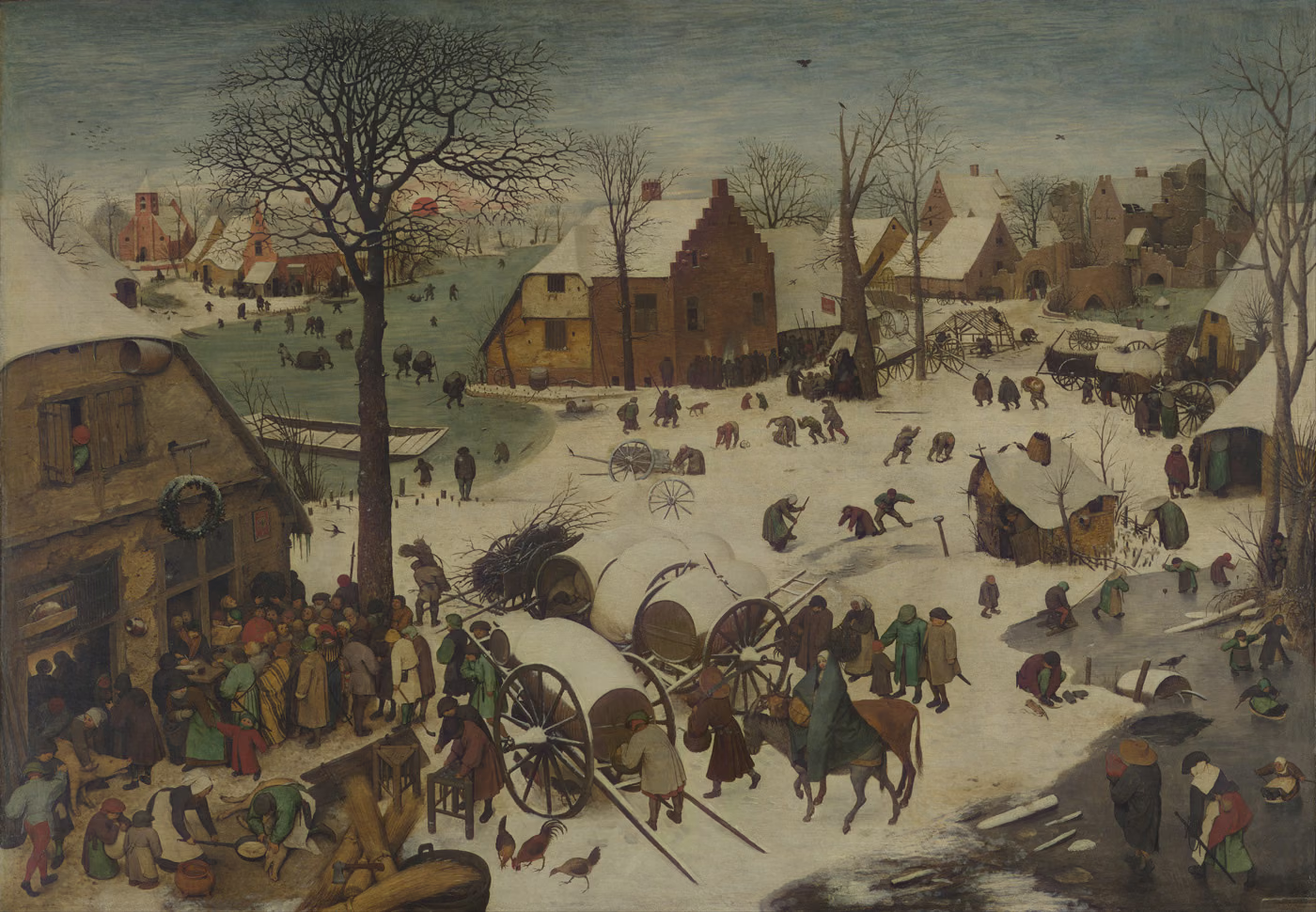
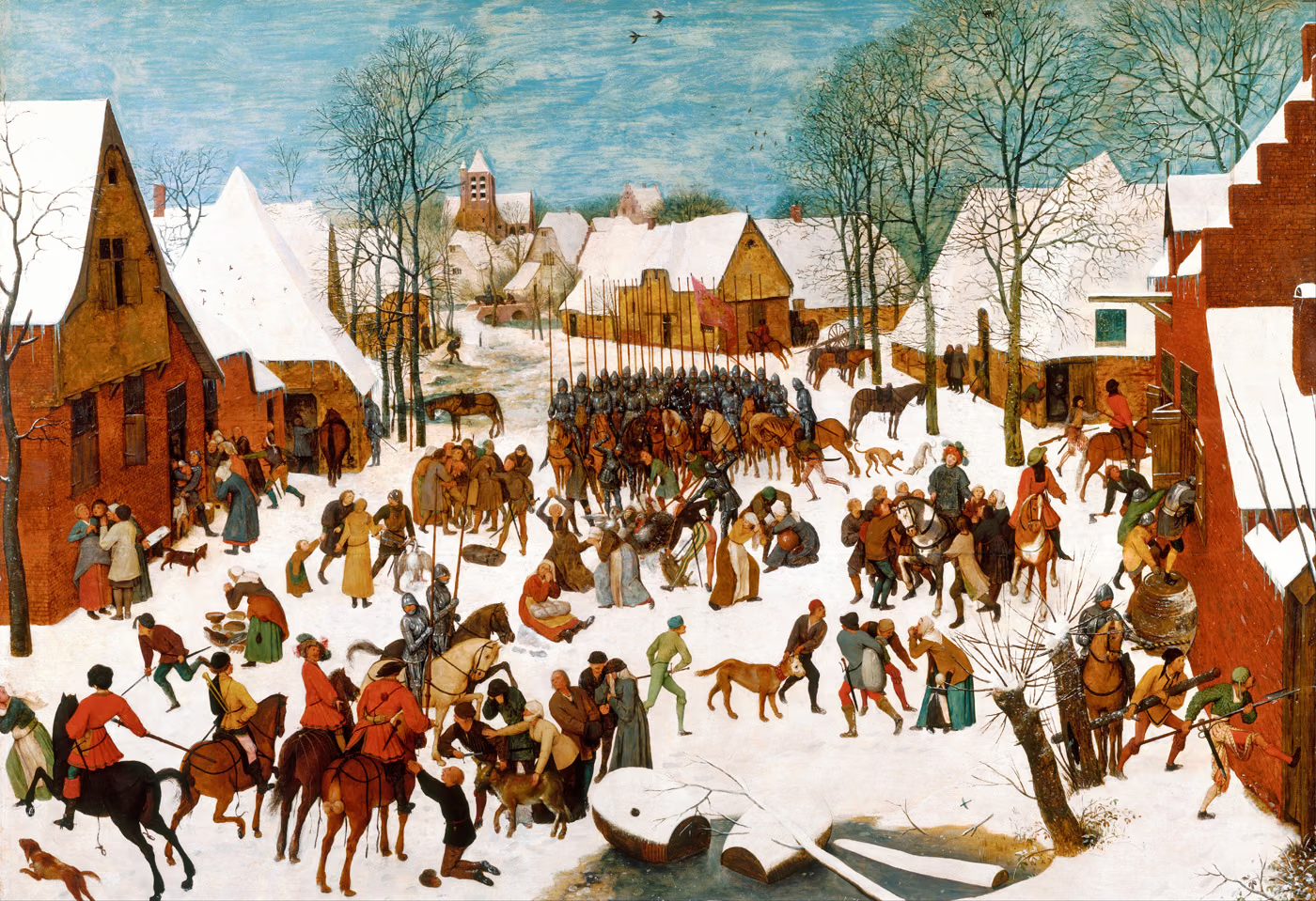
Painted in 1566 by Pieter Bruegel the Elder, this vision of the Massacre of the Innocents transposes the biblical episode into a setting that strangely evokes sixteenth-century Flemish villages under Spanish occupation. Far from the ancient Orient, the scene unfolds in a snow-covered landscape where helmeted soldiers and bewildered villagers clash in the heart of a public square, creating a political charge both powerful and veiled. This temporal transposition is not arbitrary: it reflects the atrocities perpetrated by the troops of the Duke of Alba in the Spanish Netherlands, transforming an evangelical narrative into a contemporary chronicle of state violence.
The teeming composition, characteristic of Bruegel's style, deploys a multitude of characters and simultaneous actions across the pictorial space. The ochre, brown and rust tones of the buildings contrast sharply with the immaculate whiteness of the snow, while touches of red—clothing, signboards—punctuate the scene with dramatic accents. The bare trees draw their skeletal silhouettes against a pale blue sky, emphasizing the atmosphere of winter desolation. The diffuse light, typical of Nordic landscapes, bathes the composition uniformly without creating theatrical effect, paradoxically reinforcing the almost documentary horror of the scene.
Undisputed master of Northern Renaissance Flemish painting, Bruegel demonstrates here his capacity to interweave realistic observation of daily life with universal allegorical reach. His meticulous technique reveals a multitude of micro-narratives—soldiers ransacking houses, parents pleading, horses trampling through snow—that invite the eye to travel endlessly across the canvas. Held today in the Royal Collection, this version presents a troubling particularity: the massacred children would have been repainted later as animals or bundles, probably to mitigate the unbearable violence.
This work embodies Bruegel's capacity to transform history painting into engaged testimony, establishing a timeless dialogue between biblical violence and political terror, an artistic legacy that still resonates in our understanding of art as an act of resistance.
If you appreciate "The Massacre of the Innocents" and other paintings by Pieter Bruegel, we offer you 10% off the purchase of an art poster from our partner europosters with the promo code GRANDSPEINTRES10.
Image license: faithful photographic reproduction of a two-dimensional public domain work of art.